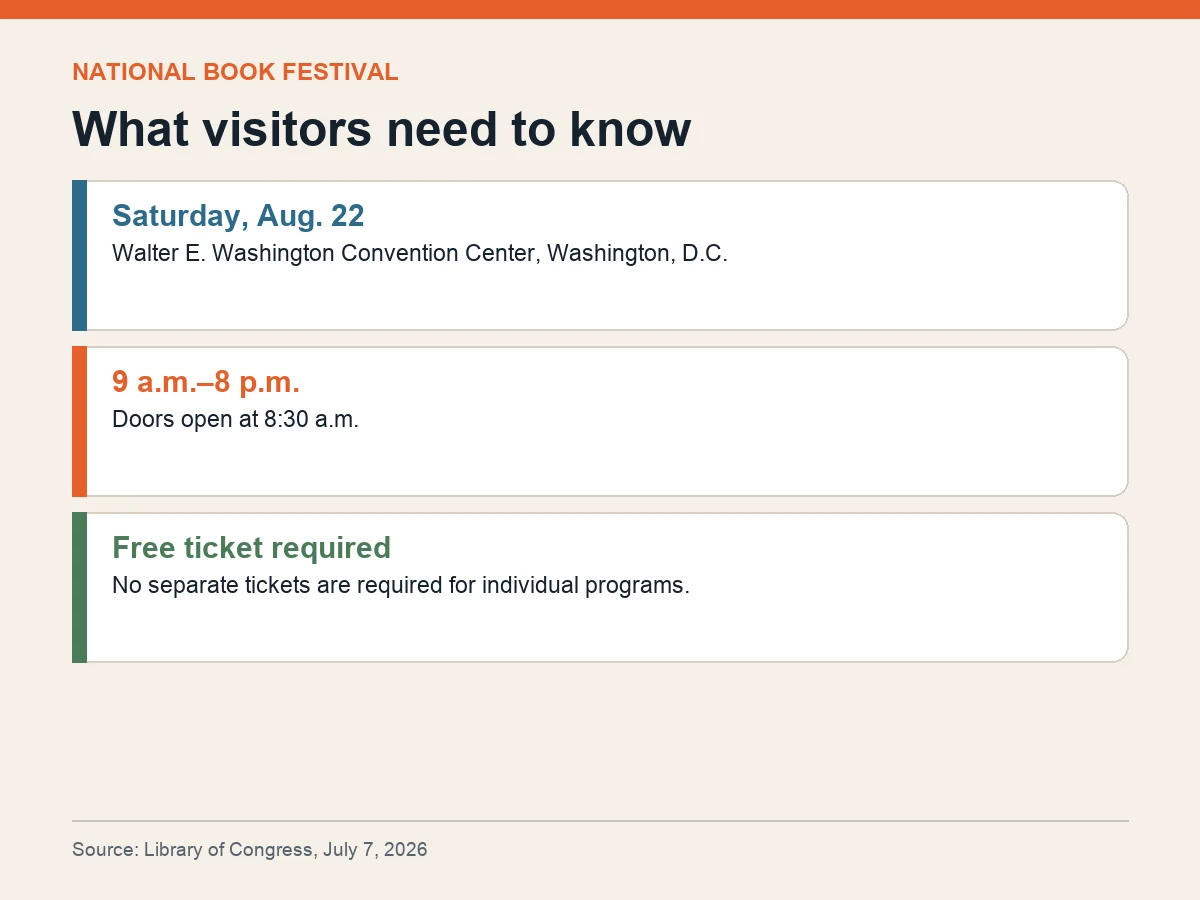
The 2026 Library of Congress National Book Festival will bring more than 80 authors and speakers to Washington on Saturday, Aug. 22, with free admission, a first-time entry-ticket requirement and expanded programming beyond books.
The festival runs from 9 a.m. to 8 p.m. at the Walter E. Washington Convention Center. Doors open at 8:30 a.m. Tickets are free and required for entry, but individual programs inside the festival do not require separate reservations.
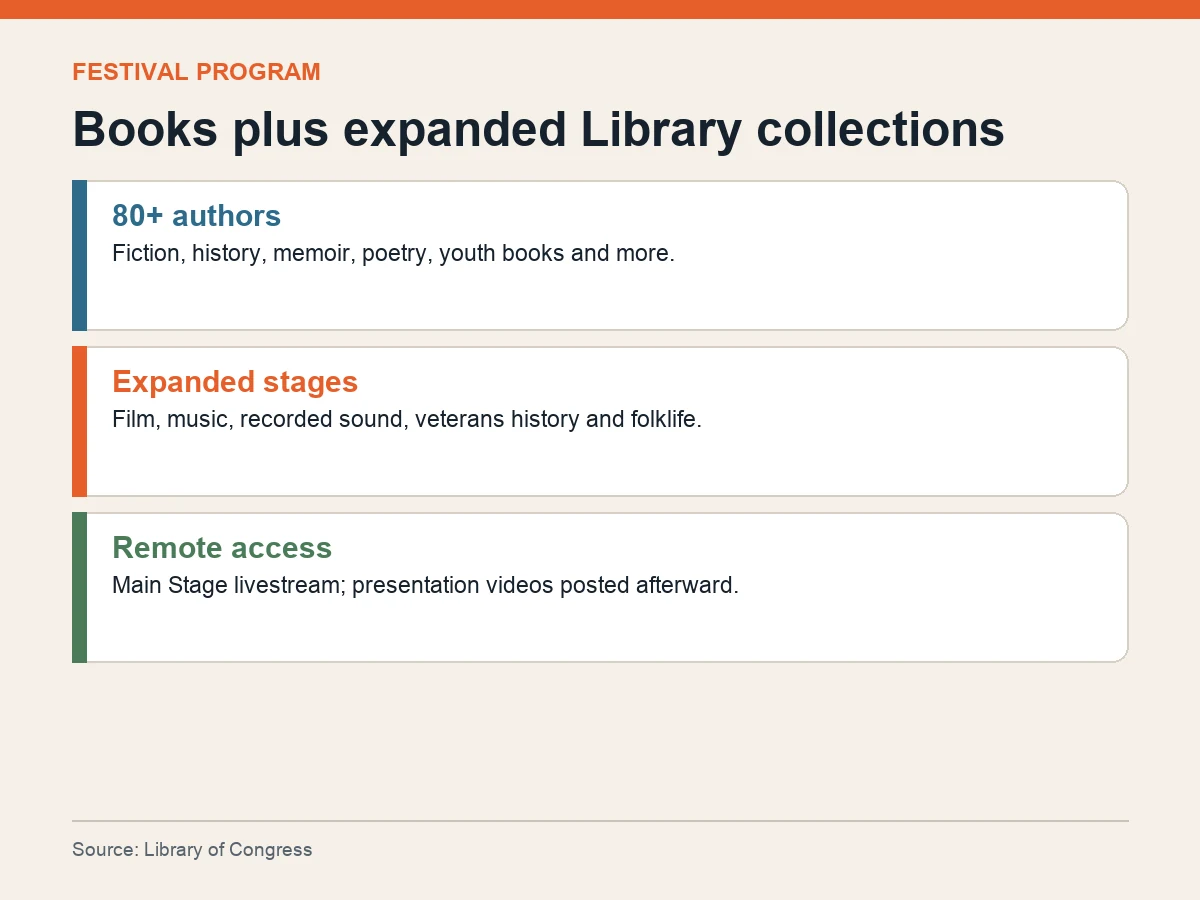
The announced lineup spans fiction, history, memoir, poetry, young-adult and children’s books. Headliners include Cynthia Erivo, Ann Patchett, Martin Scorsese, Kate McKinnon, Tia Williams, historian Annette Gordon-Reed and U.S. Poet Laureate Arthur Sze.
The Library is using the nation’s 250th anniversary to widen the program. Alongside author conversations, the event will feature film, music, recorded sound, veterans history and American folklife drawn from Library collections and year-round work.
Family programming includes storytelling, hands-on activities connecting science and literature, workshops and a Roadmap to Reading area that highlights literary activity around the country.
The Main Stage will be livestreamed through the festival website. The Library says videos of presentations will be posted on its website and YouTube channel shortly after the event, giving remote visitors broader access than the live stream alone.
C-SPAN’s Book TV is scheduled to stream selected sessions and interview writers. Other announced media partners include WAMU, NPR and The Washington Post.
Visitors should distinguish a festival ticket from an author-session seat. The ticket gets a person into the convention center; it does not guarantee space in every room. Popular conversations can fill, so arrival time and movement between stages matter.
The Library’s official event page is the authoritative place for updates, accessibility information and the final schedule. Organizers note that the lineup is subject to change, a normal condition for an event with dozens of traveling participants.
This year’s format turns the festival into both an in-person service event and a public archive. Readers can attend a full day in Washington, watch selected sessions live or return later to recordings—while the free ticket system gives organizers a clearer picture of expected attendance.