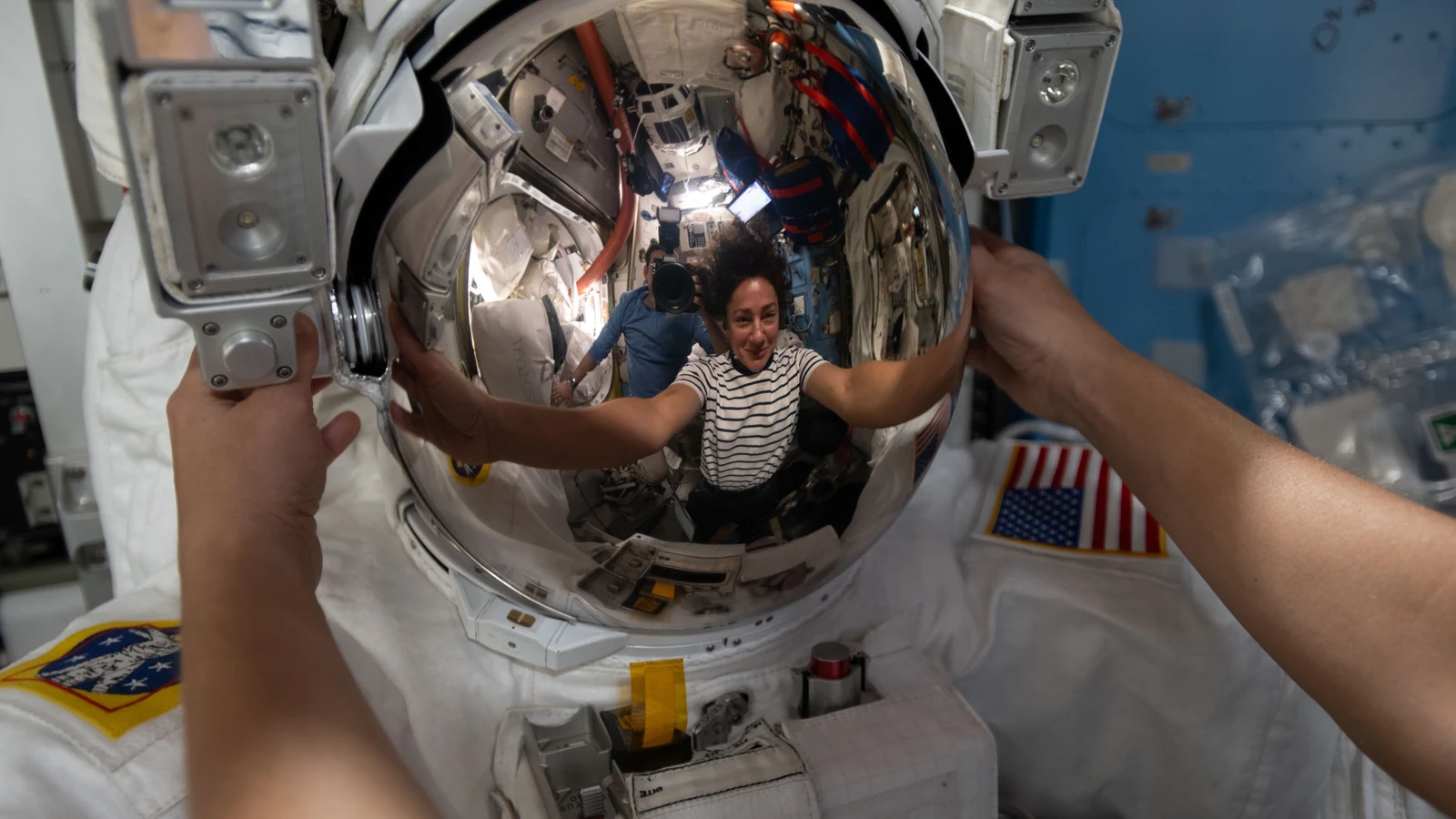
NASA has scheduled three U.S. spacewalks for Aug. 6, Aug. 13 and Aug. 25, a compact run of outside work that links the International Space Station's day-to-day upkeep with two longer-term priorities: adding power and preparing the complex for its eventual deorbit.
The first operation is the most fully specified. NASA astronauts Jessica Meir and Anil Menon are due to leave the Quest airlock Aug. 6. Coverage begins at 7 a.m. EDT, and NASA expects the spacewalk to begin at 8:35 a.m. and last about six and a half hours.
Power work comes first
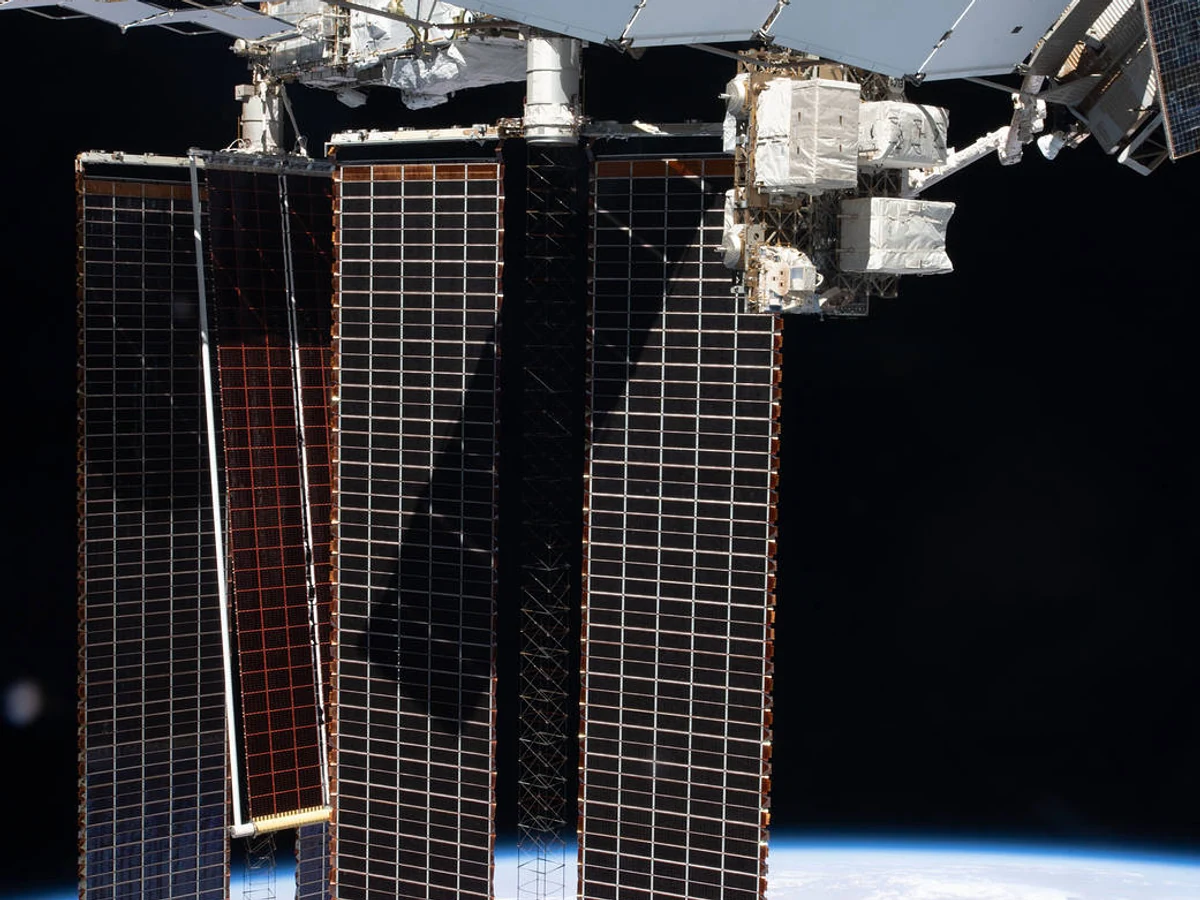
Meir and Menon are assigned to install hardware on the station's 3B power channel. The modification is intended to prepare that channel for a seventh International Space Station Roll-Out Solar Array, or IROSA, which NASA says is scheduled for delivery later in 2026.
The pairing mixes deep spacewalk experience with a debut. This will be Meir's sixth spacewalk and Menon's first. Meir will wear the suit marked with red stripes as crew member 1; Menon will wear the unmarked suit as crew member 2.
Communications, docking and the deorbit plan
NASA's second August outing, U.S. spacewalk 97 on Aug. 13, is aimed at communications. Two astronauts will replace a Space-to-Ground antenna, part of the system used to move data and high-speed communications between the station and Mission Control in Houston. NASA has not yet announced the crew or timing.
The Aug. 25 operation combines cabling and docking work. The crew for U.S. spacewalk 98 is expected to connect power-channel cables and data-relay systems, work NASA describes as part of continuing maintenance and preparation for the station's future deorbit. The astronauts also are scheduled to replace a navigational aid on the forward port of the Harmony module, where visiting spacecraft dock.
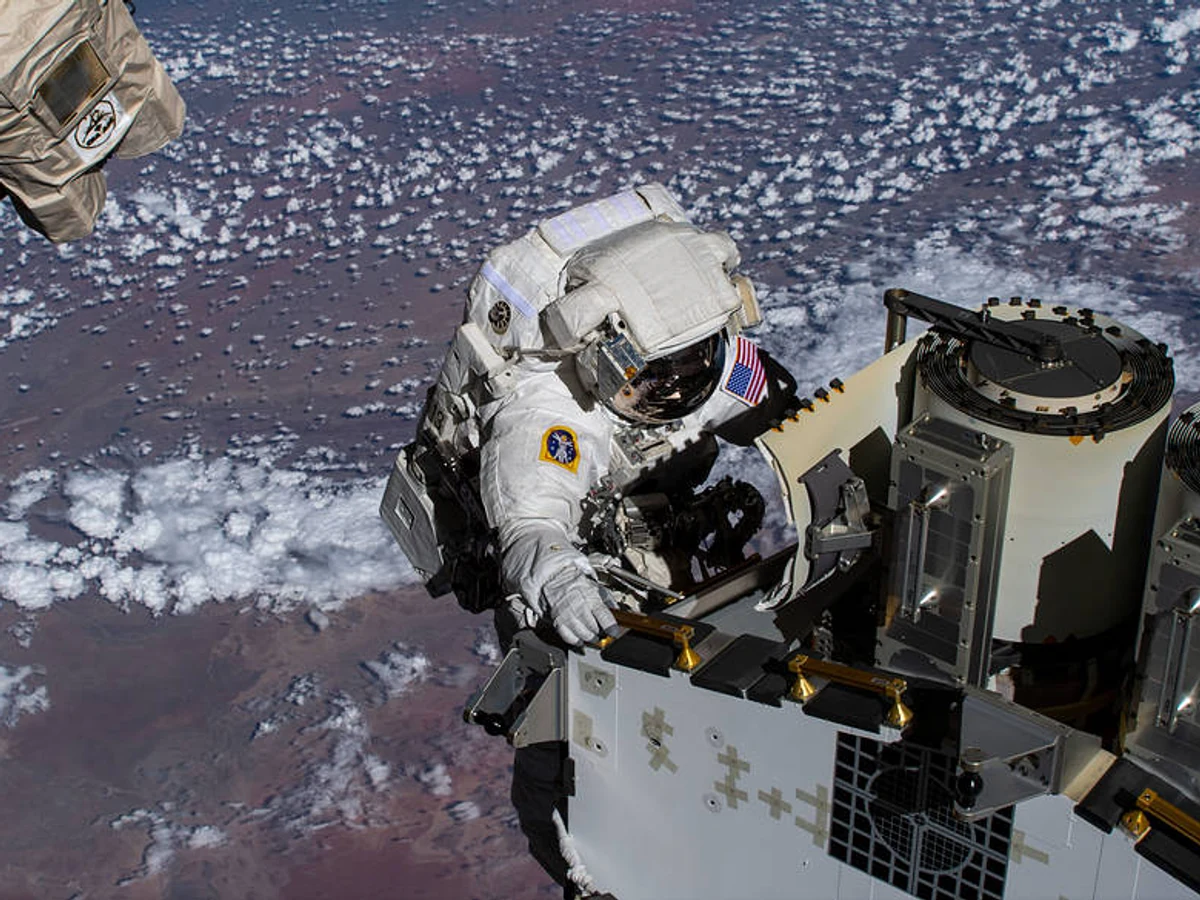
NASA counts the three outings as the 281st, 282nd and 283rd spacewalks conducted for station assembly, maintenance and upgrades. That sequence is more than a milestone: it shows how the station's final era still demands new infrastructure.
IROSA panels are smaller than the station's original arrays but use more efficient cells. Earlier units were mounted in front of portions of the legacy arrays, adding generation while using existing tracking and power-distribution hardware. NASA says the next array will add power needed for critical operations, including a safe, controlled deorbit.
The schedule remains partly provisional. NASA said it will publish the assigned crews, start times and coverage details for the Aug. 13 and Aug. 25 spacewalks closer to those dates. Operational timing can also move as station managers assess equipment, crew readiness and conditions aboard the orbiting laboratory.