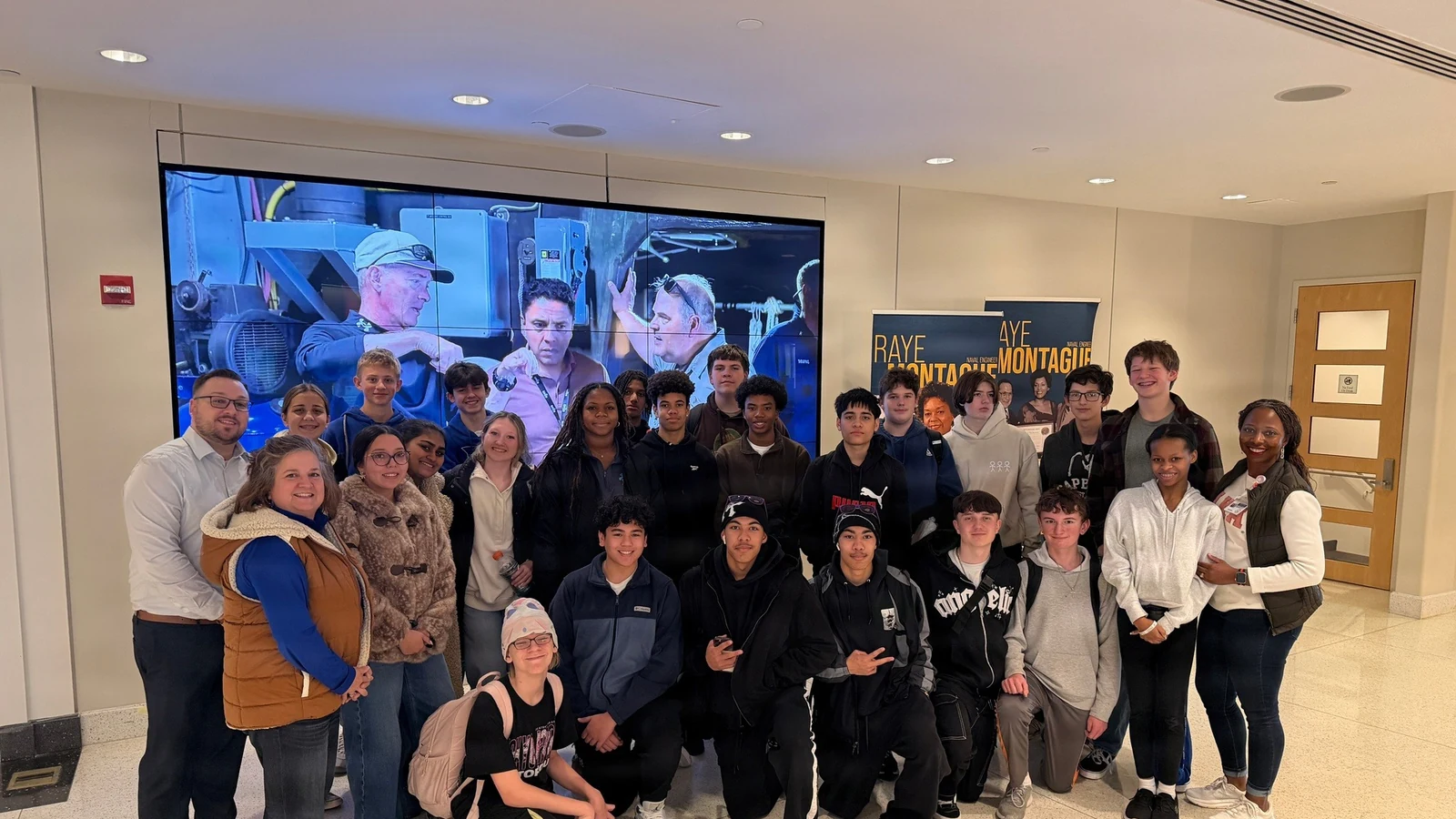
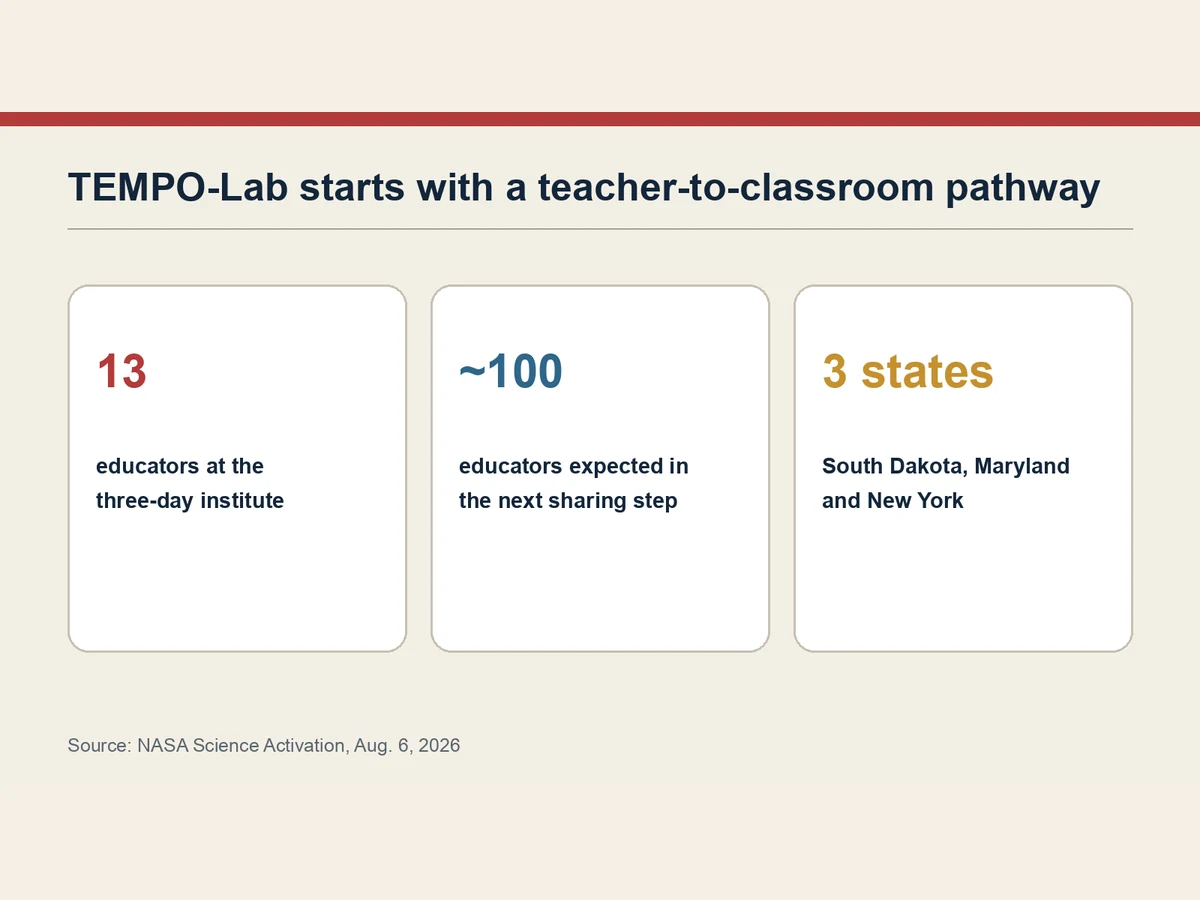
NASA’s Science Activation program trained 13 educators to use TEMPO-Lab, a free browser-based tool that turns hourly satellite air-quality observations into research questions for teenagers. The three-day institute ran July 27–29 in Cambridge, Massachusetts.
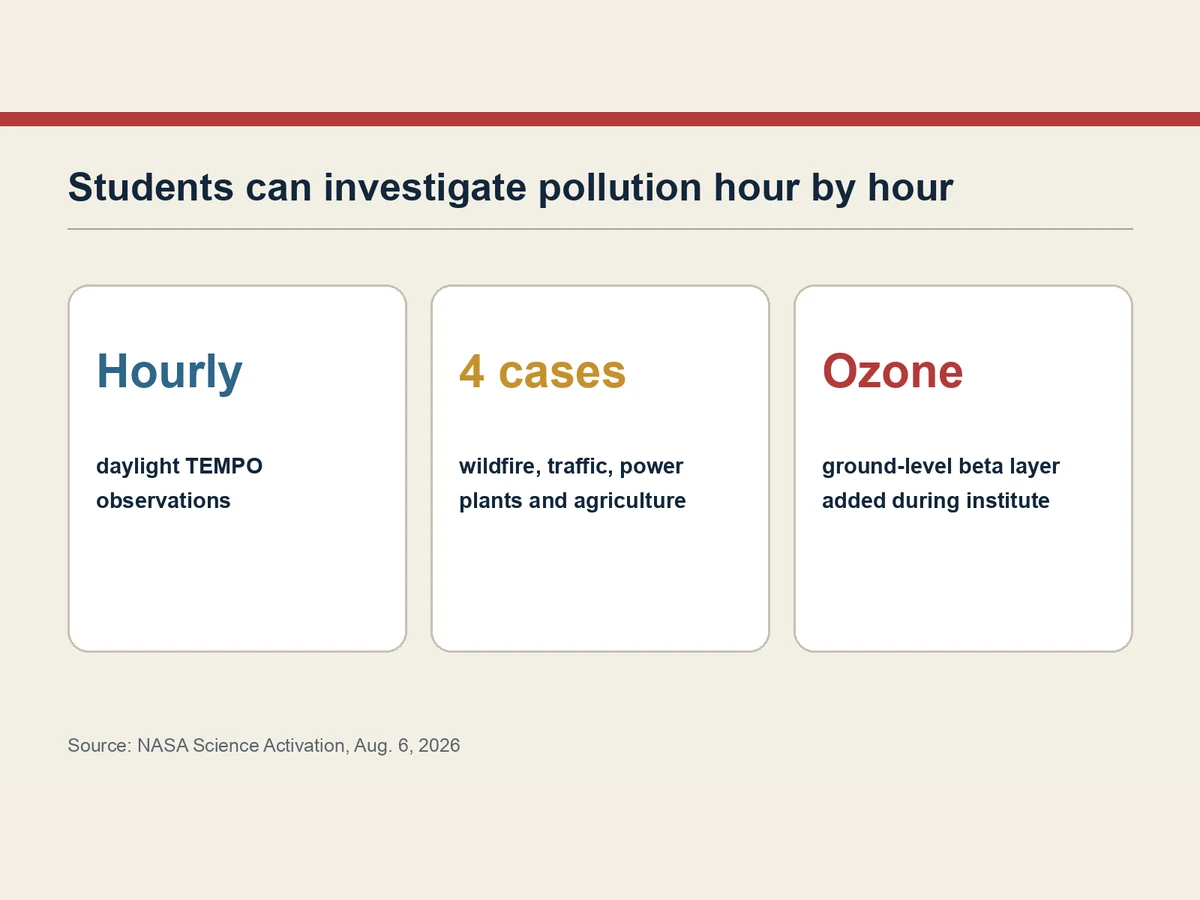
TEMPO observes pollution across North America during daylight hours. That cadence lets learners compare changes within a day instead of relying only on daily or monthly summaries, making local events easier to connect with patterns in the atmosphere.
Participants tested case studies involving wildfire smoke, rush-hour traffic, power plants and agriculture. They also worked with a beta ground-level ozone layer that the development team added during the institute.
The instructional goal is not simply to display a satellite map. Educators frame questions, choose times and places, compare layers and discuss what the data can and cannot establish about a pollution source.
TEMPO-Lab lowers a technical barrier by packaging NASA observations for classroom use. It does not turn a satellite estimate into a regulatory monitor, and students still need context from local stations, weather conditions and other evidence.
The 13 participants came from education networks that plan to share the material with about 100 educators in South Dakota, Maryland and New York. NASA says that second step could eventually expose thousands of teens to the tool.
Those figures are plans rather than completed reach. The useful evaluation will track how many educators adopt a lesson, how many students conduct a full investigation and whether they understand uncertainty rather than merely producing a colorful map.
The project is led by the Cosmic Storytelling with NASA Data team at the Center for Astrophysics | Harvard & Smithsonian under a NASA cooperative agreement. Its broader approach is to pair authentic agency data with guided inquiry.
If the sharing network works, TEMPO-Lab could make neighborhood-scale air-quality questions a recurring part of science education. Its value will depend on keeping the data source, limits and distinction between observation and attribution visible to learners.