A 15-foot composite truss-braced wing test article withstood expected flight loads and failed only after NASA engineers pushed it to roughly 127% of its design limit load.
The Structural Wing Experiment Evaluating Truss-bracing, known as SWEET-15, is a long, thin wing supported by an aerodynamic strut. It adapts ideas from NASA's earlier Transonic Truss-Braced Wing work for possible use in more efficient commercial aircraft.
NASA Langley designed and fabricated the article using five advanced composite manufacturing and assembly technologies. It was then installed in the Flight Loads Laboratory at NASA Armstrong in Edwards, California.
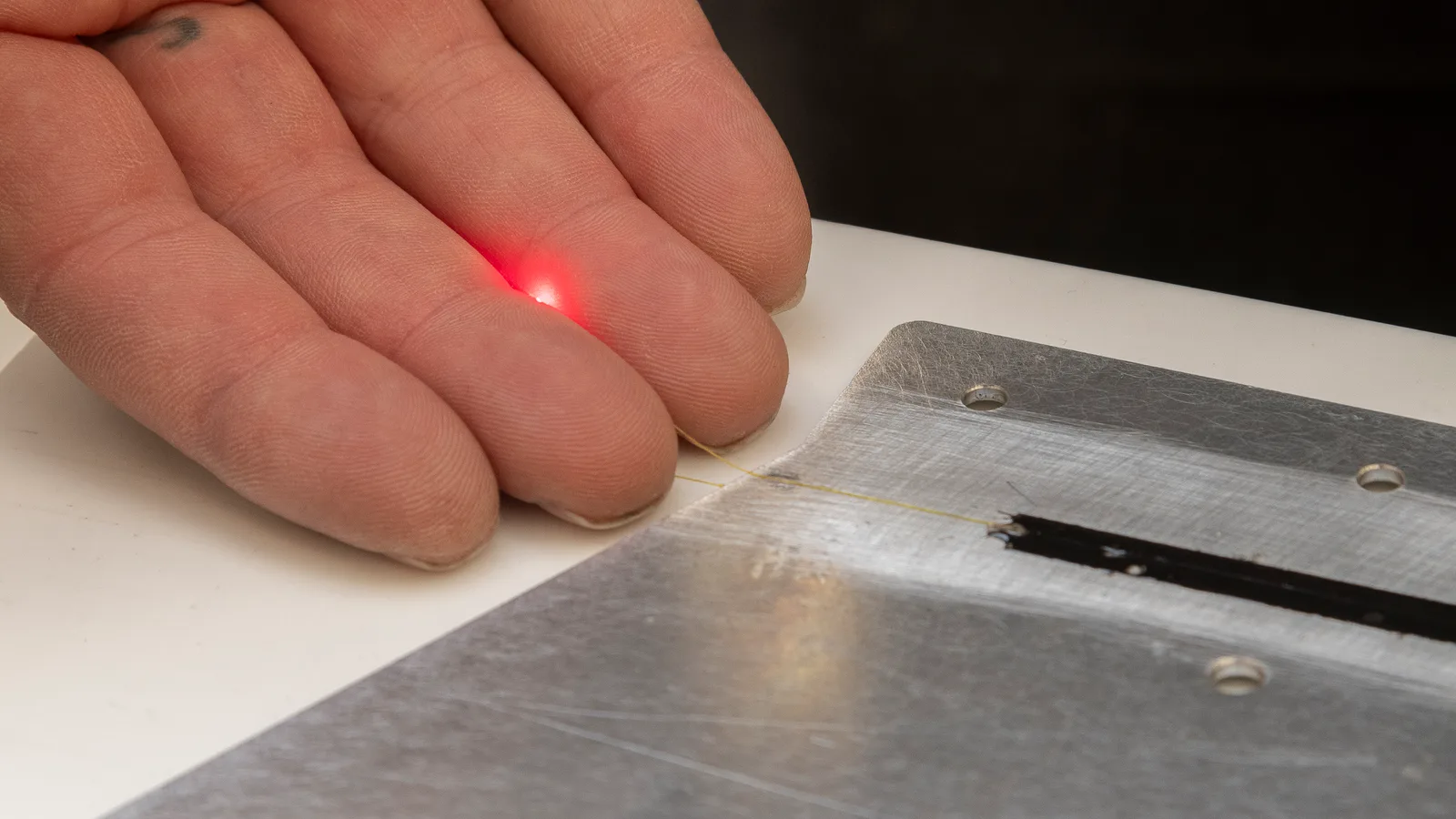
Engineers bent the wing over several months while conventional and fiber-optic sensors measured strain and load throughout the structure. NASA says the measurements confirmed predictions from its computer models through the anticipated in-flight range.
That agreement is as important as the headline failure number. Airframe designers need models that reliably predict where loads travel before they can reduce structural weight without sacrificing margin.
For the final test, engineers deliberately exceeded the design envelope. Visible damage appeared near the wing's back edge and in the upper cover when the structure failed at about 127% of design limit.
The test also showed how the joints connecting the wing to its main strut and smaller jury strut behaved beyond expected flight forces. NASA called it the first structural evaluation of this kind for a representative composite truss-braced configuration.
SWEET-15 is not a full aircraft wing and the test does not certify an airliner. Scale, manufacturing consistency, fatigue, aerodynamics and integration with a fuselage remain separate engineering questions.
NASA will analyze the sensor record to refine airframe designs. The practical aim is a lighter, stronger structure that lets a longer wing reduce aerodynamic drag without adding back the weight that the efficiency gain was meant to save.