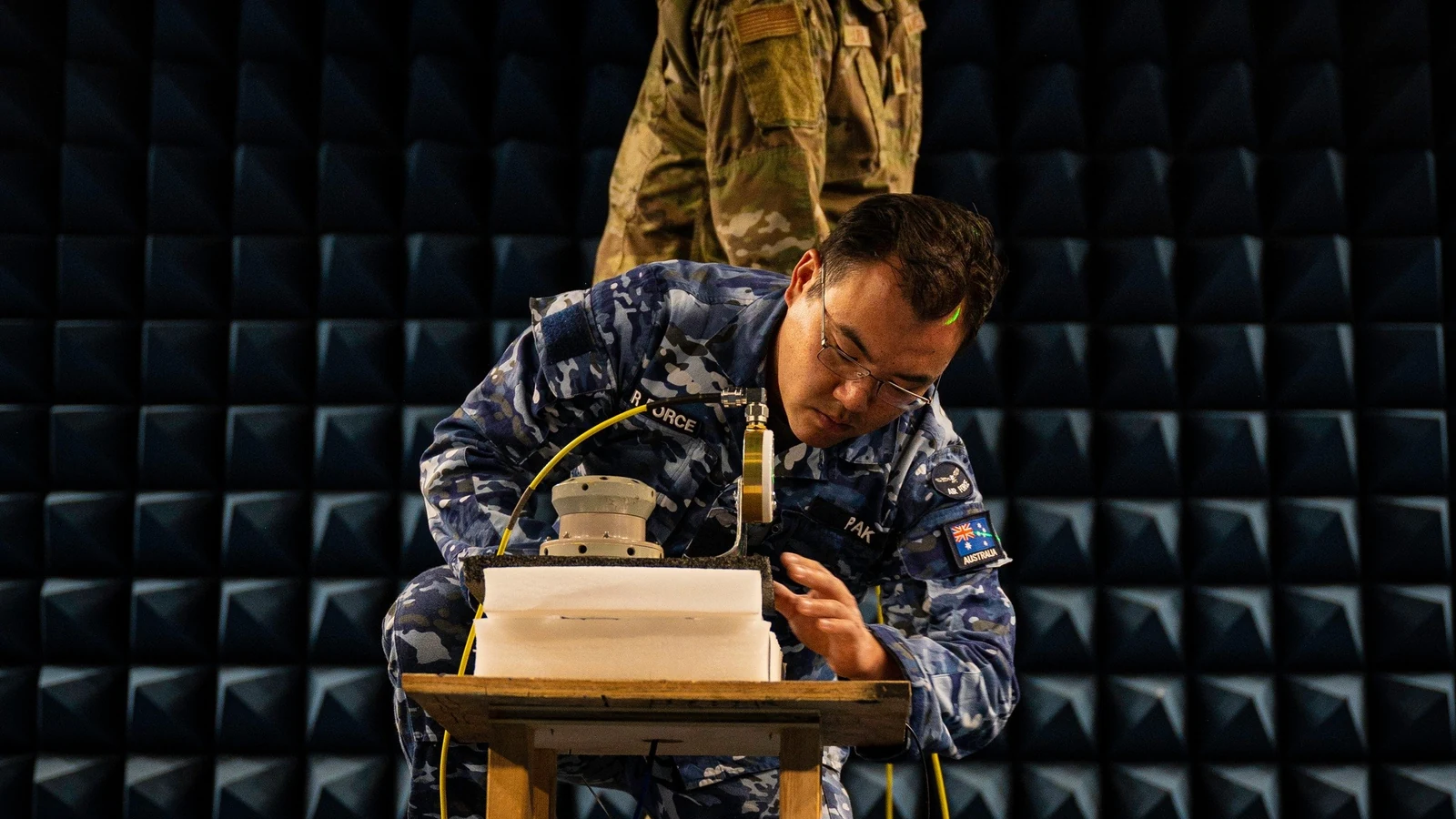
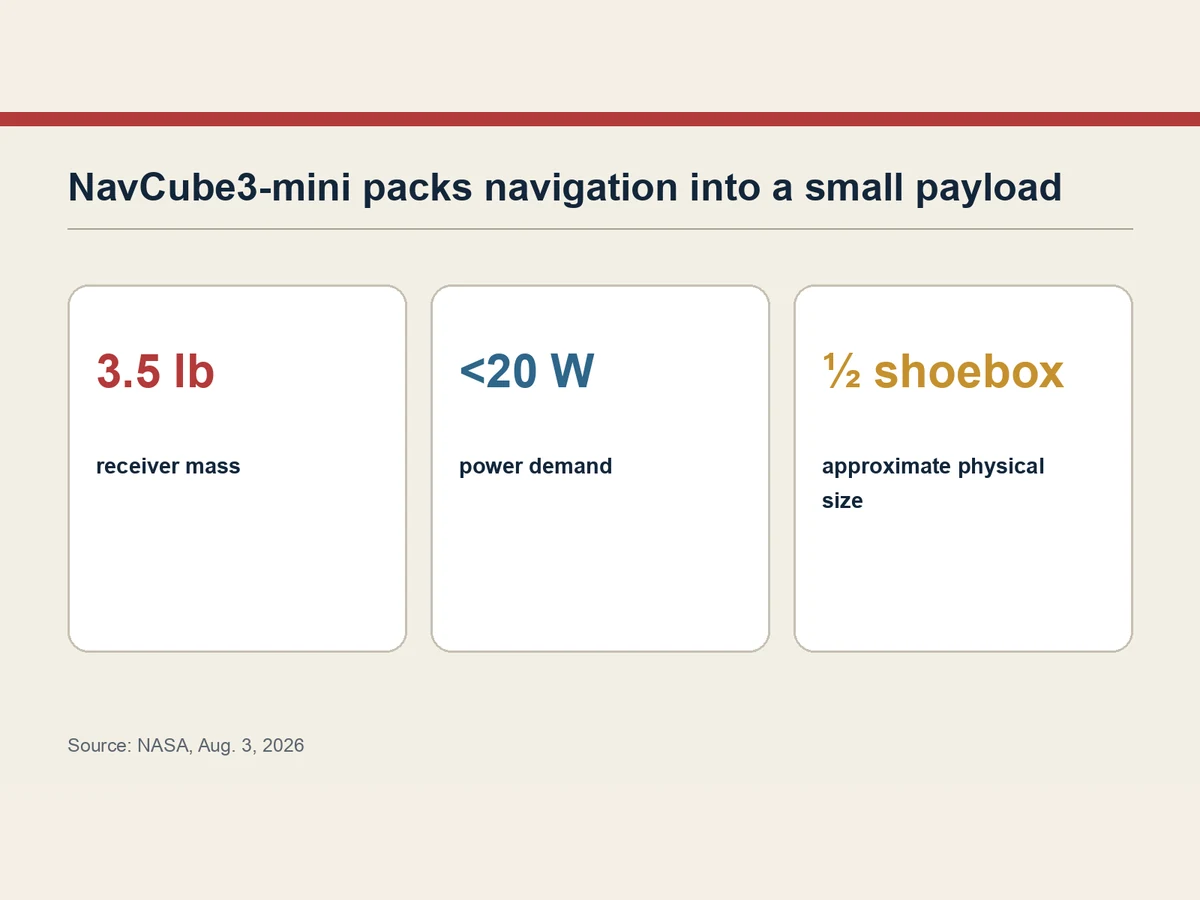
NASA has delivered a 3.5-pound navigation receiver for integration with Intuitive Machines’ planned Altus-1 lunar relay, a small hardware step toward communications and positioning services around the Moon.
NavCube3-mini is approximately half the size of a shoebox and uses less than 20 watts. NASA delivered it July 13 after engineers at Goddard Space Flight Center completed environmental and functional testing.
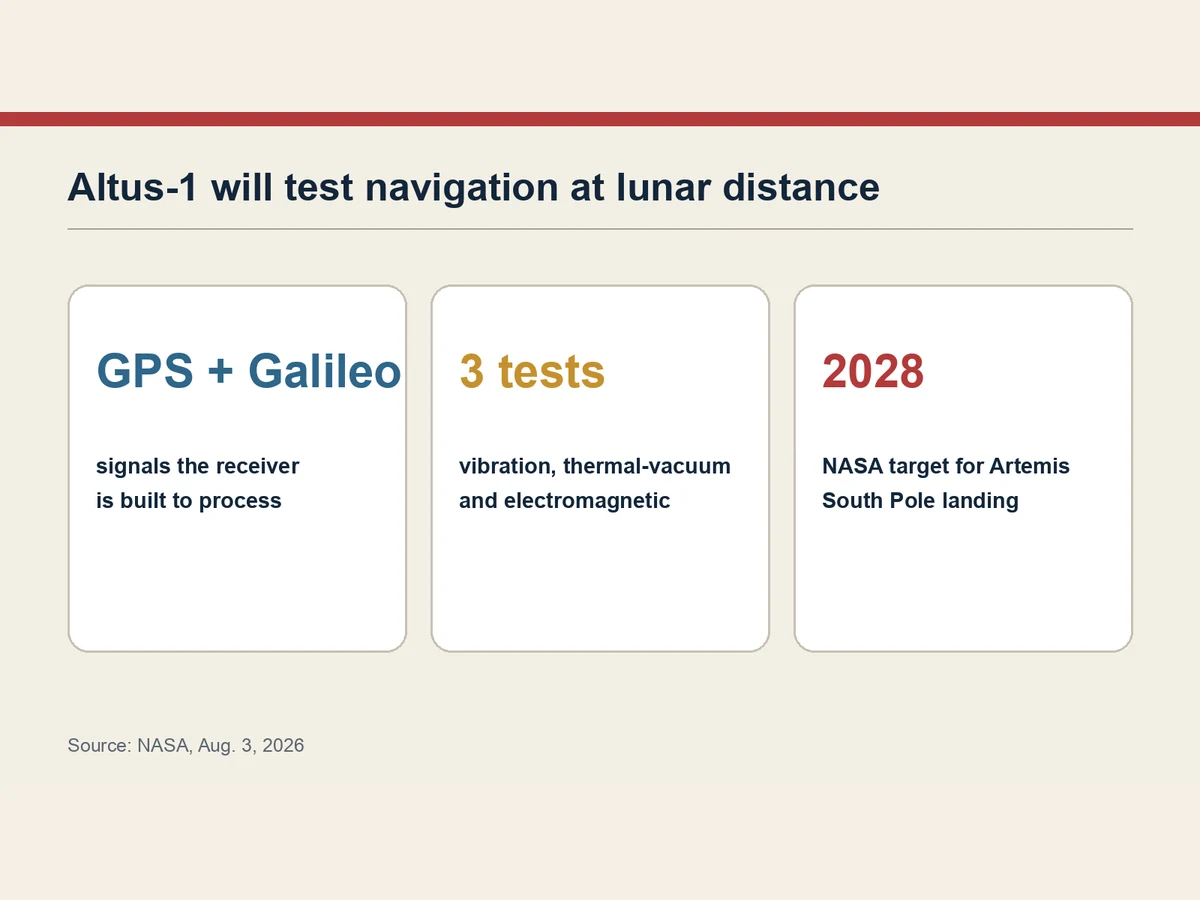
The receiver is designed to process signals from the U.S. GPS and European Galileo constellations at lunar distances. Those signals are far weaker beyond their ordinary Earth-service region, so the hardware and algorithms must detect and combine limited observations.
Altus-1 is the first planned relay satellite under NASA’s Near Space Network Services contract. A relay can connect missions that lack a direct line of sight to Earth, including operations near the lunar South Pole.
That geography matters because terrain and the Moon itself can interrupt direct links. NASA is targeting a 2028 Artemis landing near the South Pole, where communications and navigation infrastructure are central to surface planning.
Engineers subjected NavCube3-mini to vibration, thermal-vacuum and electromagnetic tests, then compared performance in high-fidelity simulations before and after each campaign. Passing those tests establishes readiness for integration, not success in lunar orbit.
The planned flight will test autonomous navigation for the relay. If the receiver can determine position from distant GPS and Galileo signals, spacecraft could depend less on continuous ground-based tracking for every navigation update.
The demonstration still carries mission risk. Launch, deployment, signal acquisition and sustained operation near the Moon all remain future steps, and NASA has not presented flight results because the system is not yet there.
For now, the delivery converts a laboratory program into flight hardware with a named commercial host. Altus-1 will show whether a receiver small enough for a compact payload can help anchor a broader lunar communications network.