Four commercial lunar landers are moving through assembly and ground tests as NASA tries to turn a sequence of one-off Moon missions into a repeatable cargo network. The most important word in that sentence is “tries”: none of the milestones NASA detailed Tuesday is a completed delivery.
NASA’s Aug. 4 update says Blue Origin, Firefly Aerospace, Intuitive Machines and Voyager Technologies are working toward lander flights by 2028. The agency’s first phase, running through 2029, calls for more than 20 robotic landings, with successive missions testing systems and placing instruments before additional human operations near the lunar south pole.
The update supplies an unusually useful snapshot of what is actually built, what is being tested and what still has to happen. It also shows why a launch target should not be confused with a delivery: each vehicle still faces integration, environmental or propulsion work before it can leave Earth.
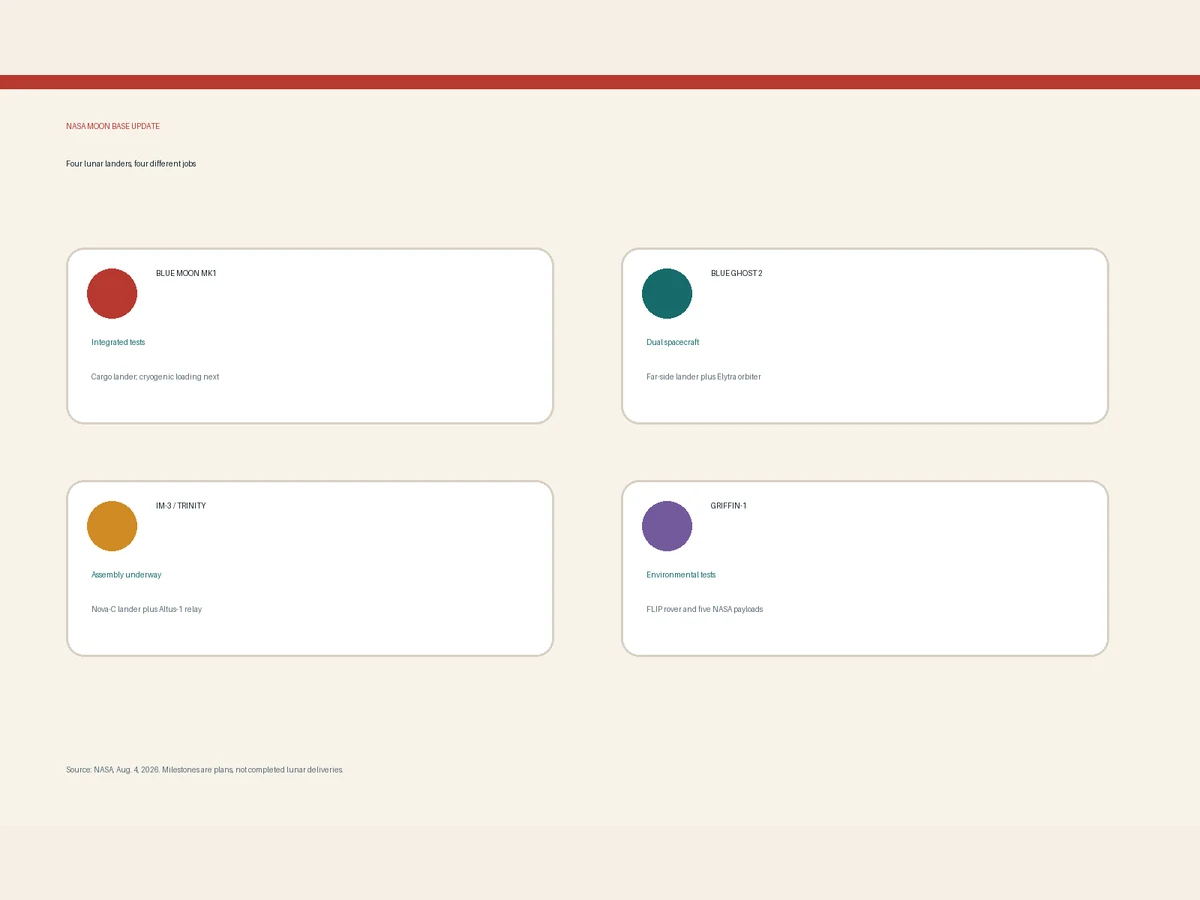
Blue Moon Mark 1 is past its vacuum campaign
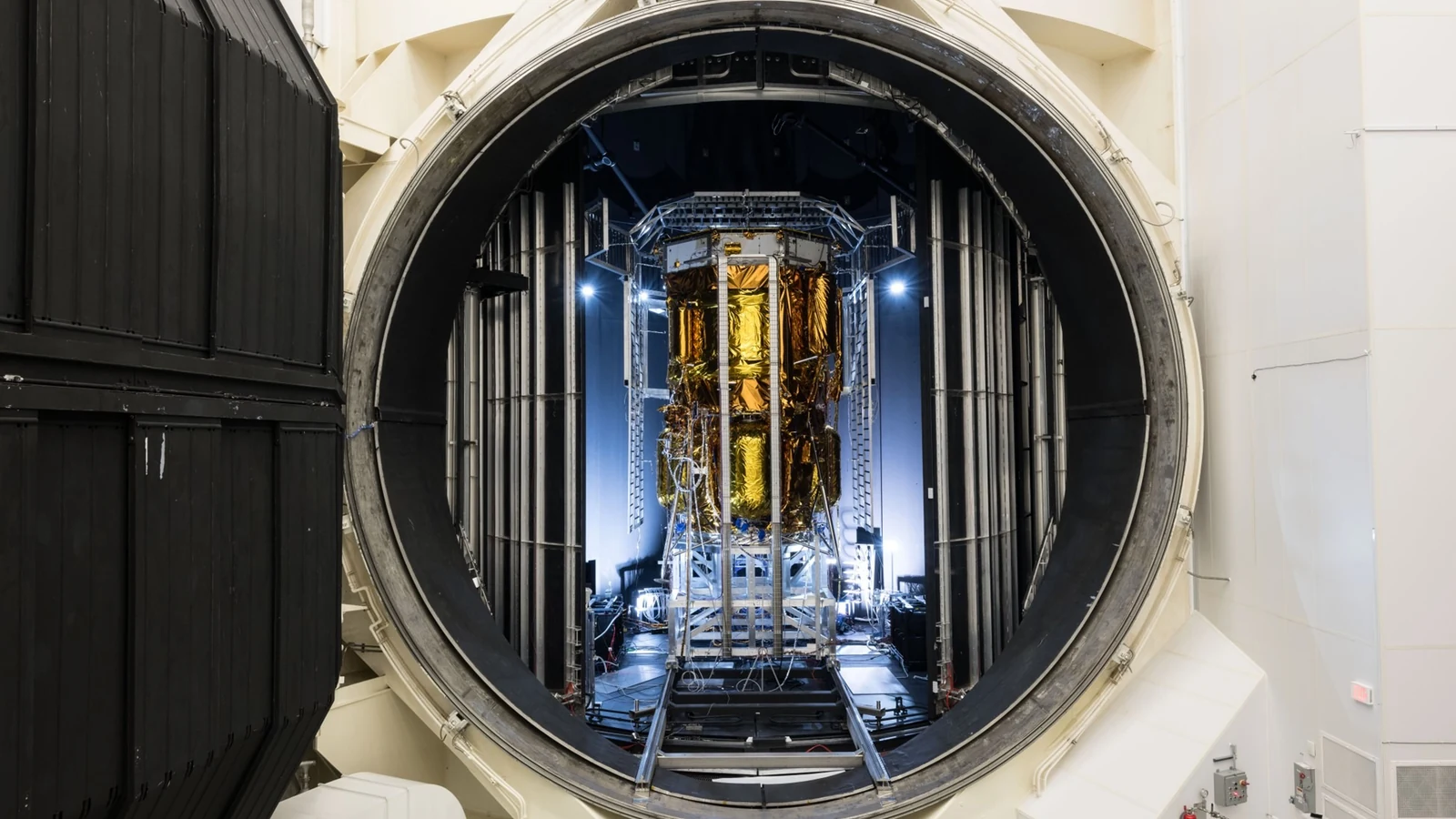
Blue Origin’s uncrewed Blue Moon Mark 1, named Endurance, completed an environmental campaign in NASA Johnson’s Thermal Vacuum Chamber A. The chamber recreated vacuum and extreme temperatures so engineers could evaluate structural and thermal performance before launch.
NASA says the lander’s structure, propulsion elements and avionics are fully assembled. It has completed communications checkouts with the Tracking and Data Relay Satellite System and Deep Space Network. The next major test NASA identified is loading cryogenic propellants.
Endurance is intended to demonstrate precision landing, cryogenic propulsion and autonomous guidance, navigation and control. NASA has assigned two payloads: cameras to observe how the engine plume interacts with lunar soil and a laser retroreflector that orbiting spacecraft can use for precise position measurements.
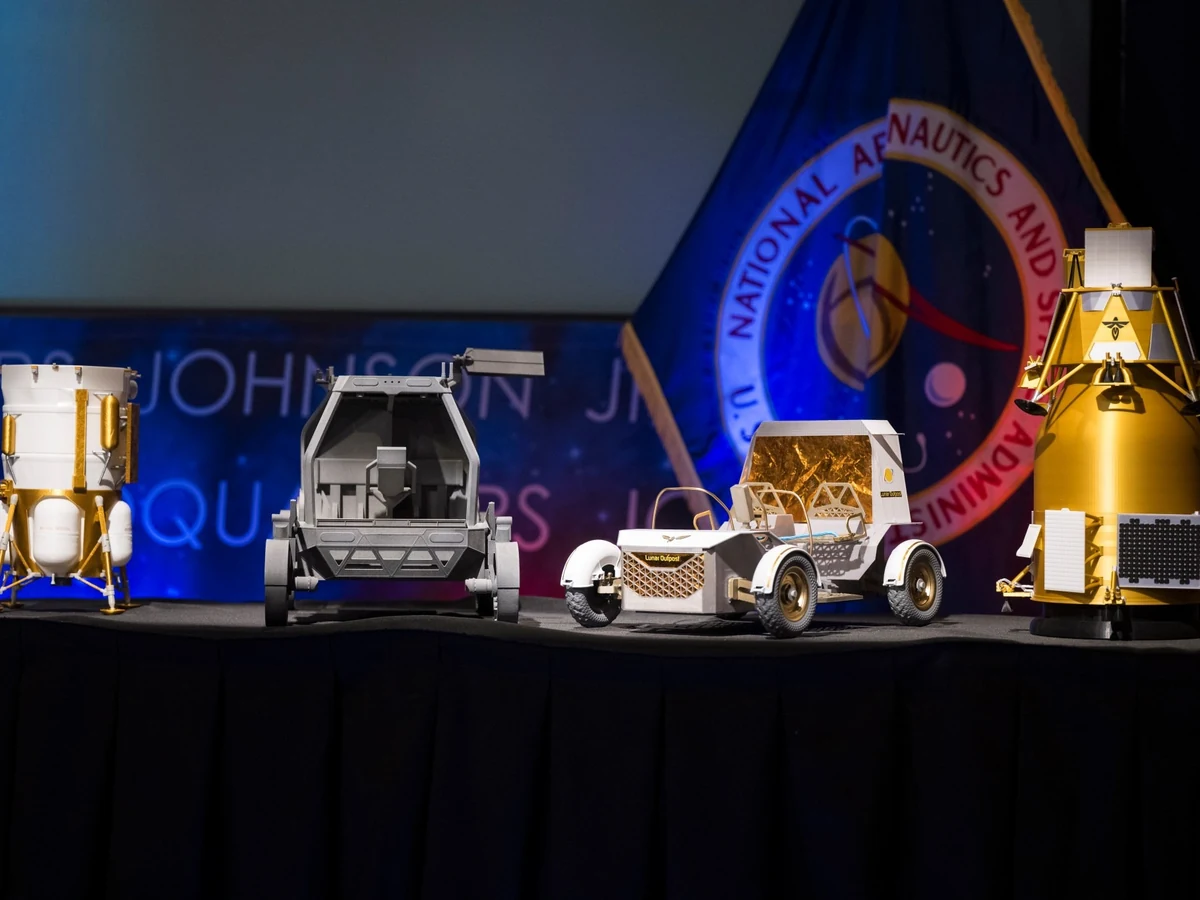
Three other landers, three different configurations
Firefly’s Blue Ghost Mission 2 pairs a lander with the Elytra orbital spacecraft in a stack NASA says is 22 feet tall—nearly three times the height of the company’s first Blue Ghost vehicle. The mission is planned for the Moon’s far side and is slated to carry three NASA payloads. Far-side operations also require a communications architecture that does not depend on a direct line to Earth.
Intuitive Machines’ third Nova-C lander, named Trinity, is being assembled alongside Altus-1, the company’s first lunar data-relay satellite. NASA says long-duration thermal-vacuum work on descent sensors is complete; engine integration and hot-fire testing remain. The planned manifest includes three payloads on Altus-1 and, on the surface, five NASA payloads, six commercial payloads and one civil payload.
Voyager’s Griffin-1 is undergoing environmental testing at NASA’s Jet Propulsion Laboratory. NASA says the vehicle recently completed mass-properties testing, data needed for guidance, navigation, control and flight-dynamics models. The lander is planned to carry Astrolab’s FLIP rover with five NASA payloads, then return to Pittsburgh for final assembly after the JPL campaign.
The surface systems are part of the test
NASA is also working with Northrop Grumman on three surface technology demonstrations derived from power and avionics hardware developed for Gateway’s HALO module. The demonstrations are meant to test survival through long cold periods, shared surface power and supporting avionics.
Those details matter because landing is only the first engineering problem. A durable lunar logistics system has to move payloads, communicate around terrain and the far side, distribute power and keep hardware alive through darkness and temperature swings.
NASA’s schedule remains a planning framework. Launch licensing, integration, test results, launch-provider readiness and lunar conditions can all move individual missions. The concrete news in the Aug. 4 update is the hardware status: one large cargo lander has completed thermal-vacuum testing, another is stacked with an orbiter, a third is in assembly and a fourth is in environmental tests.