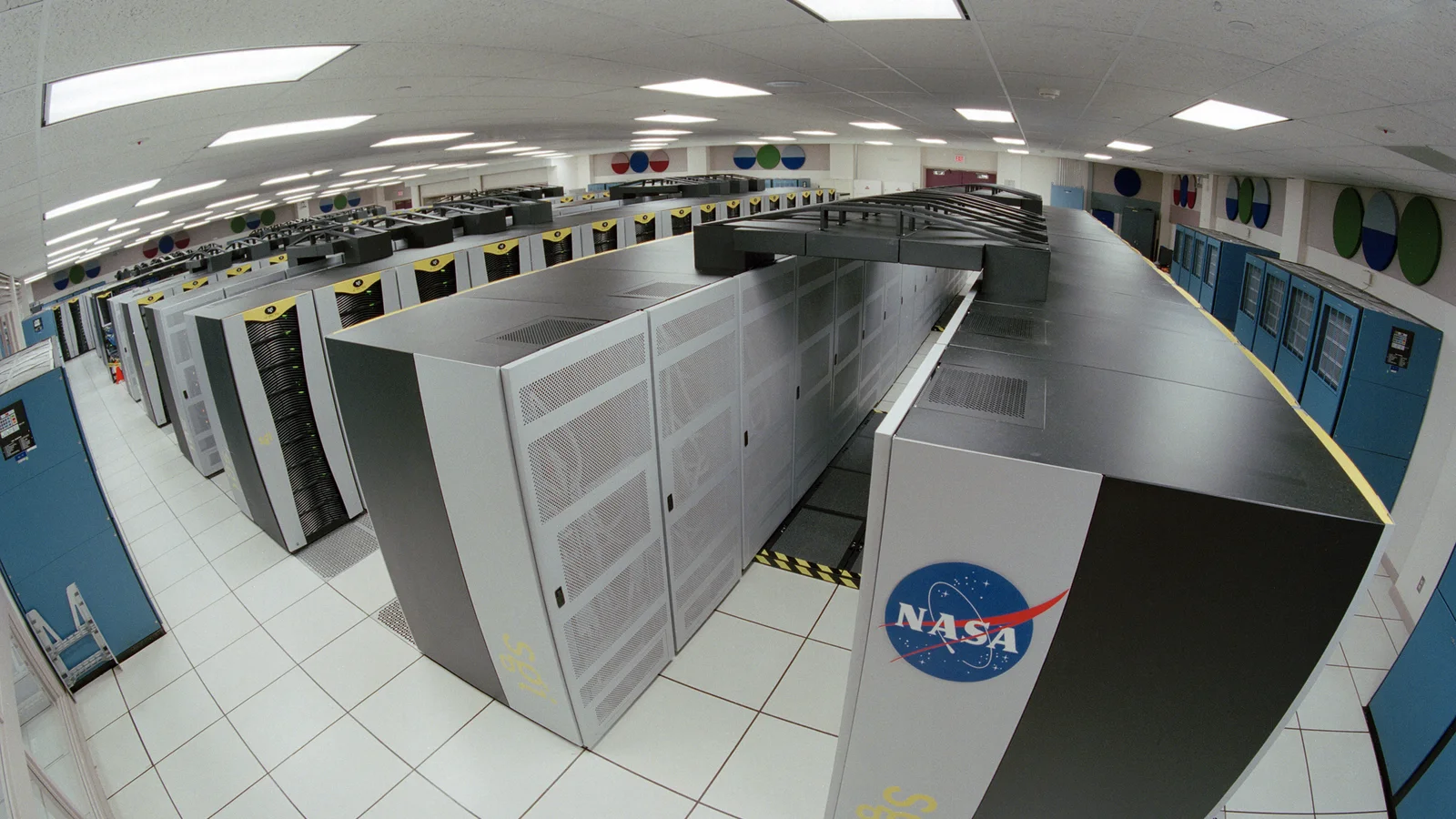
NASA has joined the federal Genesis Mission, committing its engineering expertise and more than 150 petabytes of scientific and mission data to an effort aimed at accelerating discovery with artificial intelligence.
The White House Office of Science and Technology Policy leads the initiative, which NASA says now involves more than 15 federal agencies. The mission was established by executive order in November 2025.
NASA identified two broad priorities: developing advanced systems for increasingly complex space operations, and finding new scientific value in data collected across decades of telescopes, satellites, orbiters, landers and aeronautics research.
On the engineering side, the agency says AI tools could shorten development cycles for systems that must coordinate spacecraft, communications, logistics and surface operations. NASA plans to combine its mission knowledge with Department of Energy computing and AI capabilities.
On the science side, the central problem is scale. More than 150 petabytes cannot be examined observation by observation with traditional manual methods. Models may help researchers connect missions, instruments, simulations and fields, identify patterns and improve predictions.
The announcement describes a research and coordination program, not a claim that an AI system has already made a specific discovery or taken operational control of a mission. NASA did not publish a project-by-project budget, procurement schedule or benchmark in the release.
That distinction matters for accountability. The value of the effort will depend on documented datasets, reproducible evaluation, model limitations and expert review—not merely on the size of the archive or the use of the AI label.
NASA's archive also contains heterogeneous records created for different missions and instruments. Before systems can connect them reliably, teams must address metadata, calibration, access controls, uncertainty and the risk that a model mistakes an artifact for a scientific signal.
The immediate development is institutional: NASA has formally placed its data and technical capacity inside the Genesis Mission. Measurable outcomes will come later through named tools, published evaluations and discoveries that independent researchers can inspect.