NASA plans to send two identical small spacecraft toward the Moon in 2027 to test autonomous navigation, close-proximity operations and communications that future lunar missions may need without constant direction from Earth.
The mission, called CAPSTONE 02, is a paired-spacecraft successor in name and software lineage to the original Cislunar Autonomous Positioning System Technology Operations and Navigation Experiment.
NASA selected Colorado-based Advanced Space to develop and operate the demonstration. The agency described the launch year as a target, meaning schedule, integration and launch-provider milestones still stand between the announcement and flight.
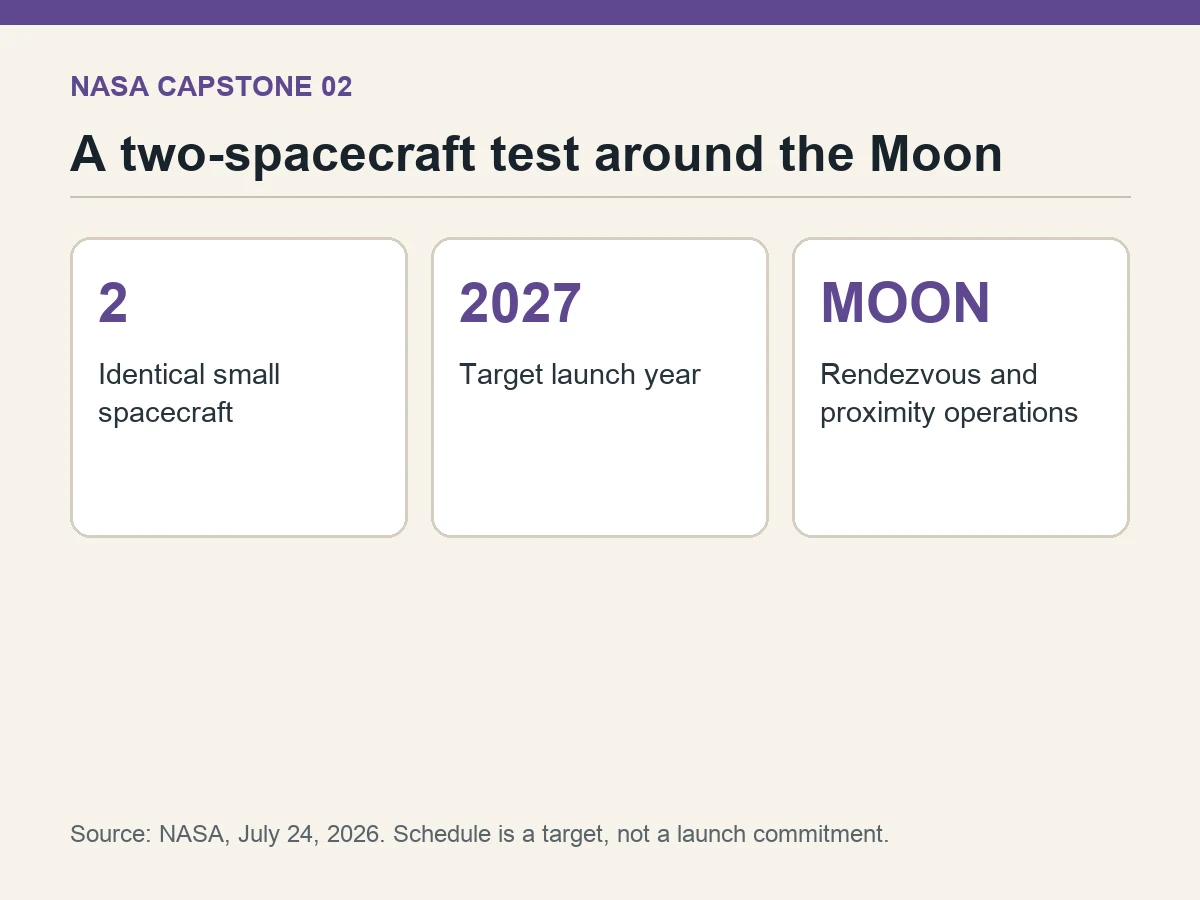
Once in cislunar space, the spacecraft are designed to rendezvous and operate near one another. Relative navigation—knowing where one vehicle is with respect to the other—can support formation flying, inspection, distributed sensing and future logistics.
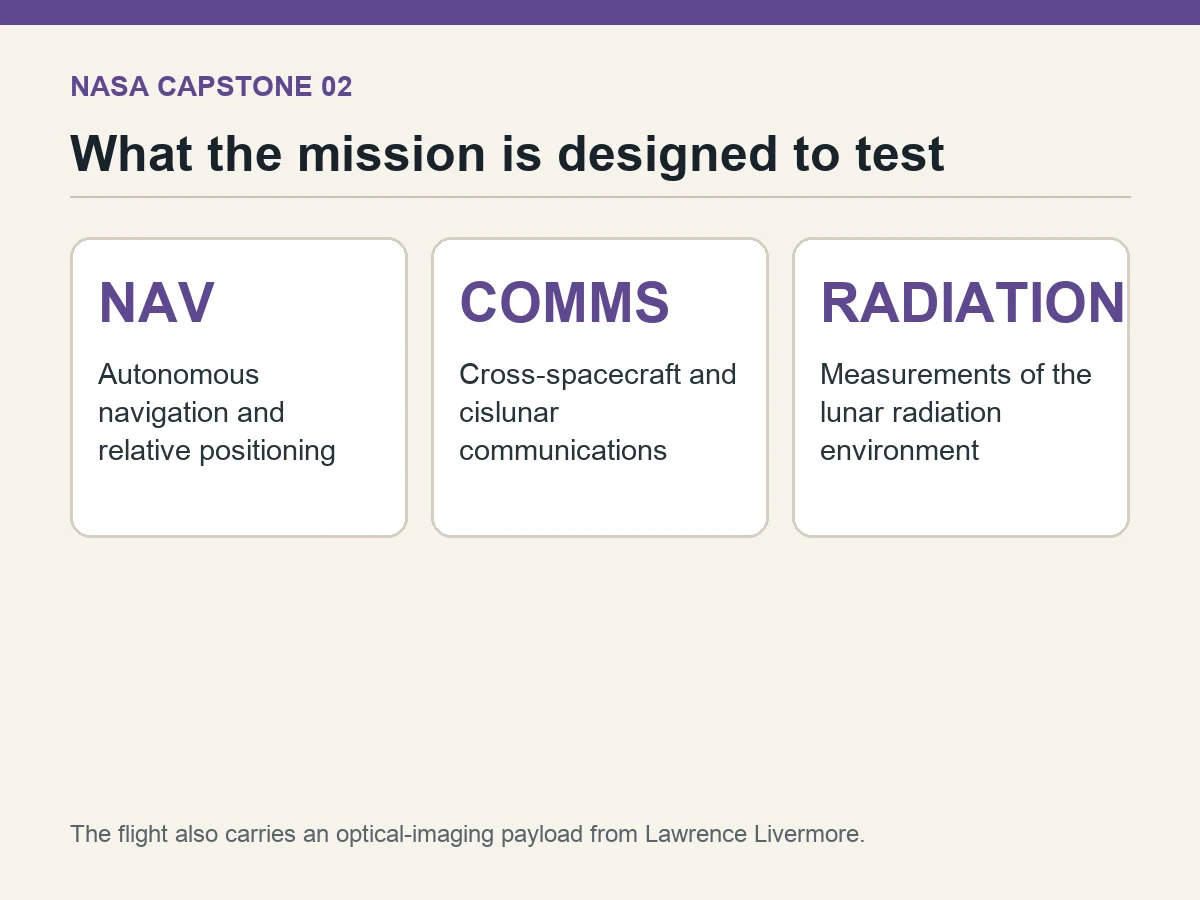
The vehicles will test autonomous navigation and cross-spacecraft communications while gathering information about the lunar radiation environment. NASA also plans cislunar communications demonstrations intended to reduce dependence on continuous ground contact.
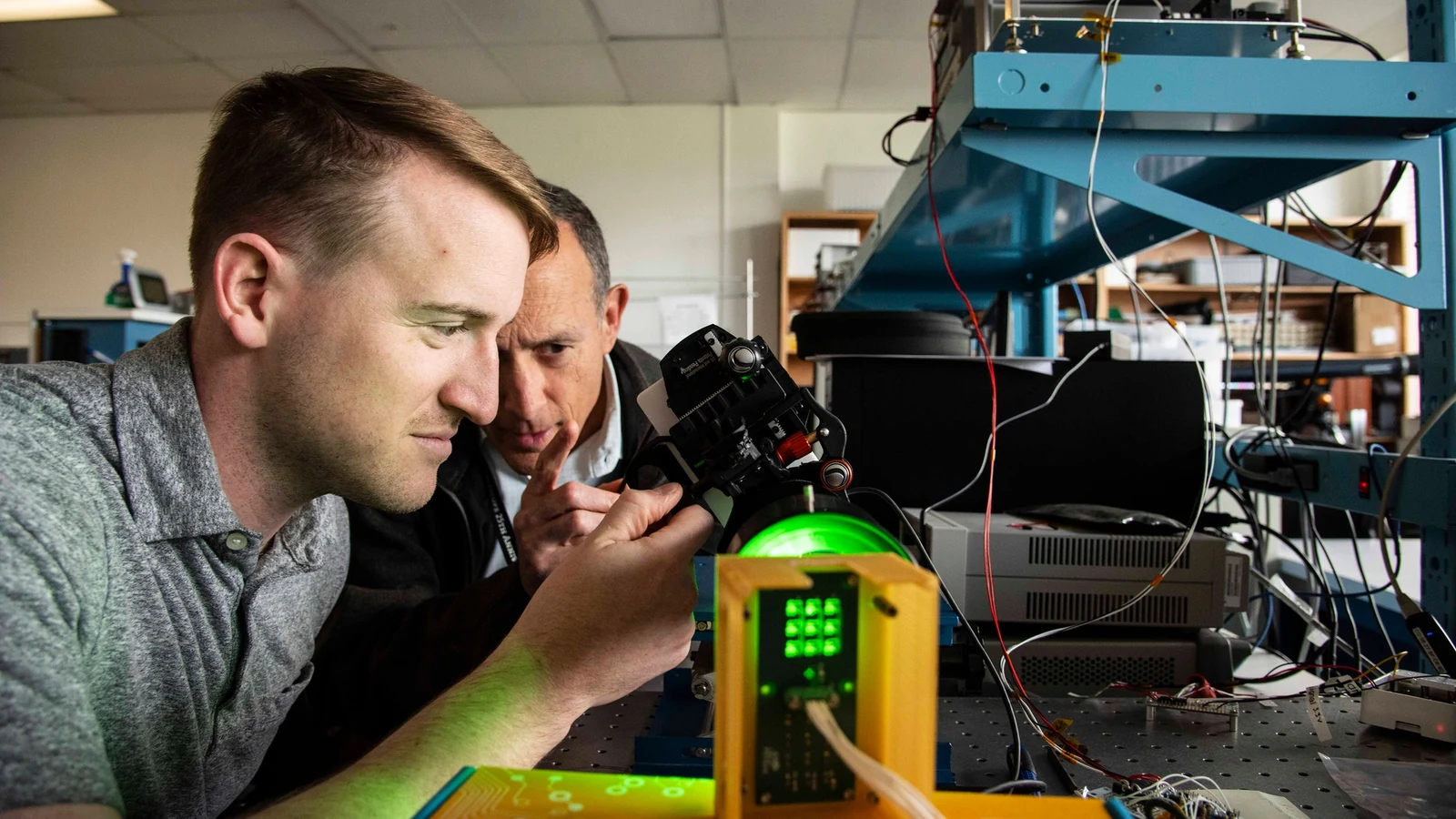
An optical-imaging payload from Lawrence Livermore National Laboratory will add another sensing objective. The mission will also reuse navigation software developed for the first CAPSTONE spacecraft, carrying operational experience into a more complex two-vehicle architecture.
CAPSTONE 02 is not a crewed mission and does not itself deliver a lunar base. Its value is architectural: prove that small spacecraft can coordinate, locate one another and exchange data in an environment where delays and limited ground coverage make autonomy useful.
NASA said human-spaceflight programs are funding the mission with support from the agency’s technology directorate. That pairing connects a relatively small demonstration to larger Moon-to-Mars planning without claiming the test is the only path to those goals.
Success will be judged after flight, not at contract announcement. For now, CAPSTONE 02 defines a practical 2027 test: two matched spacecraft, one lunar operating environment and a set of navigation and communications tasks designed to make future missions less dependent on Earth.