The Merit Systems Protection Board has revised its jurisdiction list to remove regulatory references for most new probationary-termination, suitability and reduction-in-force appeals beginning Sept. 2.
The final rule follows Office of Personnel Management rules that rescinded the regulatory bases for those MSPB appeals and directed the affected appeal paths to OPM. The MSPB says its own revision reflects those decisions rather than independently creating the shift.
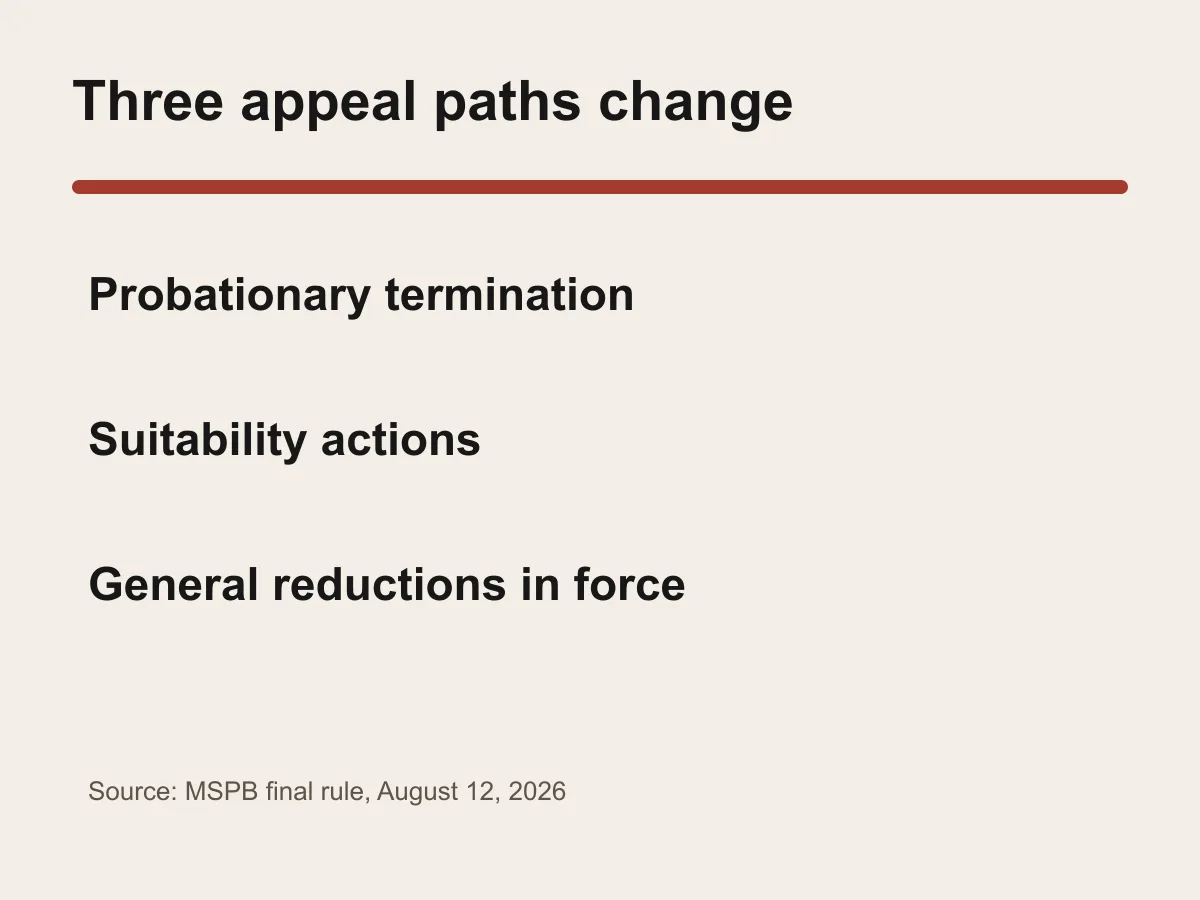
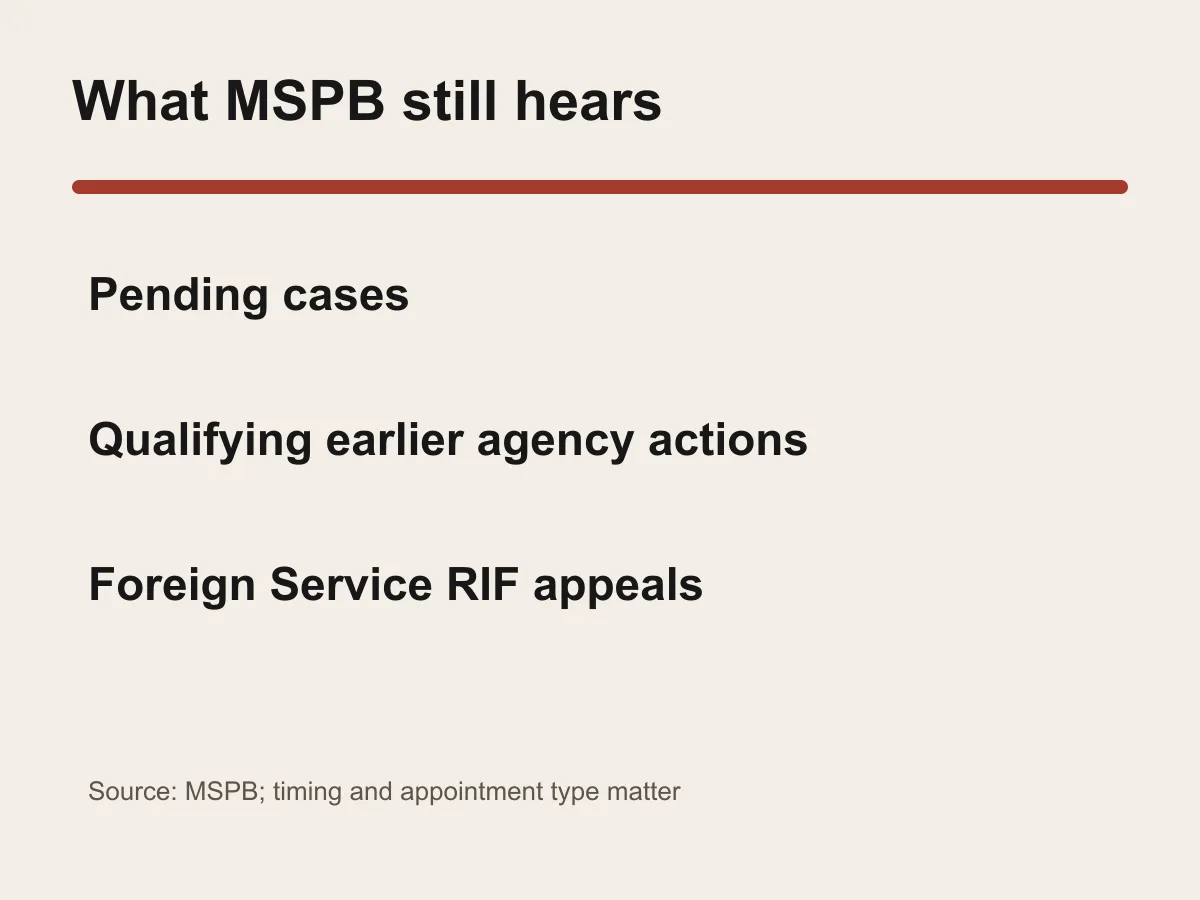
Timing determines the forum. The board will continue adjudicating probationary-termination and suitability appeals already pending on Sept. 2, along with qualifying matters tied to agency actions taken before the OPM rules become effective.
For reductions in force, MSPB says an appeal may remain in its process when the agency issued the employee's specific RIF notice before Sept. 2. A later filing date alone does not necessarily move an earlier action out of MSPB.
The rule also keeps the board's separate statutory jurisdiction over RIF appeals by career or career-candidate Foreign Service appointees under 22 U.S.C. 4010a.
Suitability actions named in the record include cancellation of eligibility, removal, cancellation of reinstatement eligibility and debarment. The rule does not say every other kind of personnel dispute is barred from MSPB review.
MSPB issued the amendment without prior notice and comment, saying it lacked discretion because OPM had rescinded the underlying regulatory jurisdiction. The board classified the action as significant but below the $100 million annual-effects threshold.
Federal workers facing an individual deadline should use the operative agency notice and current rules for their case. This report describes the jurisdiction change and is not individualized legal advice.