
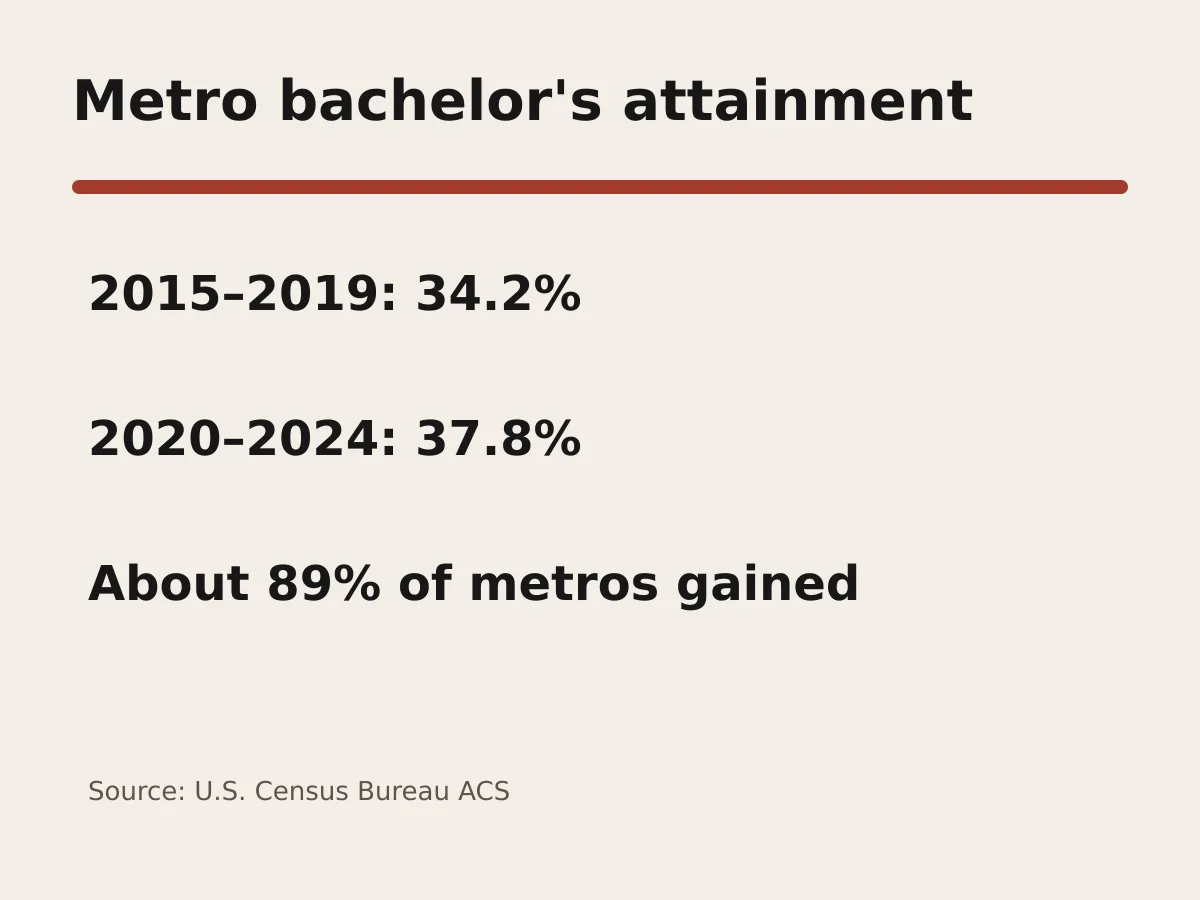
The share of adults age 25 and older with a bachelor's degree or higher rose to 37.8% across U.S. metropolitan areas in the 2020–2024 period, Census Bureau estimates show.
That was up from 34.2% in the 2015–2019 American Community Survey five-year estimates, a 3.6-percentage-point increase. The bureau said about 89% of metro areas recorded a statistically significant gain.
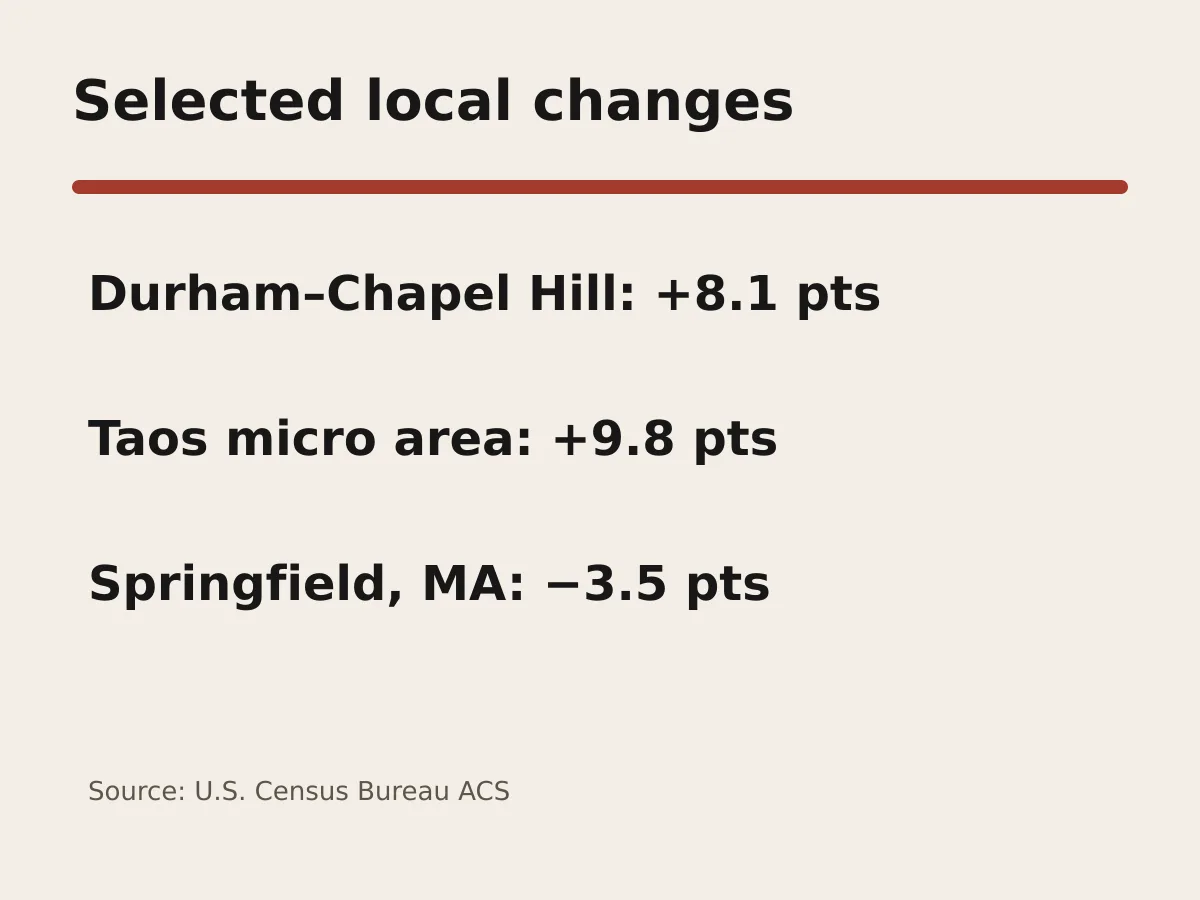
Durham–Chapel Hill, North Carolina, posted one of the largest metro increases, from 45.3% to 53.4%. The comparison covers adults across the full metro area, not only the two named cities.
Springfield, Massachusetts, was the only metro area the bureau identified with a significant decline, from 32.8% to 29.3%.
Among micropolitan areas, which center on smaller urban areas, 50.8% recorded an increase. Taos, New Mexico, rose 9.8 points, from 28.7% to 38.5%.
Metro and micro boundaries include surrounding counties linked to the urban core through commuting. They should not be read as city-limit statistics.
The ACS is a sample survey. The bureau said the highlighted comparisons were tested at the 90% confidence level; individual estimates still have margins of error.
Five-year estimates pool responses across longer periods to support detailed local statistics. They are not a year-by-year measure of how quickly degrees were earned.
The broad gain establishes a change in educational attainment, not its cause. Migration, aging, local institutions and degree completion can all affect a place's measured share.