Mauritius' economic growth is projected to slow to 2.8% in 2026 as higher commodity costs and weaker tourism weigh on the island economy, the International Monetary Fund said.
Real GDP grew 3.2% in 2025, supported by tourism and financial services while construction contracted. The IMF expects medium-term growth to recover gradually to 3.2% as investment offsets demographic pressure.
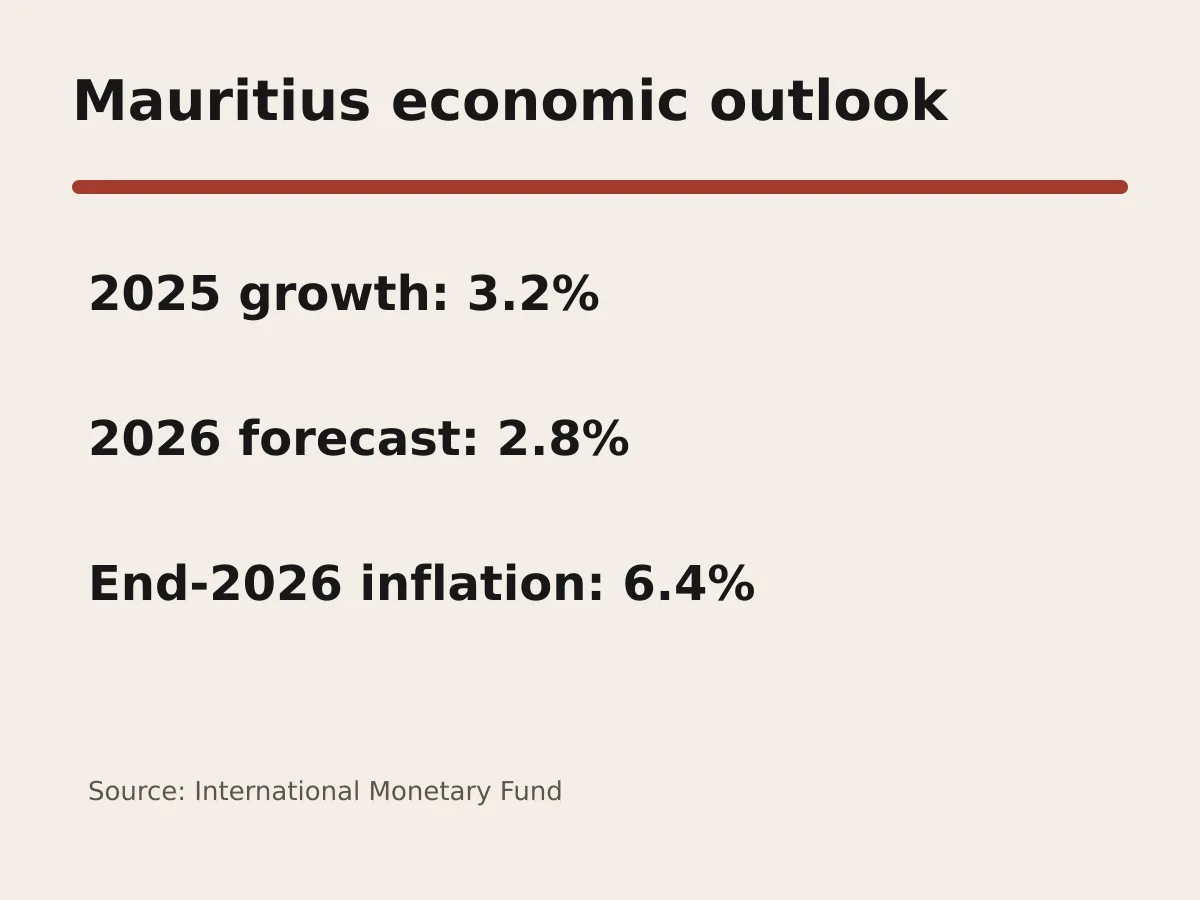
Inflation eased early in 2026 before rising to 3.6% in April. The fund projects year-over-year inflation near 6.4% by the end of 2026, then a return toward the midpoint of the central bank's 2%–5% target range.
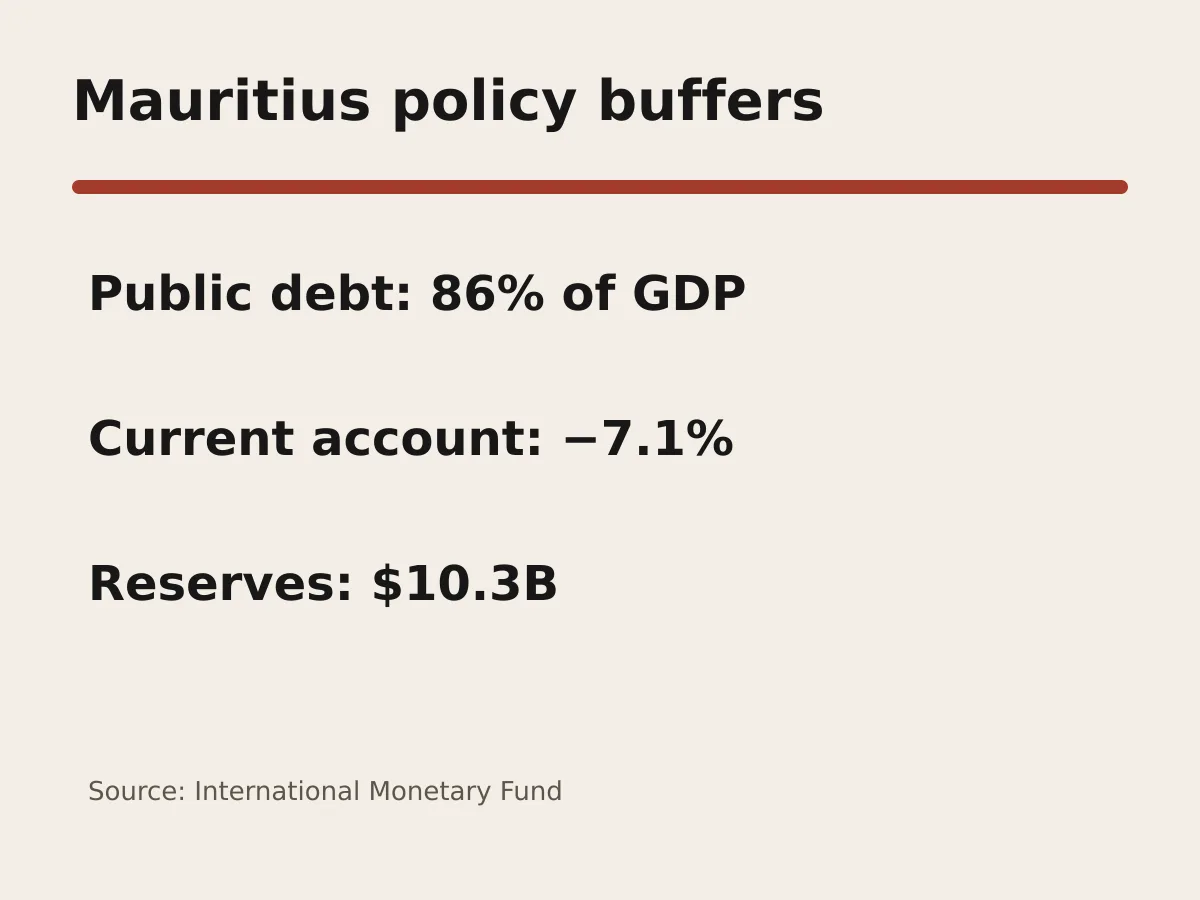
Public debt reached 86% of GDP at the end of June 2025 after higher current spending widened the fiscal stance. The IMF estimated debt would remain elevated at the end of June 2026.
The current-account deficit widened to 7.1% of GDP in 2025 and is projected at 7.4% in 2026. Gross international reserves rose to $10.3 billion and remained within the fund's adequacy range.
The IMF urged fiscal reforms, a stronger monetary-policy framework and closer monitoring of financial risks, while protecting priority social and investment spending.
It also highlighted productivity, private investment and climate resilience as longer-term needs for an economy exposed to tourism cycles and demographic headwinds.
Article IV projections are staff estimates built on assumptions about external demand, prices and policy. They are not guarantees, and the outlook was described as tilted to the downside.
The report's central tension is resilience without much buffer: services continued to expand, but high debt and a wider external deficit leave less room to absorb new shocks.