
Italy's economy is projected to grow 0.5% in both 2026 and 2027, according to the International Monetary Fund's annual review.
Real GDP also grew 0.5% in 2025. The IMF attributes part of that expansion to continued investment under Italy's National Recovery and Resilience Plan and expects that investment to support activity in the near term.
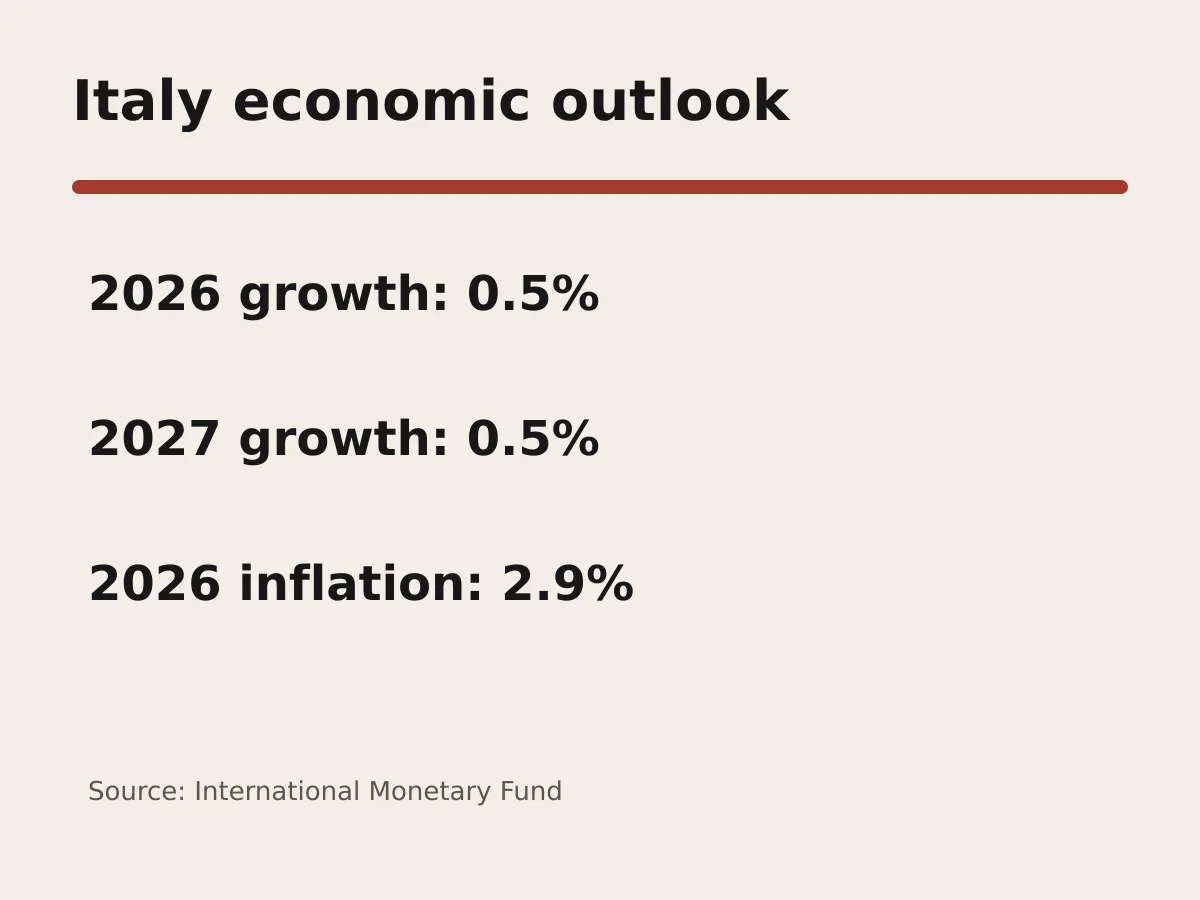
Inflation is projected to rise to 2.9% in 2026 and remain above 2% in 2027. The Fund links the increase to higher global energy prices and Italy's dependence on imported fossil fuels.
The fiscal position has improved as the primary surplus strengthened, but the IMF says public debt remains too high and vulnerable to shifts in interest rates and growth. That limits room to absorb another shock.
Employment has remained near historic highs, while labor-force participation still trails peer countries, particularly among women and young people. The IMF treats higher participation as part of the growth agenda rather than evidence that current employment gains are broad enough.
The accompanying financial-sector assessment found Italy's system broadly sound, with robust oversight and banks resilient in severe stress scenarios. That conclusion does not remove exposure to sovereign-market volatility or slower growth.
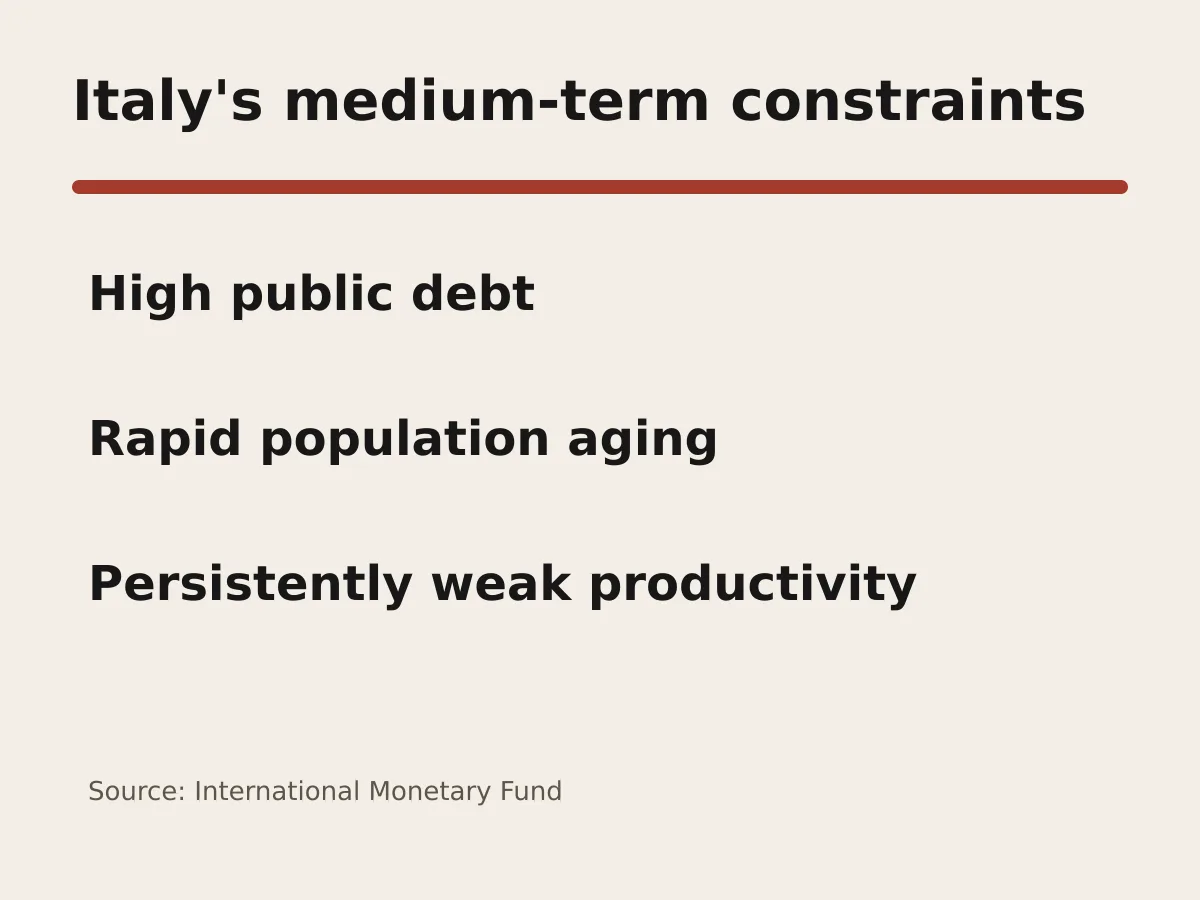
Over the medium term, rapid population aging and persistently weak productivity are expected to keep growth subdued. The Fund points to public-investment execution, digitalization and technology adoption as possible sources of stronger productivity.
Risks are tilted downward. Higher energy costs, geopolitical escalation, tighter financial conditions or delays in investment could weaken output; faster reform and productivity gains could improve it.
The 0.5% and 2.9% figures are forecasts conditioned on current policy and external assumptions. Article IV advice is an external assessment and does not bind Italy's elected institutions.