
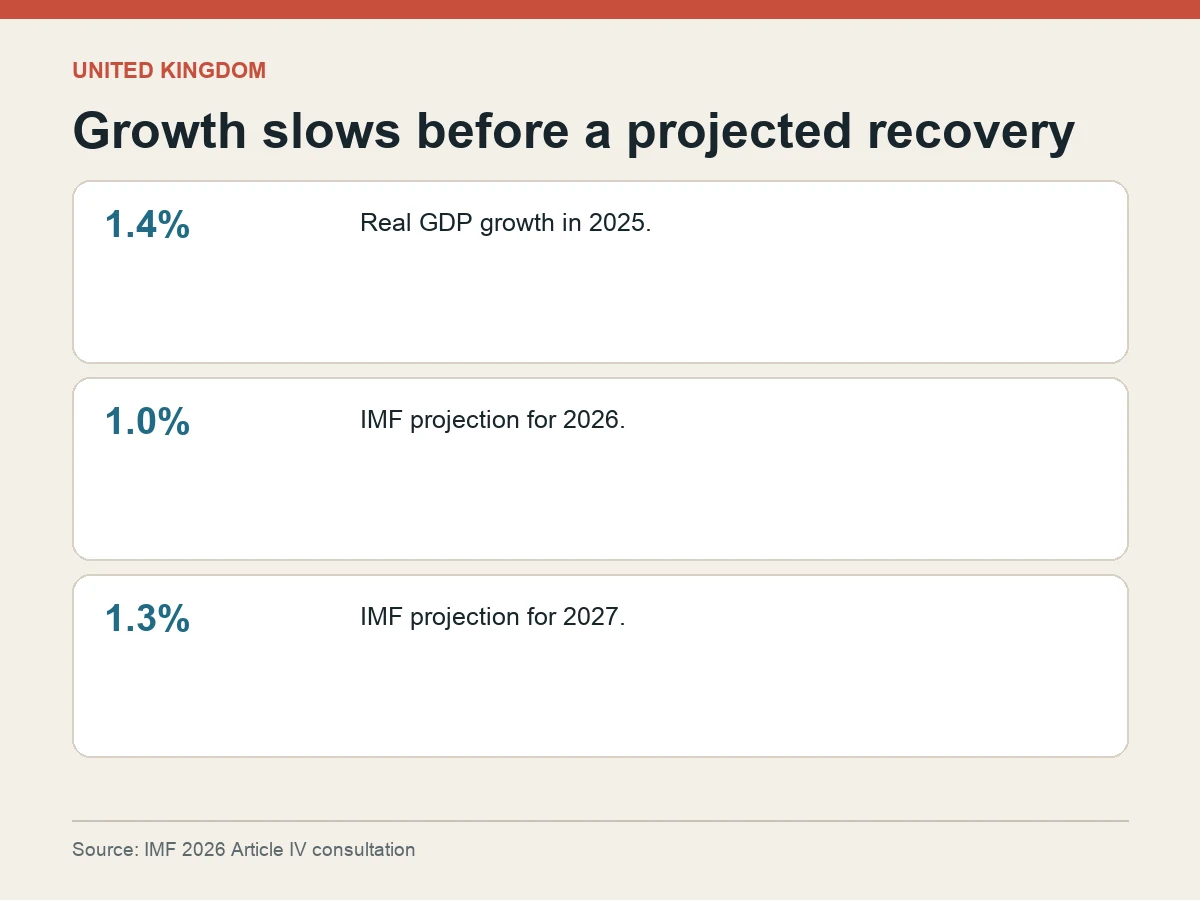
United Kingdom economic growth is projected to slow to 1 percent in 2026 as higher energy prices erode household purchasing power and tighter financial conditions weigh on demand, the International Monetary Fund said in its annual review.
The economy grew 1.4 percent in 2025, supported by recovering private consumption and investment. The IMF expects only a gradual rebound after this year, with growth at 1.3 percent in 2027 and 1.7 percent in 2028 before settling nearer 1.4 percent later in the forecast.
The near-term reversal centers on energy. The IMF said fallout from war in the Middle East pushed prices higher just as the economy had been gaining momentum. That changes both the inflation path and the amount of real income households can spend elsewhere.
Headline inflation is projected to peak above 3.5 percent toward the end of 2026, then decline to the Bank of England’s target toward the end of 2027. Core inflation pass-through could be more limited because the labor market is weak, wage growth has slowed and output remains below potential, the Fund said.
Monetary policy had already eased before the shock. The Bank of England brought Bank Rate down to 3.75 percent by February 2026. IMF directors said policy should remain restrictive enough to prevent higher energy costs from becoming embedded in wages and underlying inflation, with decisions taken meeting by meeting.
The labor outlook also softens. The IMF’s selected indicators put unemployment at 5.6 percent in 2026, up from 4.9 percent in 2025, before a gradual decline. That is a forecast based on the Fund’s model and assumptions, not a measured full-year rate.
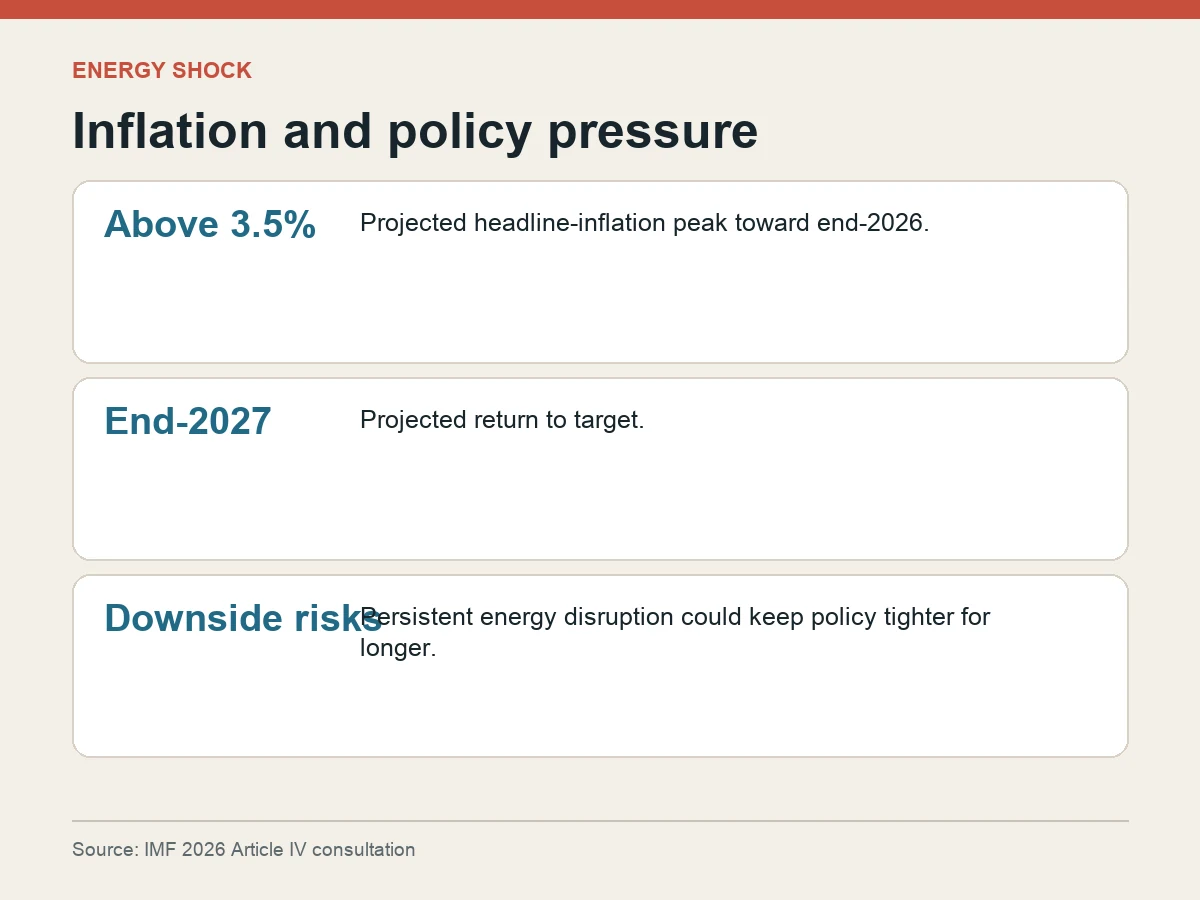
Risks lean downward. A longer energy-supply disruption could force tighter monetary policy, reduce credit availability and slow demand further. Trade tensions, policy uncertainty and tighter global financial conditions are additional threats; faster productivity gains from AI adoption and households spending accumulated savings are potential offsets.
On fiscal policy, IMF directors endorsed the broad consolidation strategy while warning that ageing, defense and the energy transition will increase spending pressure. They said any response to the energy shock should be targeted, temporary and budget-neutral rather than a broad permanent subsidy.
The United Kingdom consented to release the staff report, as Article IV rules require for publication. The resulting document is a conditional outlook rather than a promise: 1 percent growth and the inflation peak depend heavily on how long the energy shock lasts and how firms, workers, lenders and policymakers respond.