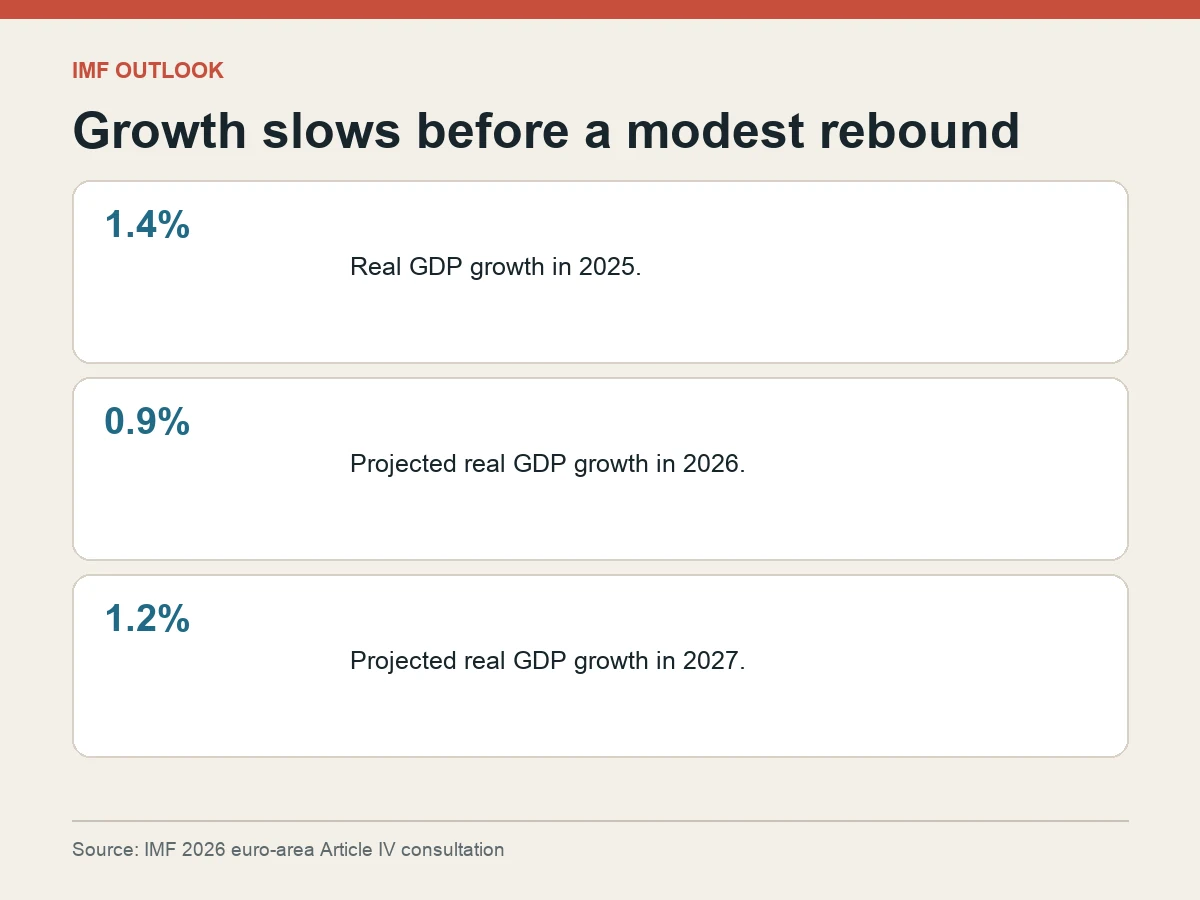
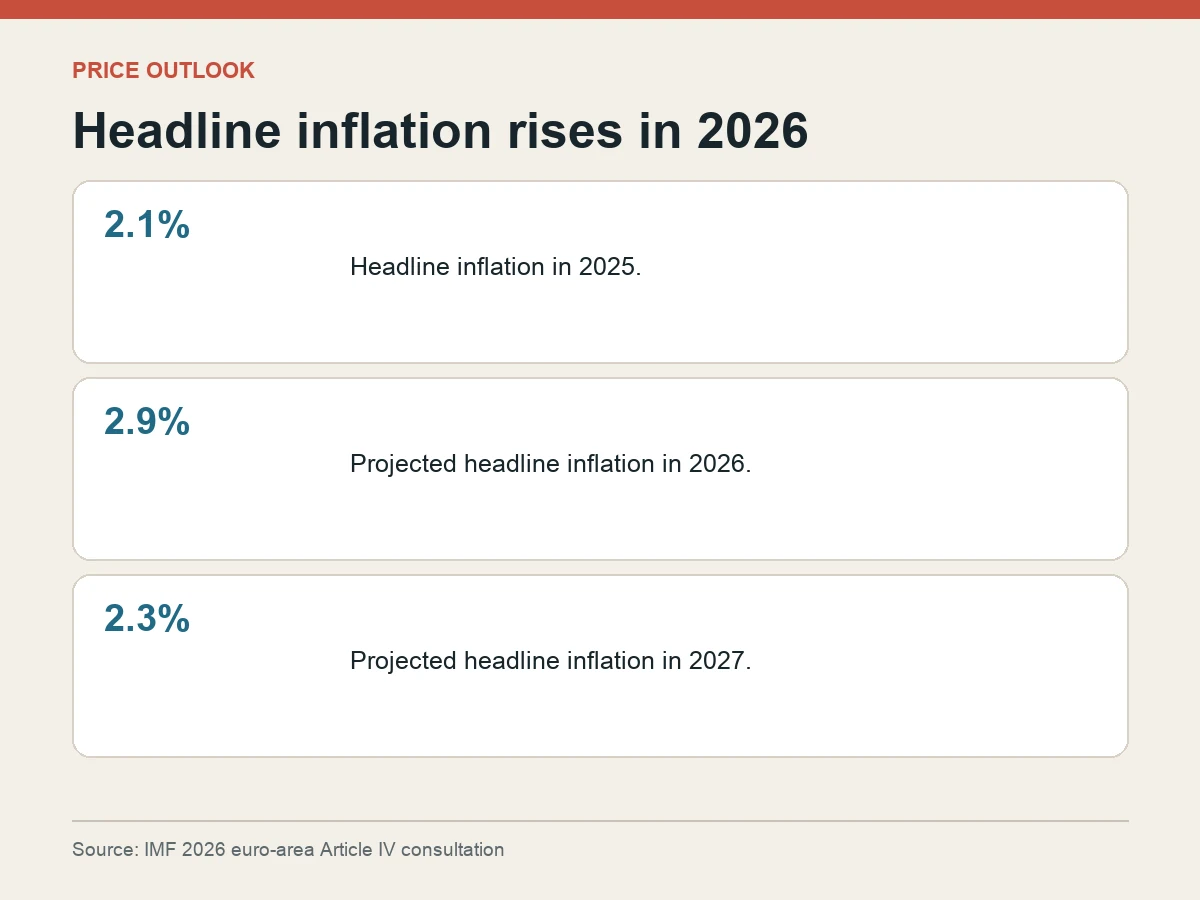
The International Monetary Fund expects euro-area economic growth to slow to 0.9 percent in 2026 while headline inflation rises to 2.9 percent, a difficult combination that leaves policymakers less room to support activity without adding price pressure.
The new outlook follows 1.4 percent real GDP growth and 2.1 percent headline inflation in 2025. For 2027, the fund projects a modest growth rebound to 1.2 percent and inflation easing to 2.3 percent.
The IMF Executive Board completed its annual Article IV consultation with the currency union on July 13 and released its conclusions July 16. The review covers the euro area as a whole rather than rating every member economy on the same path.
Energy is the central uncertainty. The fund said risks are tilted toward weaker growth and higher inflation, meaning another supply disruption could reduce output while simultaneously lifting consumer prices.
That tradeoff is more challenging than an ordinary demand slowdown. Lower interest rates or broad fiscal stimulus can support spending, but they may be less effective when the shock begins with constrained energy supply and can keep inflation elevated.
The fund called for rebuilding fiscal buffers while protecting productive public investment. It also emphasized reforms to capital markets, energy markets and the European single market as ways to raise resilience and medium-term growth.
The 2026 numbers are forecasts, not measurements of a completed year. They depend on assumptions about energy prices, trade conditions, monetary policy, national budgets and the absence of larger disruptions.
Euro-area aggregates also conceal differences. Export exposure, energy mix, fiscal space and domestic demand vary by country, so a 0.9 percent regional rate does not imply that every member will grow at that pace.
The signal from the consultation is nevertheless clear: the IMF sees 2026 as a year of slower activity and renewed price pressure, with only a partial improvement expected in 2027.