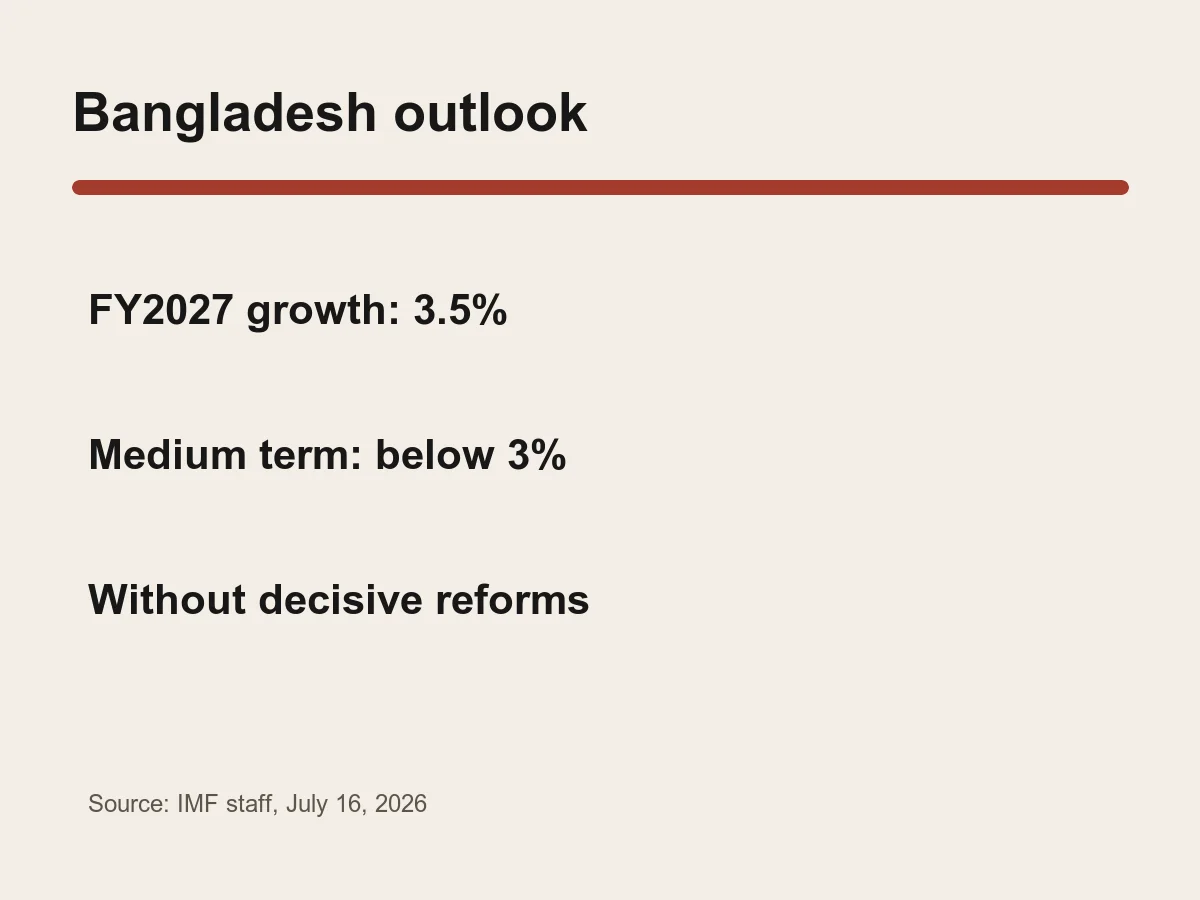
International Monetary Fund staff projects Bangladesh's economic growth will moderate to 3.5% in fiscal 2027 after a July visit prompted by the government's request for a new Fund-supported program.
Staff said growth could weaken further to below 3% over the medium term without decisive reforms to raise revenue, create fiscal space and address weaknesses in the banking sector.
The forecast is conditional, not a guaranteed outcome. Stronger policy implementation, a different external environment or new shocks could move actual growth above or below the stated path.
The IMF team visited Dhaka from July 12 through 16. It described the trip as fact-finding and said discussions about the possible size of a new arrangement and its reform commitments will take place in coming months.
That means no new lending program was approved during the visit. The end-of-mission statement contains preliminary staff views, does not represent an IMF Executive Board decision and will not itself lead to a Board discussion.
Staff identified fiscal, financial-sector and inflation pressures, including higher import and subsidy costs, pressure on external accounts and elevated banking stress. It also noted continued strong remittance growth.
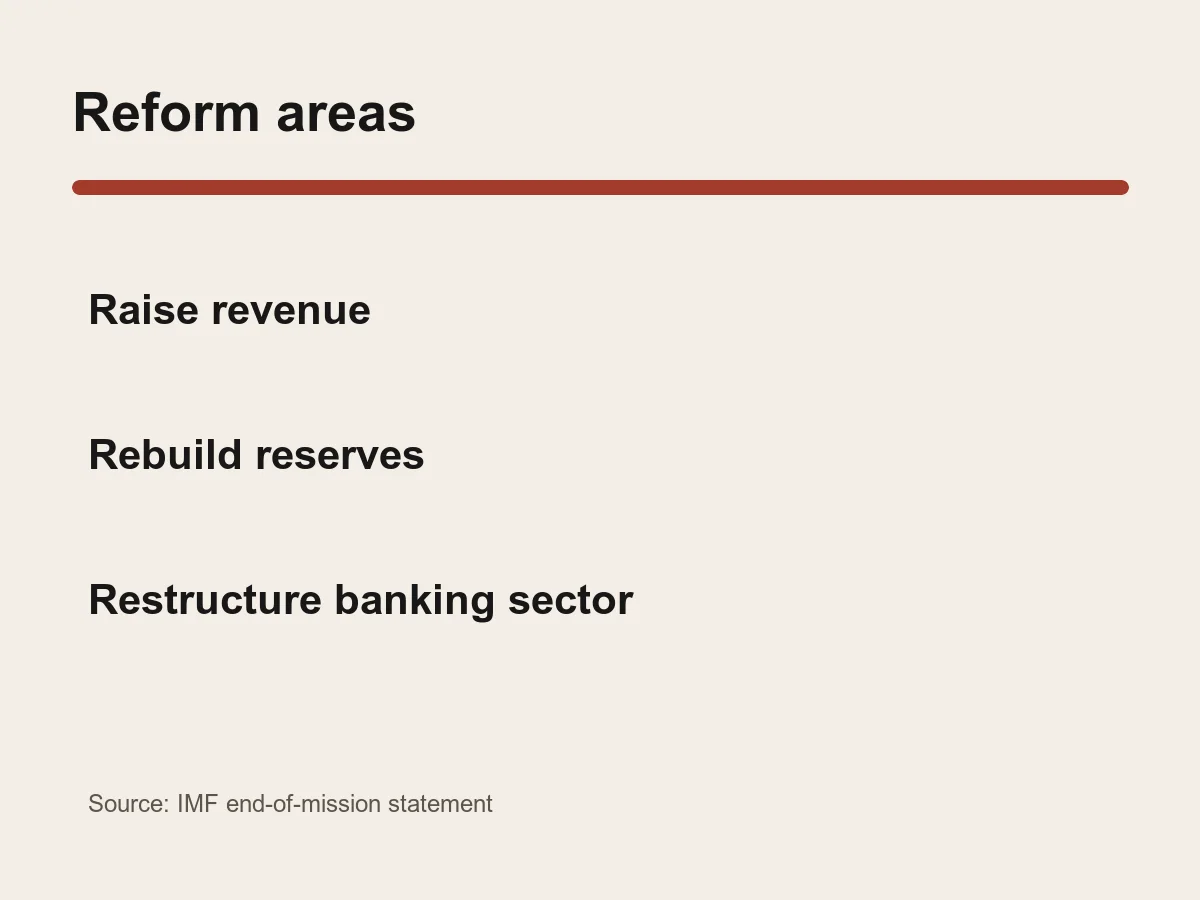
The policy priorities include stronger revenue mobilization, more targeted social support, prudent fiscal and monetary policy, consistent use of the crawling-peg exchange-rate regime and a credible banking-sector restructuring strategy.
Each measure carries distributional and implementation choices that the statement does not resolve. Future program documents would need to specify timelines, safeguards, financing and how vulnerable households are protected.
The next material evidence will be the terms of any staff-level agreement, a published debt and financing analysis, and an Executive Board decision. Until then, the request and staff forecast should not be described as an approved IMF program.