
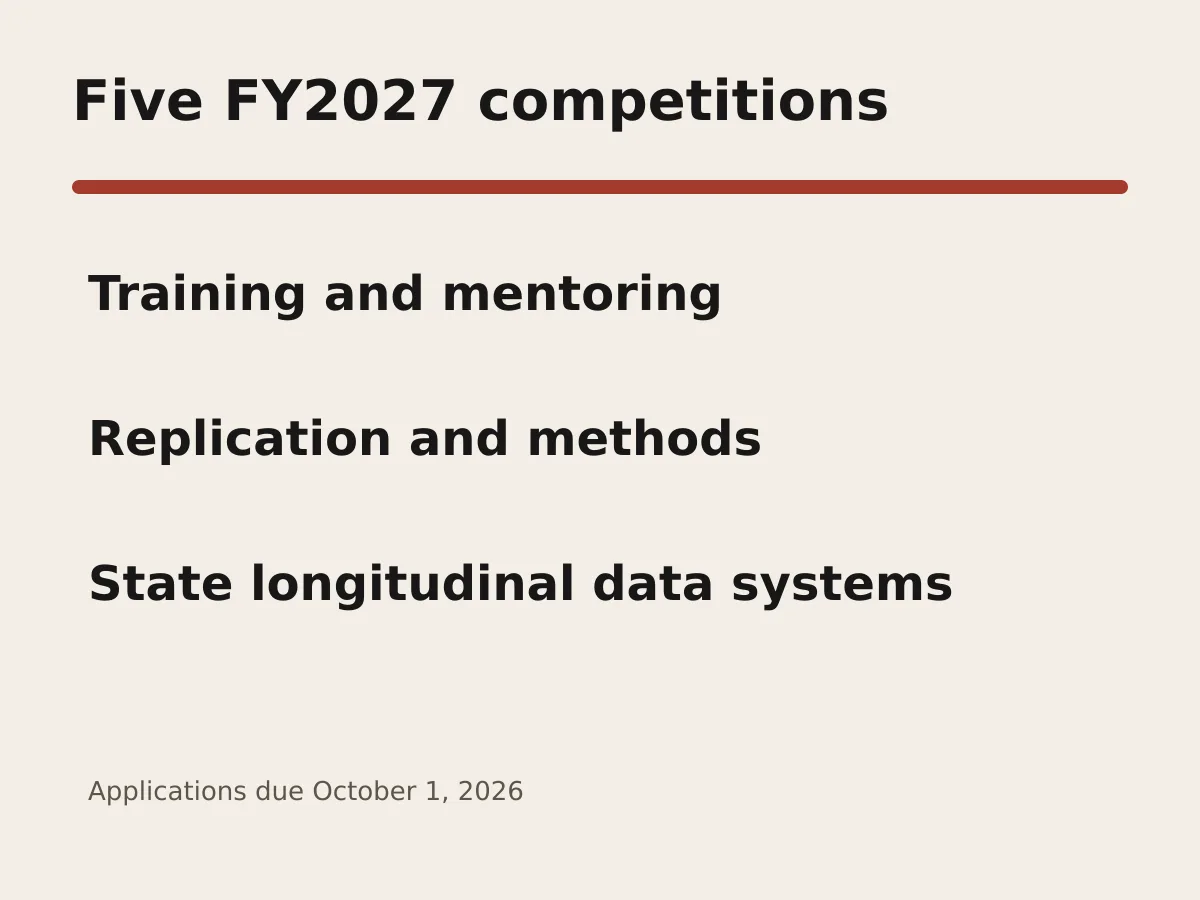
The Institute of Education Sciences has opened five fiscal 2027 grant competitions for research training, methods development, systematic replication and state longitudinal-data systems.
Applications are due through Grants.gov by 11:59:59 p.m. Eastern time on Oct. 1, 2026, according to the Education Department notice published Monday.
The competitions use assistance listing numbers 84.305B, 84.324B, 84.305D, 84.305S and 84.324S. Each has a separate request for applications that controls eligibility, scope, budgets and required materials.
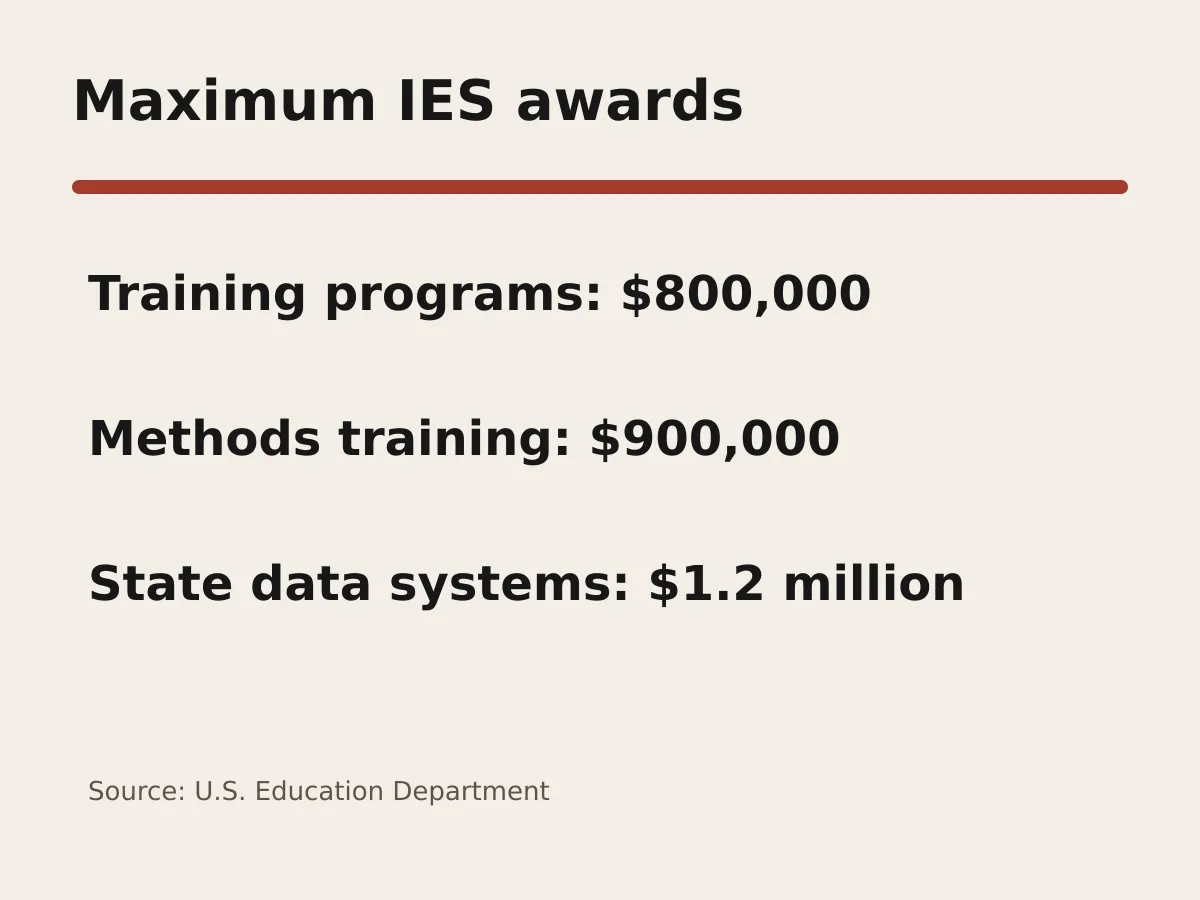
The two research-training listings, 84.305B and 84.324B, have maximum awards of $800,000. They cover training in the education sciences and special education research.
The methods-training listing, 84.305D, has a maximum award of $900,000. The notice identifies early-career mentoring, systematic replication and methods training using existing data resources among the supported areas.
The two state longitudinal-data-system listings, 84.305S and 84.324S, allow maximum awards of $1.2 million. They focus respectively on education policy and special education policy research using state data systems.
Those figures are award ceilings, not money already granted. IES will review applications under the individual competition rules, and the notice does not identify recipients or guarantee that every maximum will be used.
Longitudinal systems can link records across years to study pathways and policy effects, but projects handling student data remain subject to privacy, security and access requirements. The notice does not authorize publication of identifiable student records.
The five-program structure lets IES fund both people and research infrastructure: training researchers, improving methods, testing whether findings replicate and expanding the analytic use of state systems.
Prospective applicants need the program-specific request for applications in addition to the Federal Register notice. Deadline mechanics, eligible institutions and cost rules can differ by listing.