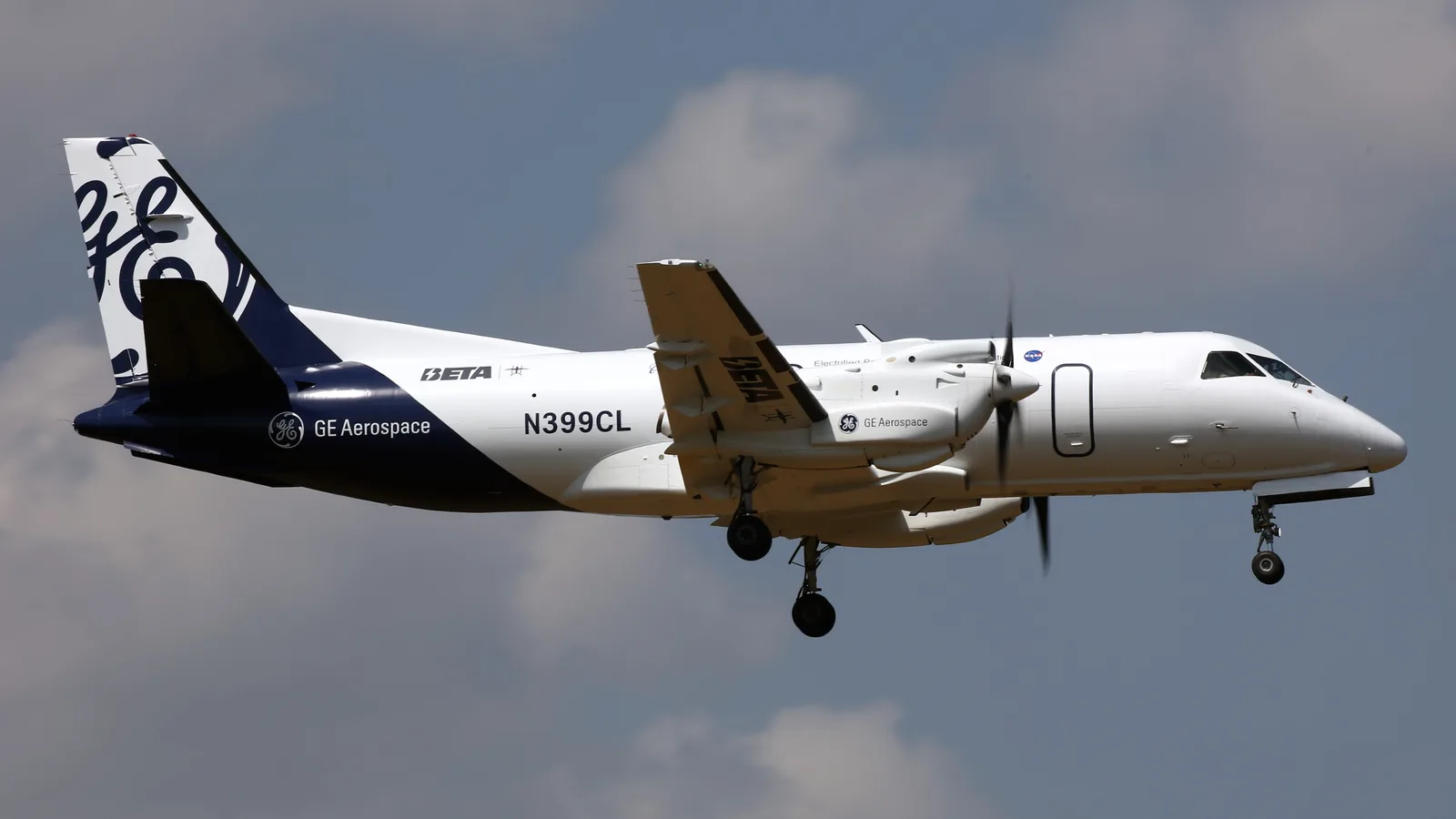
A modified Saab 340B powered in part by a megawatt-class hybrid-electric engine became the first hybrid-electric aircraft to fly above 30,000 feet, according to NASA.
The aircraft made its public debut at the Farnborough International Airshow in the United Kingdom after a series of test flights. GE Aerospace built the propulsion system through work that included NASA facilities, researchers and earlier demonstration awards.
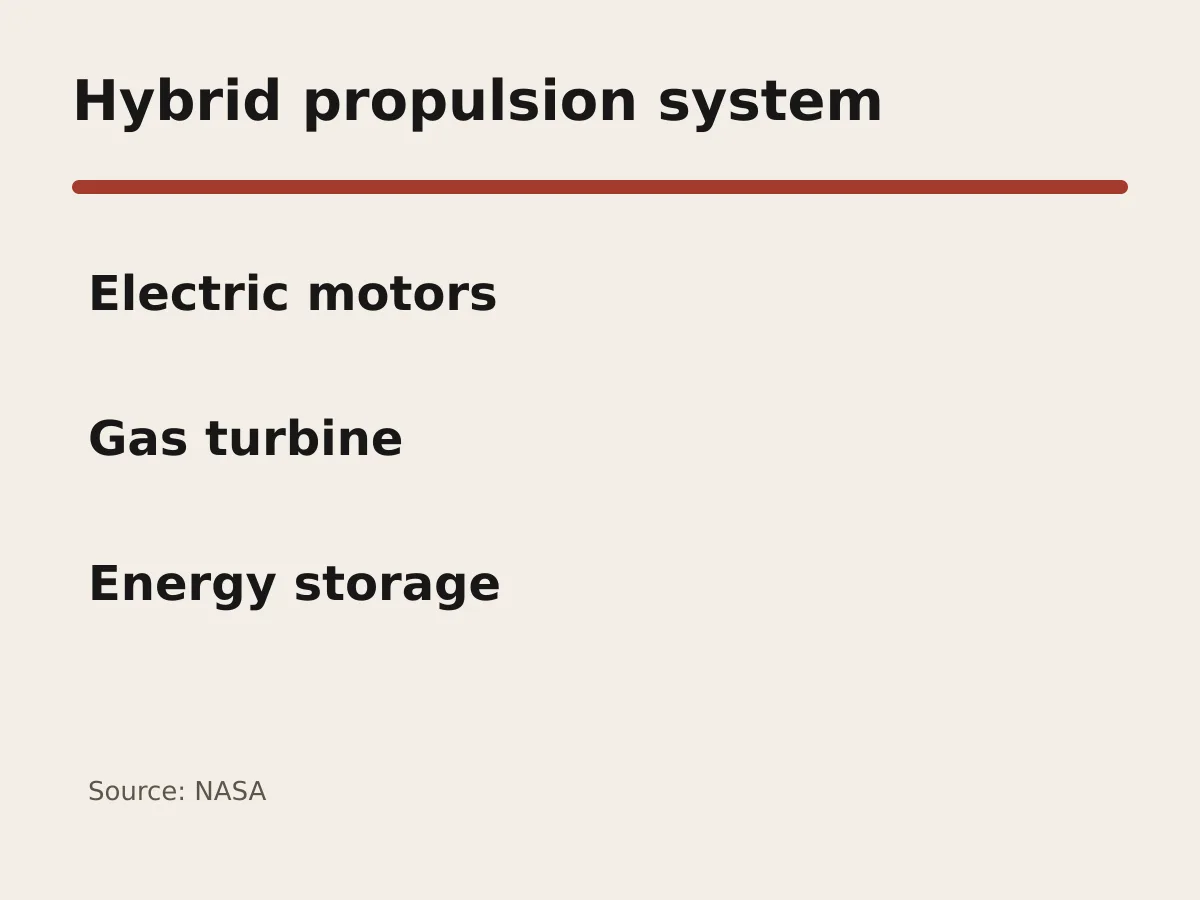
The engine integrates electric motors, a gas turbine and energy-storage capability. NASA says the design is intended to demonstrate enough power for an aircraft around the size of a regional jet while testing whether electrical assistance can reduce fuel use and operating cost.
The altitude matters because regional and single-aisle aircraft operate where thin air and low temperatures complicate heat management, insulation and power electronics. A system that works near the ground has not yet answered those flight-environment questions.
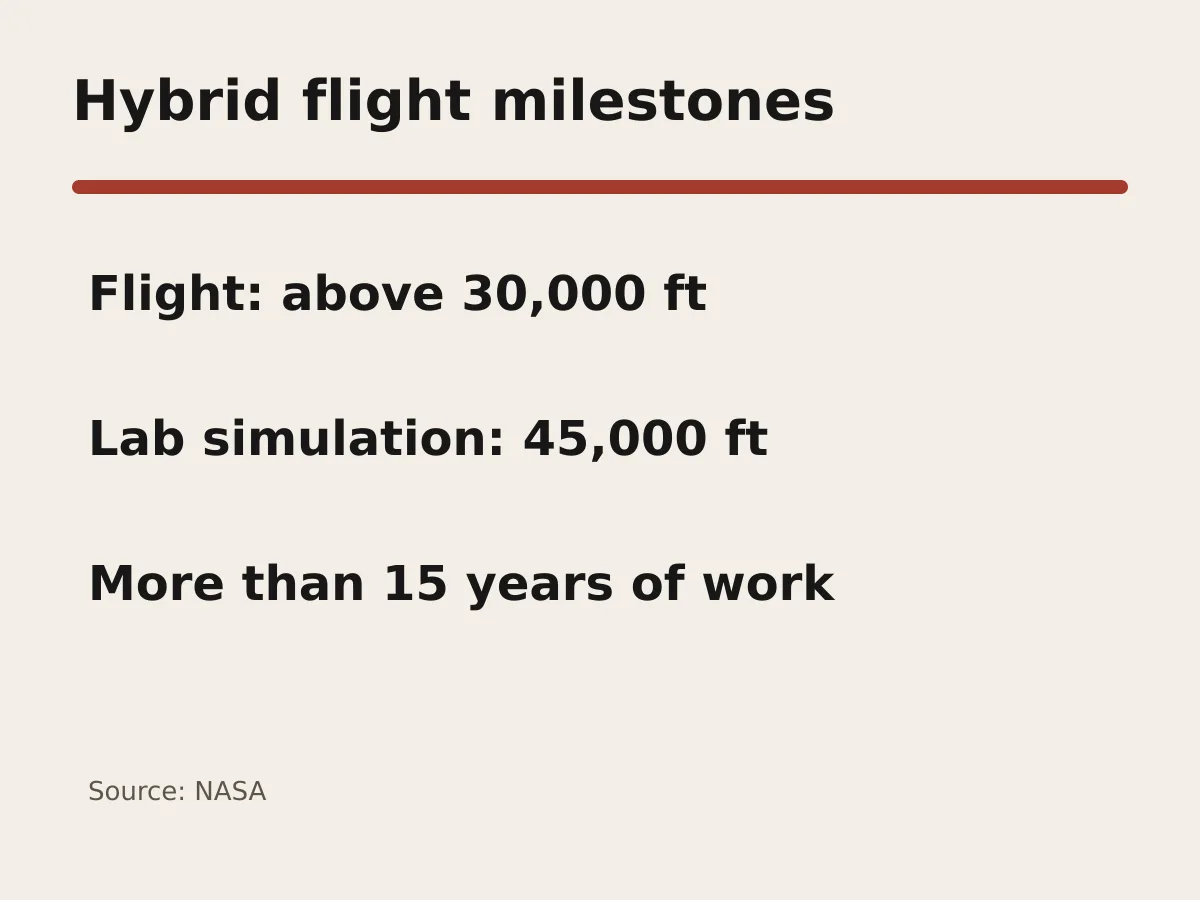
NASA and GE tested an integrated version at the NASA Electric Aircraft Testbed in Ohio in 2022 under conditions simulating 45,000 feet. The team then added motors, converters, propellers and a commercial GE engine before ground and flight tests.
The program builds on more than 15 years of research into power density, thermal control, batteries and aircraft integration. Those are linked constraints: weight added by one component can erase fuel savings elsewhere.
NASA did not publish a measured fuel-burn reduction, battery capacity, commercial entry date or certification plan in the announcement. The flight therefore demonstrates operation and integration, not a finished airline product.
A hybrid system can use a turbine where batteries alone lack sufficient energy density while using electrical machinery to redistribute or supplement power. The practical benefit will depend on the final aircraft, mission length, component weight and maintenance profile.
The test narrows an engineering question that once existed mainly in models: megawatt-class hybrid hardware can power a regional-size aircraft at high altitude. Certification, reliability, economics and quantified emissions remain separate gates before passenger service.