
Individual human neurons carried information about grammar, meaning and sentence context before people spoke, an NIH-funded study of natural conversation found.
Researchers at Massachusetts General Hospital used microelectrode recordings from eight patients who already had implants for epilepsy monitoring. The implants were not placed solely for the language study.
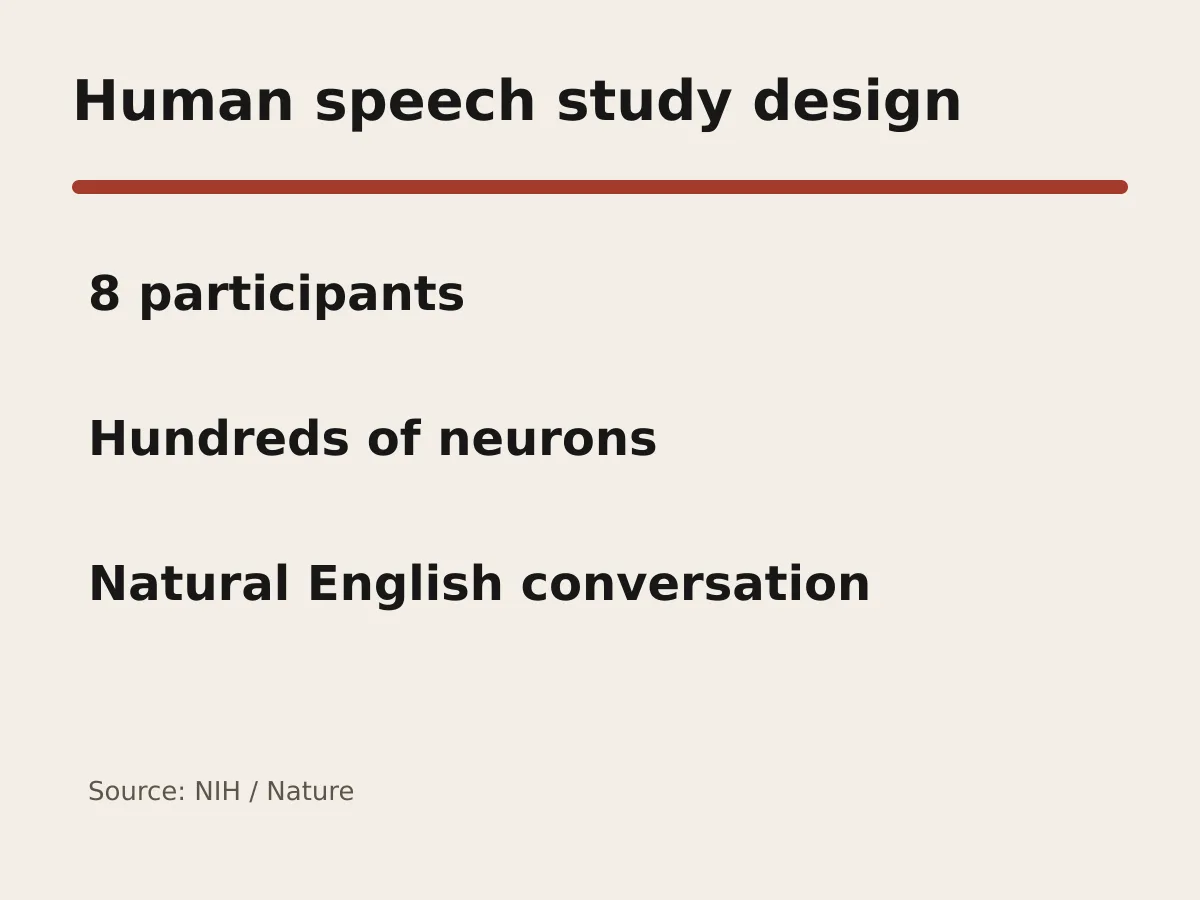
Participants held open-ended conversations in English. The team aligned transcripts with activity from hundreds of neurons in the frontotemporal cortex, a region linked to speech production.
Machine-learning language models connected patterns immediately before speech with features of the coming words and sentences across many discussion topics.
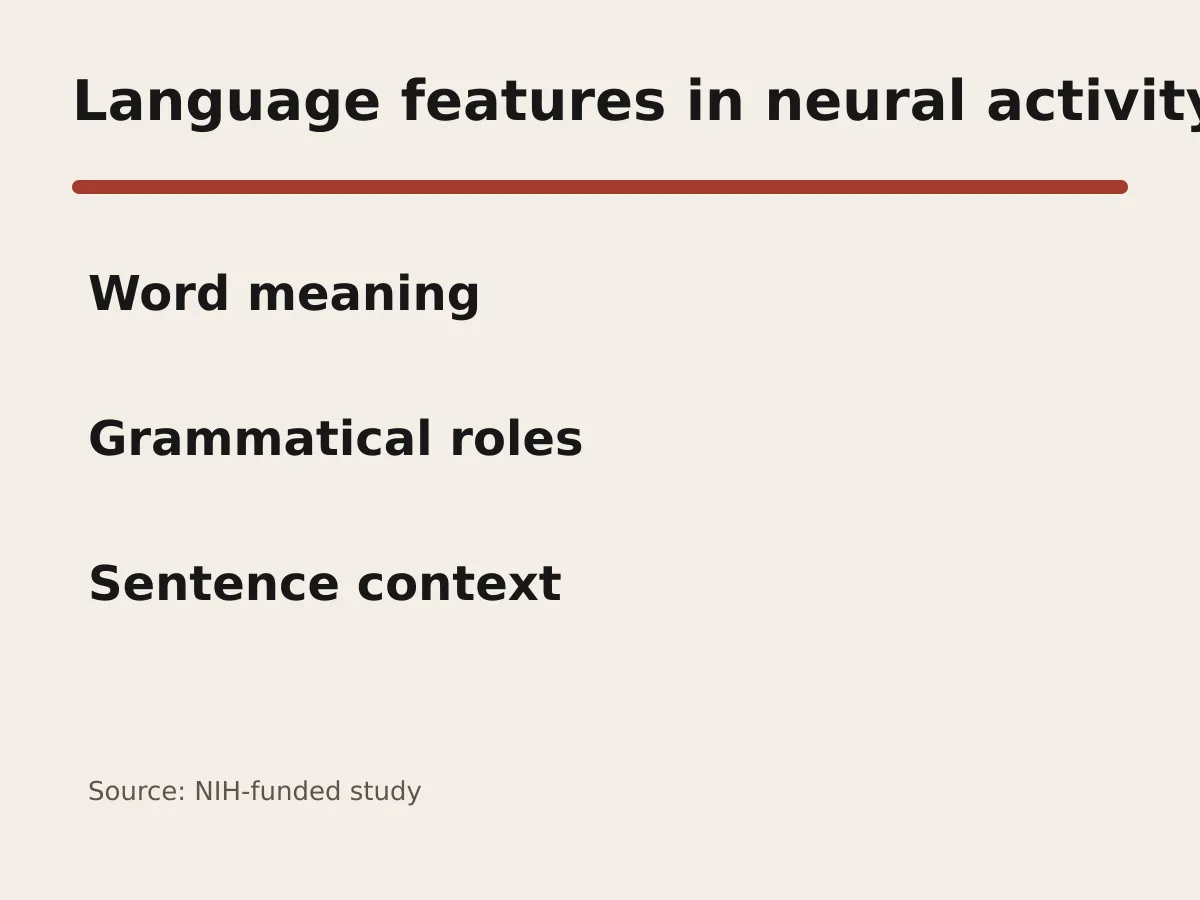
Some neurons reflected relatively basic information, including word meaning and grammatical roles. Other activity tracked how phrases were assembled and distinguished similar words or phrases by sentence context.
The result extends language mapping from broad brain regions to single cells. It does not mean researchers reconstructed unrestricted private thoughts or achieved a deployable speech decoder.
The sample was small and clinically specific: eight English-speaking patients undergoing epilepsy monitoring. Implant location and available recordings were shaped by medical care.
Researchers say the cellular map could inform future systems that translate neural activity into generated speech for people with communication disorders.
That application remains prospective. Larger and more diverse studies must test how stable the signals are across people, languages, clinical conditions and recording technologies.