
A House bill aimed at programs with expired appropriations authorizations would change congressional budget rules without significantly changing federal spending immediately, according to the Congressional Budget Office.
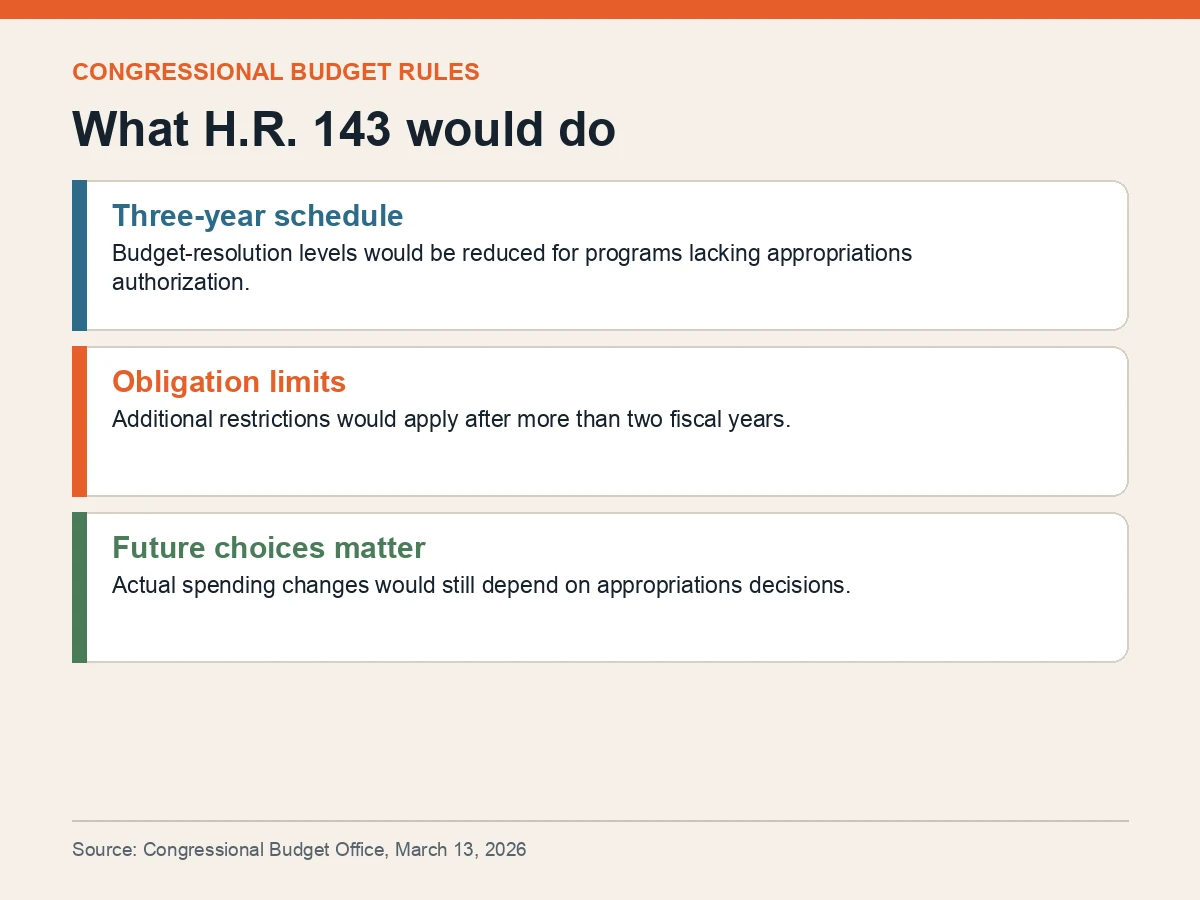
H.R. 143 would establish a three-year schedule reducing aggregate spending levels in the congressional budget resolution when programs continue without a current authorization of appropriations. It also would restrict the purposes for which funding can be obligated after more than two fiscal years.
CBO expects no significant near-term spending effect because aggregate spending levels for fiscal 2026 are already set. Beyond that year, actual changes would depend on future appropriations decisions rather than occurring automatically from the cost estimate.
The distinction between authorization and appropriation is central. An authorization can create or continue a program and set expected funding levels; an appropriations act supplies money. Expiration of an explicit appropriations authorization does not necessarily end the underlying authority to operate.
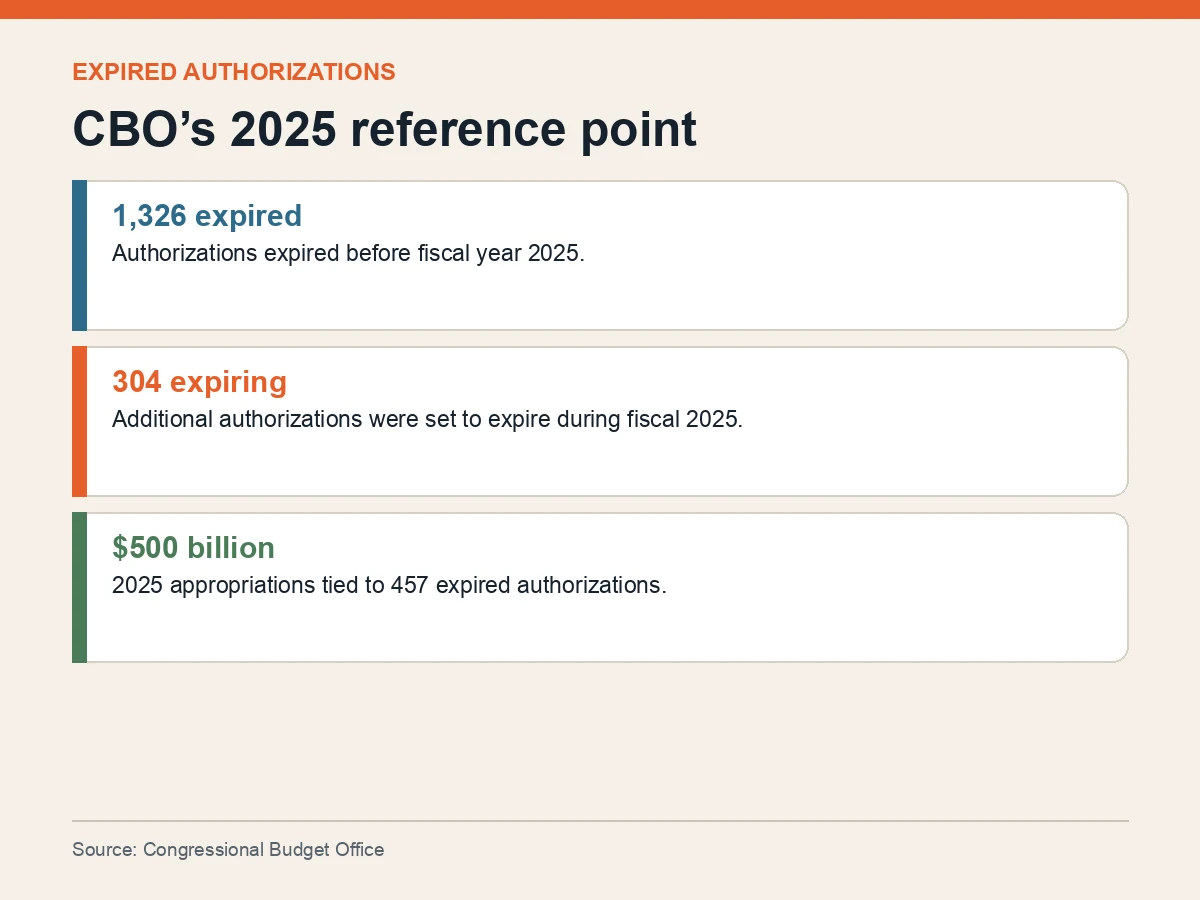
CBO’s reference inventory shows the scale: 1,326 authorizations expired before fiscal 2025, another 304 were set to expire during fiscal 2025, and $500 billion in 2025 appropriations was associated with 457 expired authorizations.
Those counts are not a finding that $500 billion was unlawfully spent. Congressional rules often govern how appropriations lacking current authorizations are considered, and lawmakers can waive or suspend procedural restrictions.
The budget office estimated that administrative work for CBO and congressional budget committees would cost less than $500,000 from 2026 through 2031, subject to appropriation. It found no significant direct-spending or revenue effect.
Supporters can describe the bill as an accountability mechanism because it creates consequences for long-lapsed authorizations. Critics can still question whether across-the-board budget reductions reflect program performance or merely legislative backlog.
The cost estimate resolves a narrower question: the bill does not itself specify large immediate cuts. Its fiscal effect depends on how later Congresses apply budget levels, reauthorize programs and enact appropriations.