The companies behind the Hopper travel apps agreed to pay $35 million for consumer redress and change how they present fees, under a proposed federal settlement over charges and product claims that regulators say were hidden or misleading.
The Federal Trade Commission filed its complaint and proposed stipulated order in U.S. District Court in Massachusetts on July 2. The Commission voted 2-0 to authorize the filing. The order still requires a judge’s approval before it has force of law.
The complaint names Hopper Inc., based in Canada, and Hopper (USA) Inc., based in Massachusetts. It alleges violations of the FTC Act and, for short-term lodging bookings beginning May 12, 2025, the federal rule governing unfair or deceptive fees.
The case centers on preselected add-ons
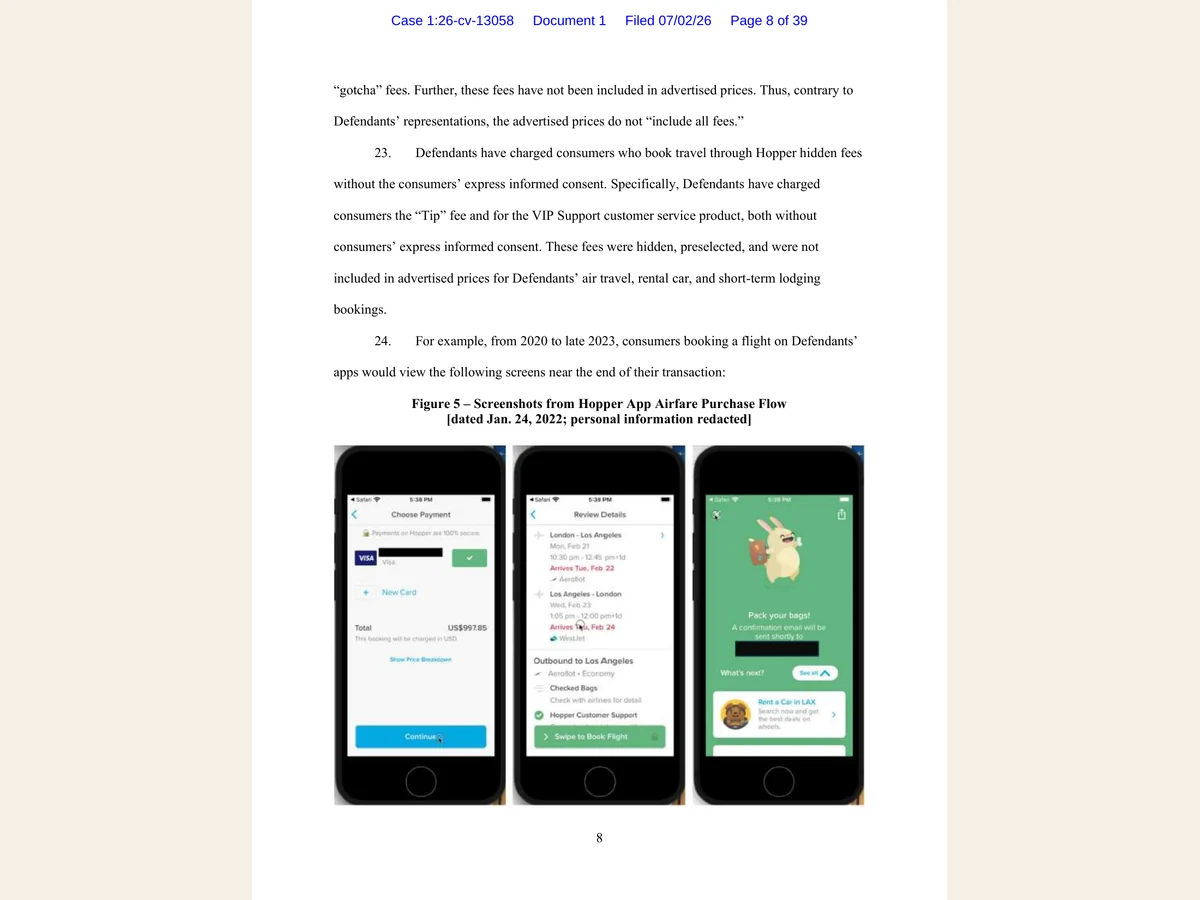
According to the complaint, Hopper promoted “no hidden fees” while adding Tip and VIP Support charges that were preselected and not included in the total price users saw near the end of some airfare, rental-car and lodging booking flows.
The agency says users could miss those add-ons unless they scrolled down, and that Hopper did not obtain express informed consent for the charges in the challenged flows. Those are allegations in a complaint, not findings reached after a contested trial.
The complaint also challenges claims about VIP Support. Hopper advertised rapid or instant contact with customer support, the agency alleges, even though some buyers could not reach an agent or faced substantial waits.
Price Freeze is a separate part of the case
Hopper’s Price Freeze product lets a user pay to hold a travel price for a period before completing the booking. The FTC says Hopper did not clearly disclose key limits, including a cap on the amount of a price increase the service would cover and the possibility that a booking could become unavailable.
The complaint further alleges that Hopper represented the Price Freeze fee as applying toward the later booking cost when it did not do so in the challenged circumstances. The proposed order bars misrepresentations about fees and product benefits.
What the proposed order changes
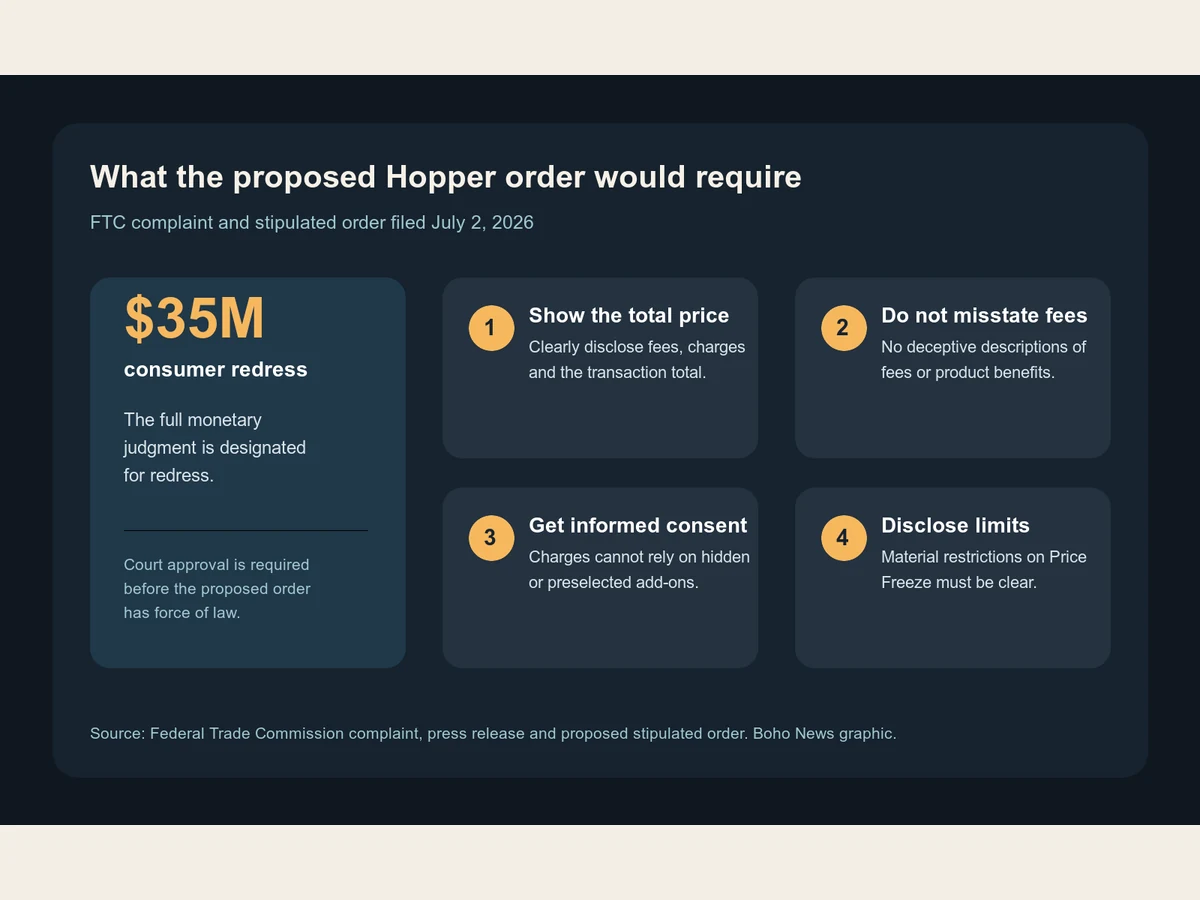
The $35 million judgment is designated for consumer redress. The public filing does not yet identify individual recipients, payment dates or refund amounts; those details depend on administration of the redress process after the order is entered.
Beyond the money, Hopper would have to clearly and conspicuously disclose fees and charges, the total price of goods or services and the final amount of payment. The company also would be restricted from misrepresenting fees and material product terms.
The proposed resolution does not mean every Hopper transaction contained every practice described in the complaint. The filing identifies particular product flows and time periods, while the order sets forward-looking requirements across covered transactions.
For travelers, the practical distinction is between an advertised or initially displayed amount and the final amount authorized. The order’s total-price and consent provisions are designed to make that difference visible before payment rather than after a charge appears.
The case is also a test of the FTC’s fee rule for lodging transactions after its May 2025 effective date. The agency tied that count to short-term lodging bookings, while relying on the broader FTC Act for the other alleged deceptive or unfair conduct.