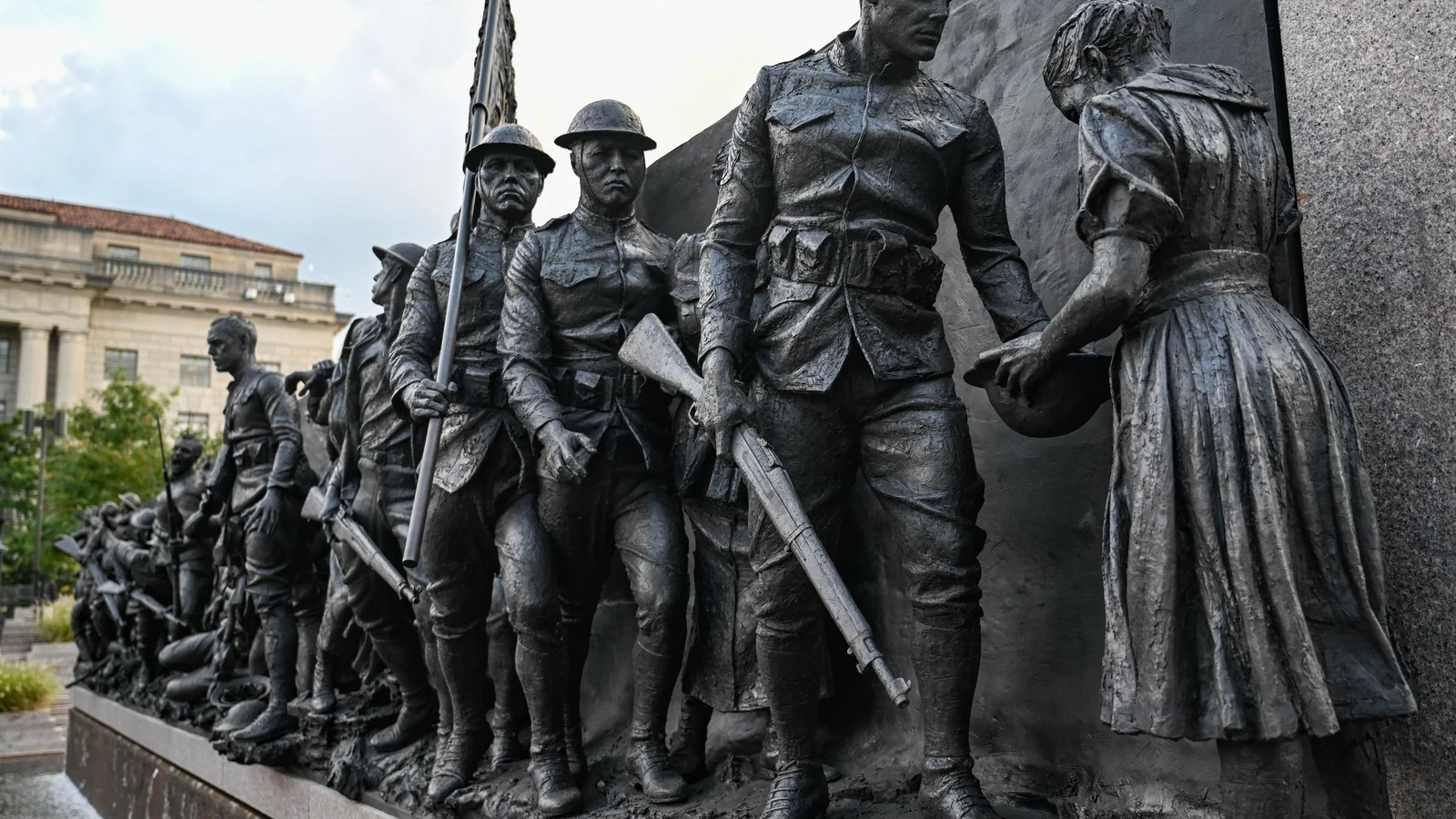
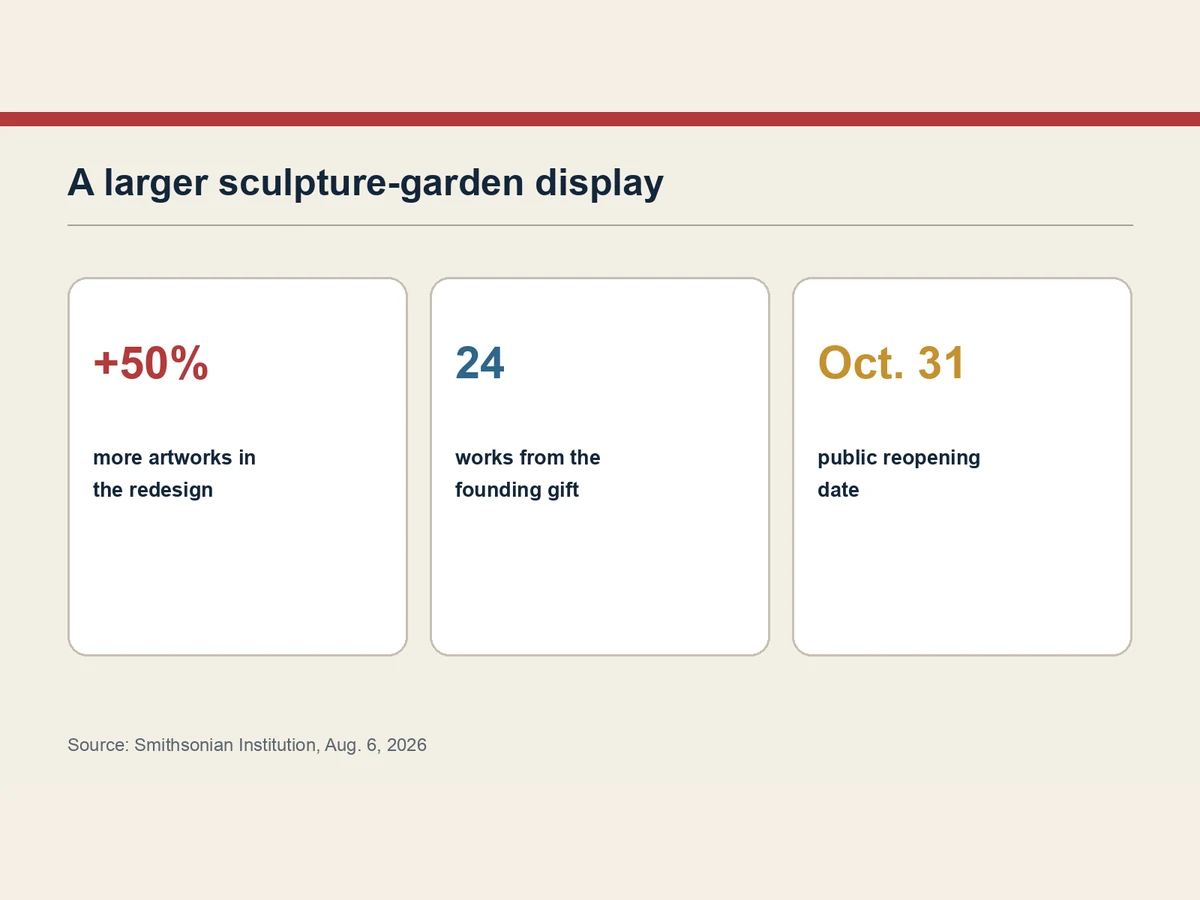
The Hirshhorn Museum’s revitalized Sculpture Garden is scheduled to reopen Oct. 31 with 50% more artworks than its previous display, the Smithsonian announced Thursday.
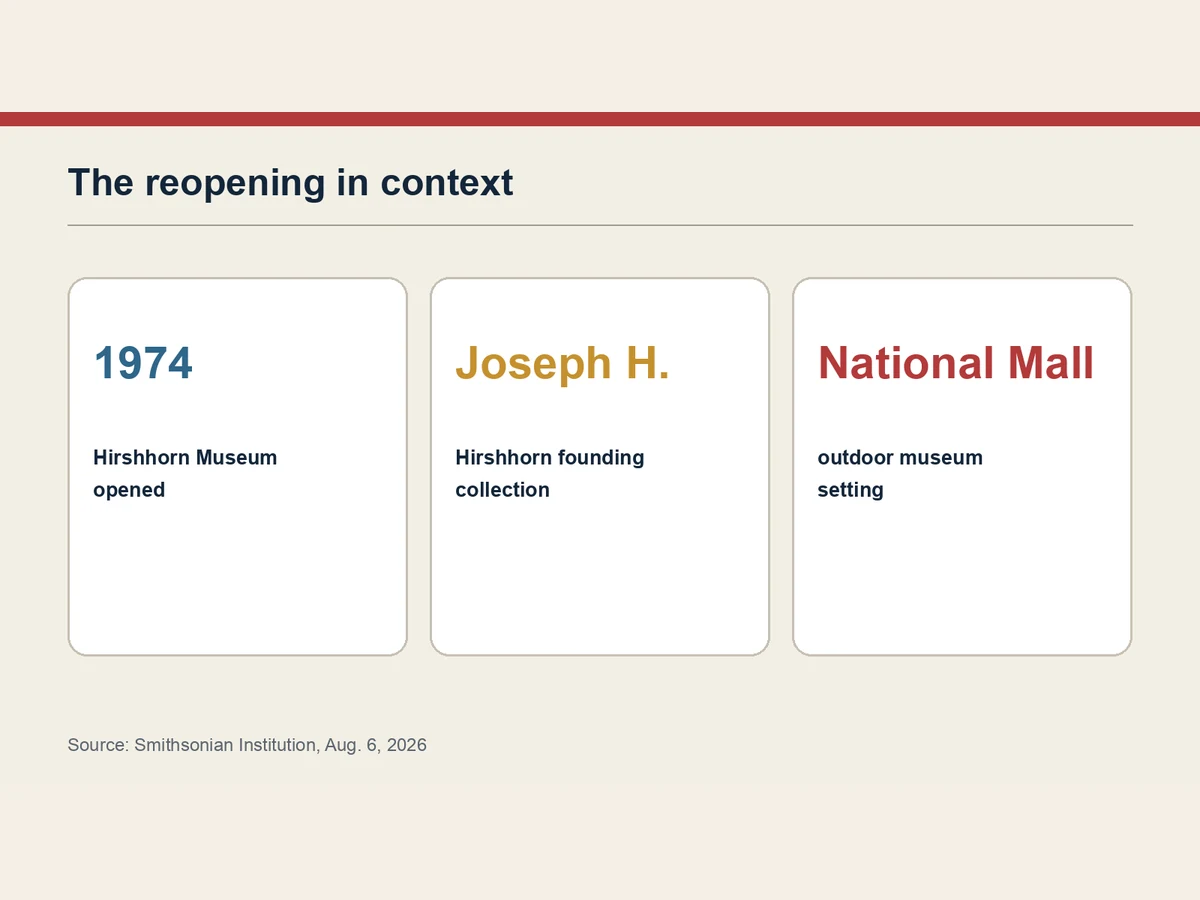
The installation will include 24 major works from Joseph H. Hirshhorn’s foundational gift, bringing a larger share of the collection into the outdoor National Mall setting.
The percentage refers to the number of artworks installed, not a 50% increase in the garden’s physical footprint. That distinction matters because exhibition density and visitor space are different measures.
Outdoor sculpture gardens ask museums to solve problems that enclosed galleries can control more easily: weather, sunlight, drainage, circulation, landscaping and views from multiple directions all affect how a work is encountered.
The reopening also reconnects the museum’s circular building with its open-air program. For visitors, the garden functions as both an exhibition and a public landscape rather than a conventional sequence of gallery rooms. That dual role makes paths, seating and shade part of the visitor experience.
Highlighting 24 works from the founding gift places the museum’s origin story inside the redesign. The Smithsonian’s release frames those pieces as a substantial component of the new installation, not the entire display.
The Oct. 31 date is still a schedule, not a completed opening. Construction, installation and final readiness must be finished before the public can judge traffic flow, accessibility, sightlines and the balance between art and landscape.
The announcement gives travelers and local visitors a concrete date while leaving a more useful evaluation for opening week: whether the expanded display feels richer without becoming crowded.
For now, the measurable change is straightforward. The Hirshhorn plans to return a major outdoor space to the National Mall with half again as many artworks and two dozen objects tied directly to its founding collection. The reopening also adds a free outdoor art destination to a museum district where most experiences happen inside buildings.