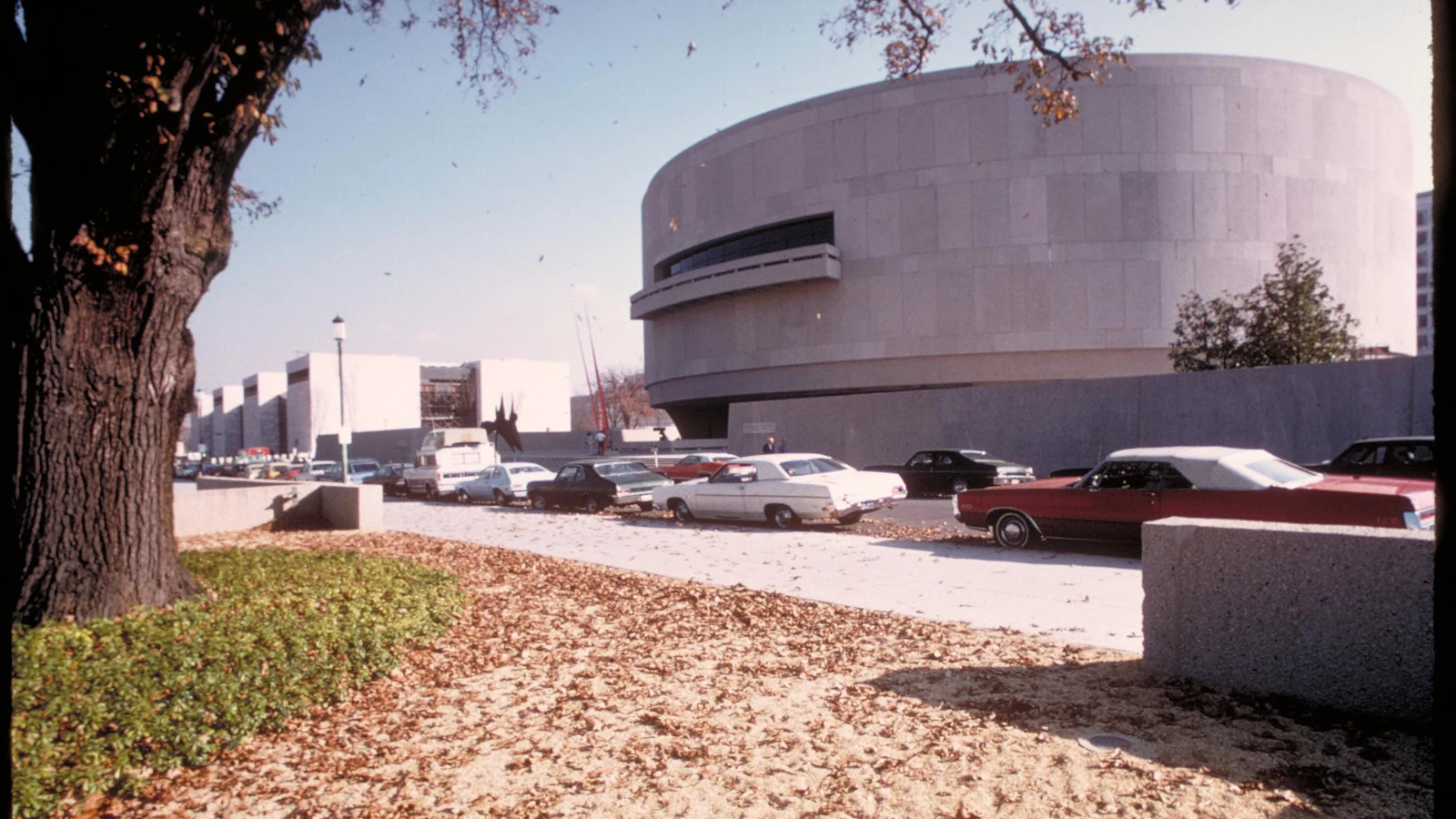
The Hirshhorn Museum will send American artworks on long-term loan to 51 museums—one in every state and Puerto Rico—through a national program designed to move collection holdings out of storage and into local galleries.
The Smithsonian museum and Art Bridges Foundation selected the institutions for “50 for 50,” which will place loans between 2026 and 2029. Each loan will last three to five years, and participating museums will not pay for the program.
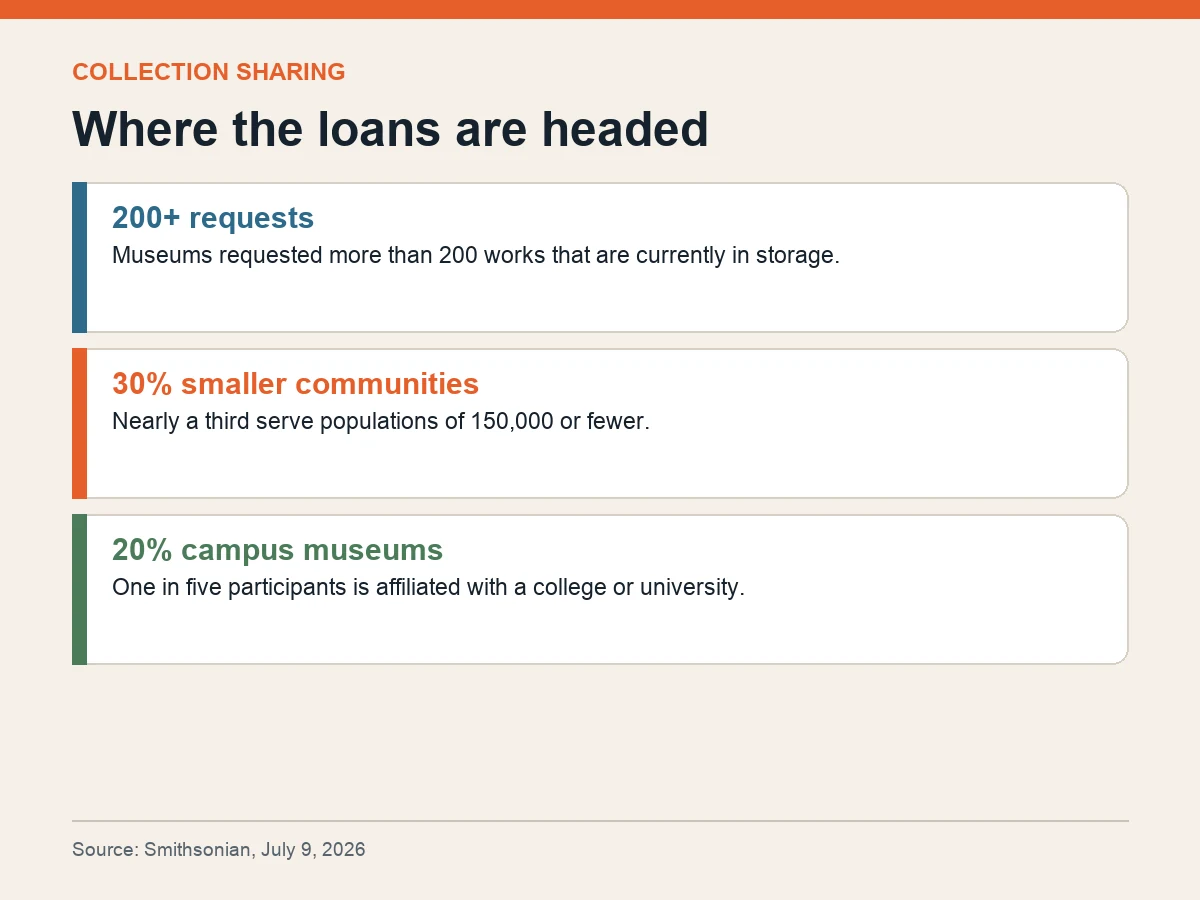
The partner list extends well beyond the largest art centers. Thirty percent of the institutions serve populations of 150,000 or fewer, including organizations in Shelburne, Vermont; Chadds Ford, Pennsylvania; and Big Horn, Wyoming, which the Smithsonian release lists at a population of 500.
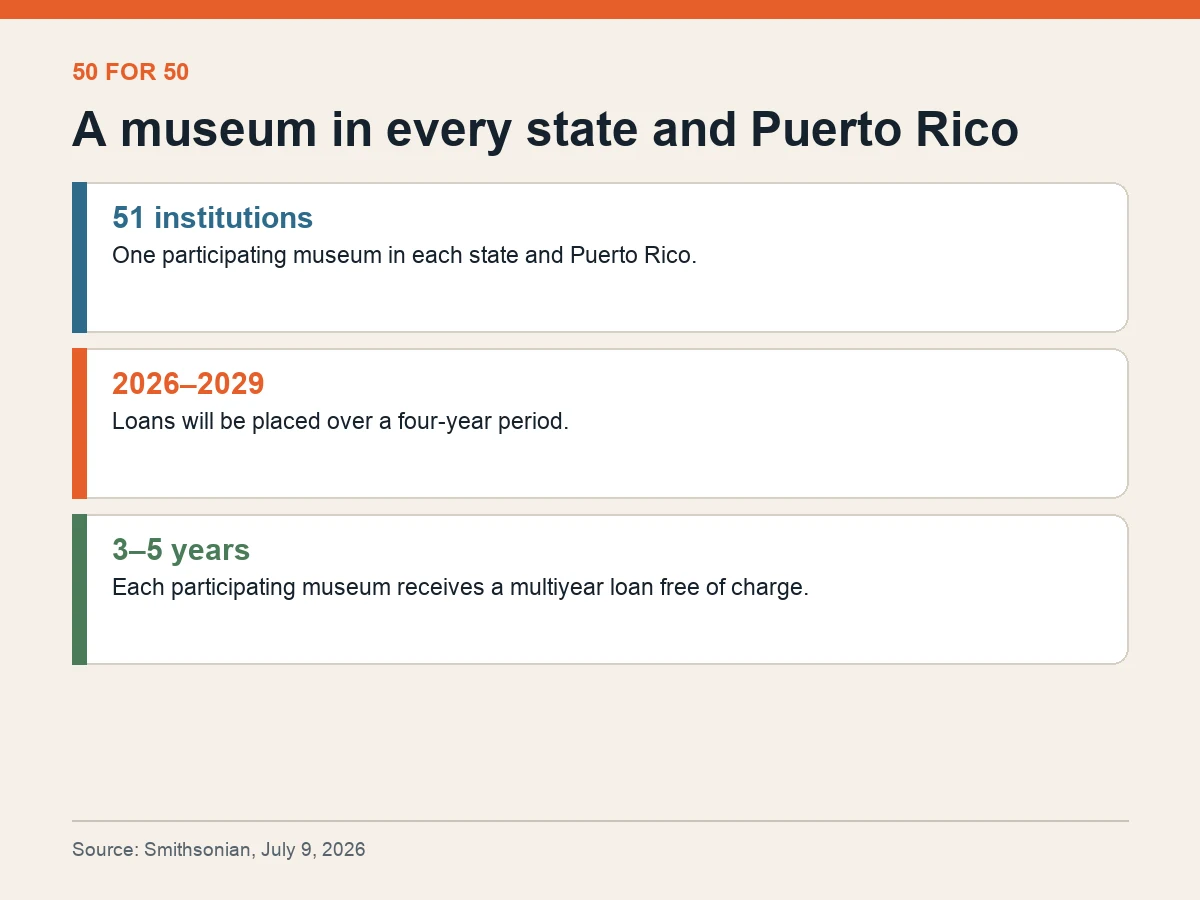
Another 20% of participants are affiliated with colleges or universities. Those shares overlap different measures of institutional reach; they should not be added together as if they describe mutually exclusive groups.
Local museums chose works intended to connect with their own collections and audiences. That produces a different kind of national tour: the loan in Tacoma need not resemble the one in Savannah, and each institution can build context around its community.
More than 200 works currently in storage have been requested from the Hirshhorn’s collection of more than 13,000 paintings, sculptures, installations and photographs. A request is not a final checklist, and conservation or scheduling decisions may still change individual loans.
Artists represented among the available works include Albert Bierstadt, Thomas Eakins, Lee Krasner, Georgia O’Keeffe, Yoko Ono, Mark Rothko and Andy Warhol, spanning nineteenth-century American art through contemporary practice.
The first group of loans is expected to be installed by December 2026. Because the placements continue through 2029 and stay for multiple years, the project is closer to distributed collection sharing than a short traveling exhibition.
Its test will be sustained access rather than opening-week attendance. By giving host museums time to interpret the works alongside their own holdings, the program turns storage capacity at a national museum into locally programmed gallery space across 51 communities.