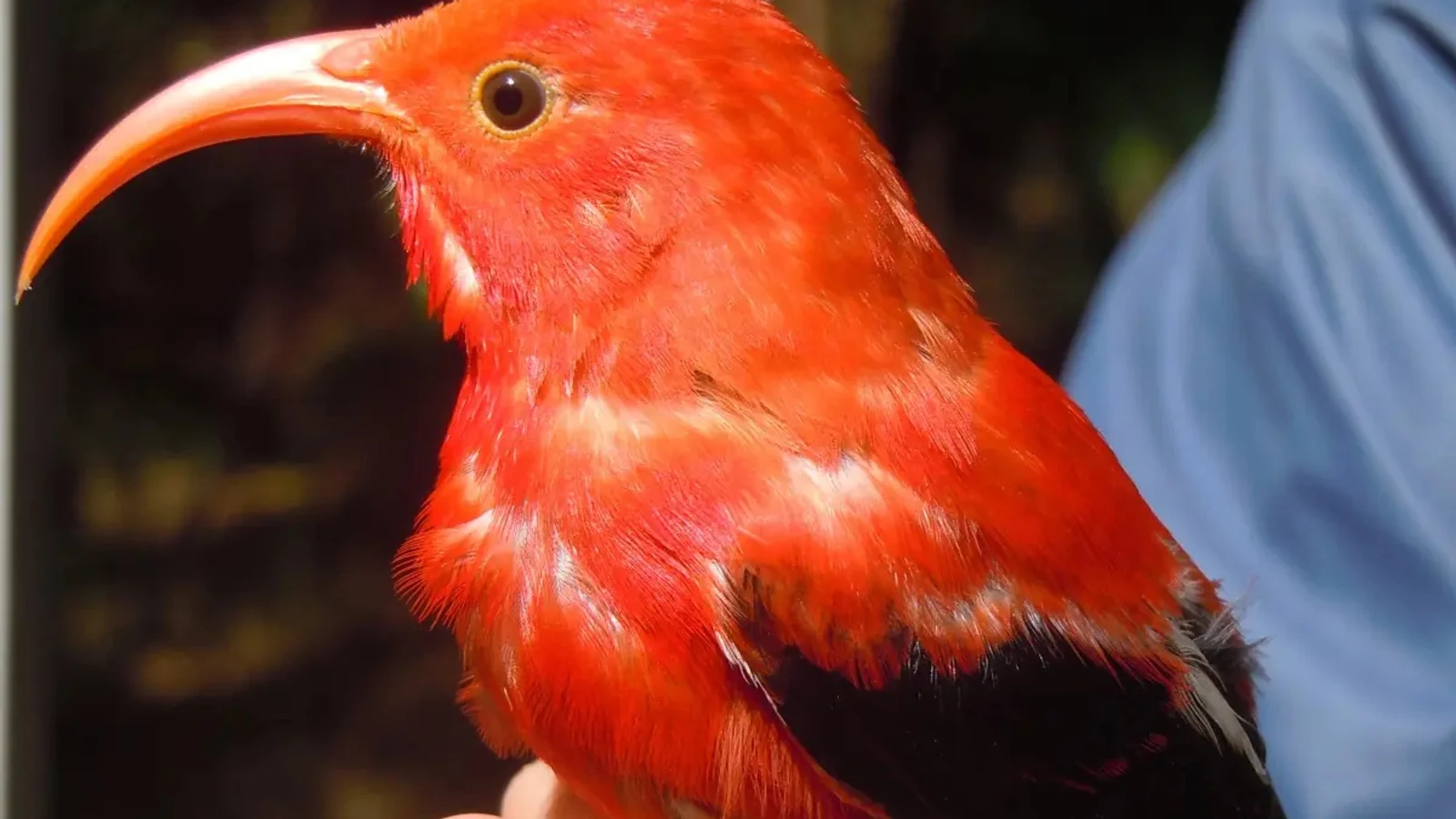
A new genetic study has assembled the first comprehensive family tree of Hawaiian honeycreepers known at the time of European arrival, connecting living birds with extinct species sampled from museum skins and fossil bones.
The analysis covers all 17 surviving species, 18 additional species that existed in 1778 and later disappeared, and two species known only from fossils. Smithsonian researchers published the work Monday in the Proceedings of the National Academy of Sciences.
Hawaiian honeycreepers evolved from a single ancestor into more than 60 species. That rapid diversification produced dramatically different bills, diets and ecological roles, but it also made the branches difficult to resolve with earlier genetic methods.
The tree captures the scale of loss
The surviving 17 species are less than half of the 37 lineages included in the comprehensive analysis. The comparison is not a complete count of every honeycreeper that ever lived; it is the set the team could place using living species, historically documented birds and two fossil-only taxa.
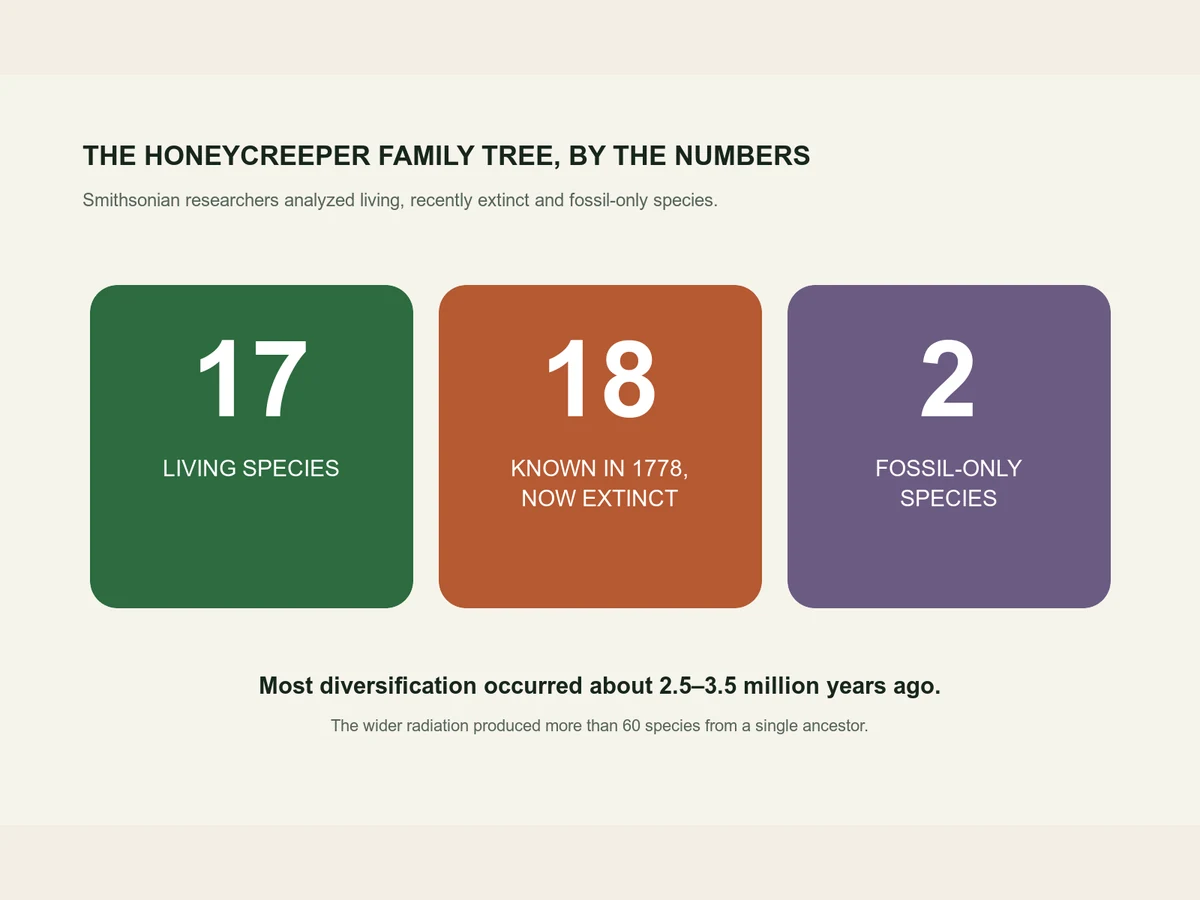
Most of the radiation occurred in a burst about 2.5 million to 3.5 million years ago, around the geological formation of Oʻahu, the team reported. The authors propose that new habitat helped populations split and later exchange genetic material, but they frame that mechanism as an evolutionary interpretation rather than a directly observed event.
The study confirmed genetic mixing between the extinct ʻōʻū and Lānaʻi hookbill. It also found continuing exchange among closely related ʻamakihi populations on different islands, evidence that a family tree alone can simplify a history that included hybridization.
Old specimens supplied new genetic evidence
Researchers used minimally invasive sampling on preserved birds held in U.S. and European museums. Tiny epidermal samples from historic skins and material from small fossil bones yielded enough DNA to place extinct species alongside living ones.
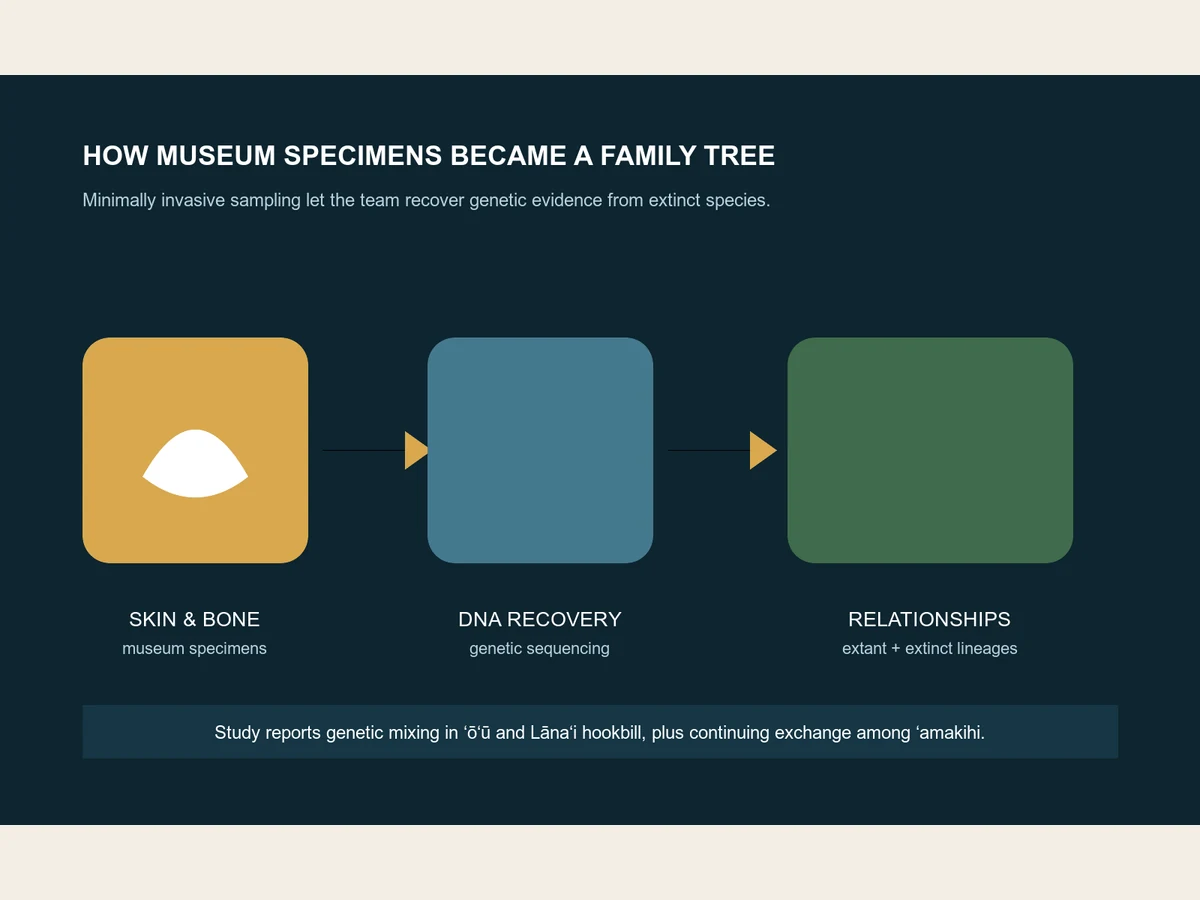
That method matters because extinct species cannot be resampled in the field. Museum labels, specimen provenance and preservation quality still limit what can be recovered, but improved sequencing lets collections answer questions that were not technically accessible when many specimens were gathered.
The paper’s family tree is therefore both a biological result and an archive result: it depends on physical specimens being retained, documented and available for careful sampling.
A tree can guide questions, not set policy by itself
The Smithsonian team says the genomic data can support research on how bill shapes evolved and whether genetic variation helped some species survive introduced disease. The authors are now studying avian malaria and avipoxvirus, two introduced diseases that have damaged honeycreeper populations.
The study does not rank species for conservation spending or establish that genetic distinctiveness should outweigh population urgency, habitat feasibility or cultural priorities. Those are management decisions requiring additional evidence and consultation.
Nor does the family tree reverse the immediate pressures on the remaining birds. The Smithsonian identifies habitat loss, introduced disease, invasive predators and climate change among the forces pushing most surviving honeycreepers toward extinction.
What the work adds is a clearer baseline: which lineages were lost, how surviving birds are related and where genetic exchange complicates a simple branching model. That context can sharpen future studies without pretending the genomic record is a conservation plan on its own.