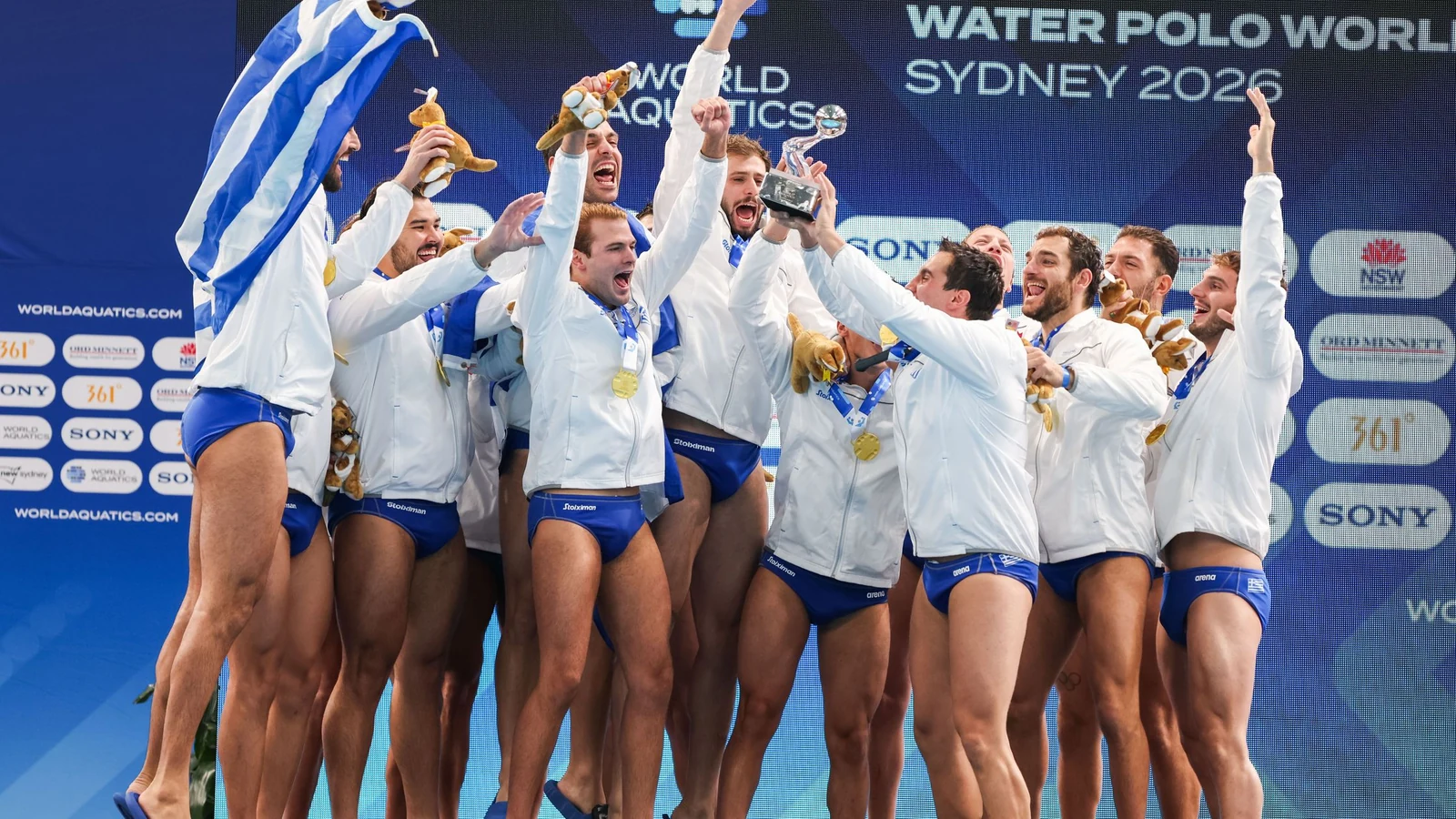
Greece’s men and the United States women left Sydney with very different kinds of water-polo history: Greece won its first global men’s crown on a goal with 12 seconds left, while the U.S. claimed a seventh women’s World Cup title by shutting Spain out in the final quarter.
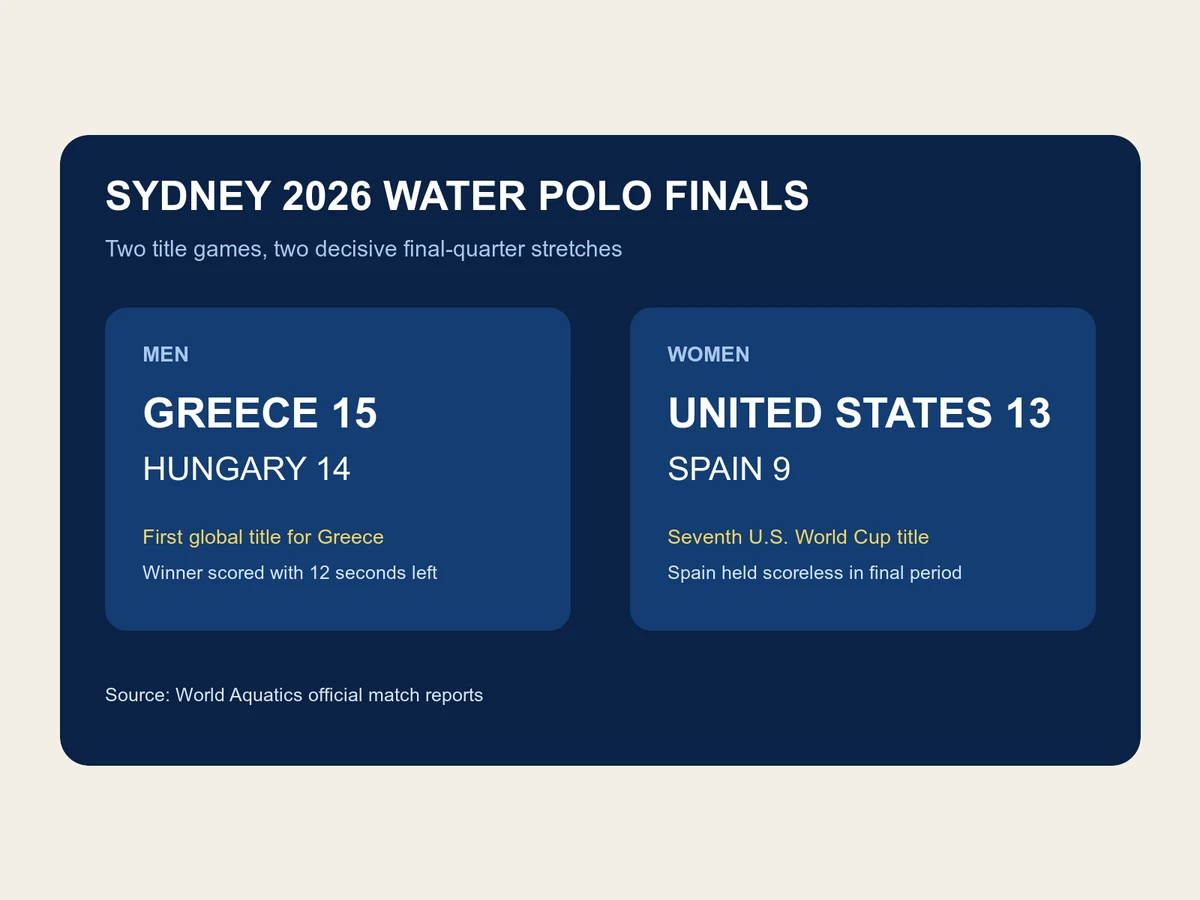
Greece beat Hungary 15-14 in the men’s final. The United States beat Spain 13-9 in the women’s final. Both results were recorded July 26 in official World Aquatics match reports.
Greece stayed in front almost all night
The Greek men led 5-3 after the first quarter and 7-6 at halftime. Hungary briefly moved ahead in the third period, but World Aquatics calculated that it led for only 35 seconds in the entire match.
The score was tied 14-14 after Hungary captain Krisztian Manhercz converted with 45 seconds remaining. Greece used a timeout, earned an exclusion and worked the ball to captain Stylianos Argyropoulos, who scored across goal with 12 seconds left.
Hungary did not score on the final possession. The 15-14 win gave Greece its first title at a major global men’s event after previous final appearances, including a silver at the 2025 World Cup.
Dimitrios Skoumpakis scored five goals for Greece and goalkeeper Panagiotis Tzortzatos made 10 saves. Greece converted six of 12 extra-player opportunities; Hungary converted seven of 11. The shot count was nearly even, 35-34 for Greece.
The U.S. women broke an 8-8 tie
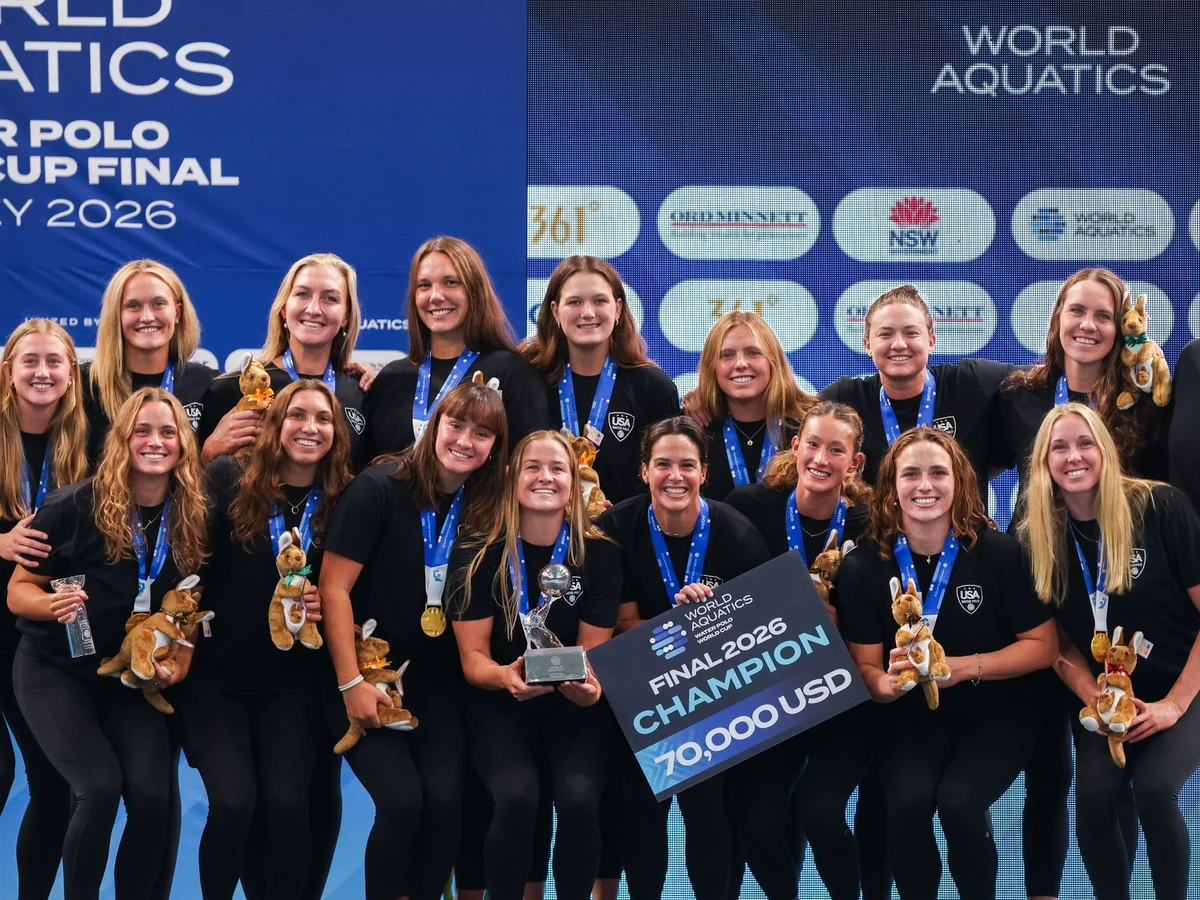
The women’s final was level at 8-8 midway through the third quarter. The United States then scored three consecutive goals, two of them by Emily Ausmus, before Spain cut the margin to 11-9 at the break.
Spain did not score in the fourth quarter. Jordan Raney added both U.S. goals in the period, sealing a four-goal win after a match in which each team took 31 shots.
Ausmus finished with six goals in the final, and Amanda Longan made 13 saves. The U.S. converted seven of 13 extra-player chances and limited Spain to three goals in 14 such opportunities.
Two titles, two different measures of dominance
For Greece, the decisive measure was time in front: it led almost the entire match but still needed one precise final possession. For the U.S. women, the separation came after the game reached 8-8, with a 5-1 closing run and no Spanish goal in the final period.
World Aquatics lists the U.S. title as its seventh women’s World Cup crown and fifth in the past six editions. Greece’s men, by contrast, were winning their first global crown.
The individual awards reflected those paths. World Aquatics named Argyropoulos the men’s tournament most valuable player and Tzortzatos the best goalkeeper. Longan received the women’s best-goalkeeper award, while Ausmus finished as the women’s highest scorer with 11 goals across the event.
The scorelines alone make both finals look close. The possession detail explains how they were won: Greece protected a one-goal edge at the last possible moment, and the United States turned an even game into a controlled finish through extra-player defense and goalkeeping.