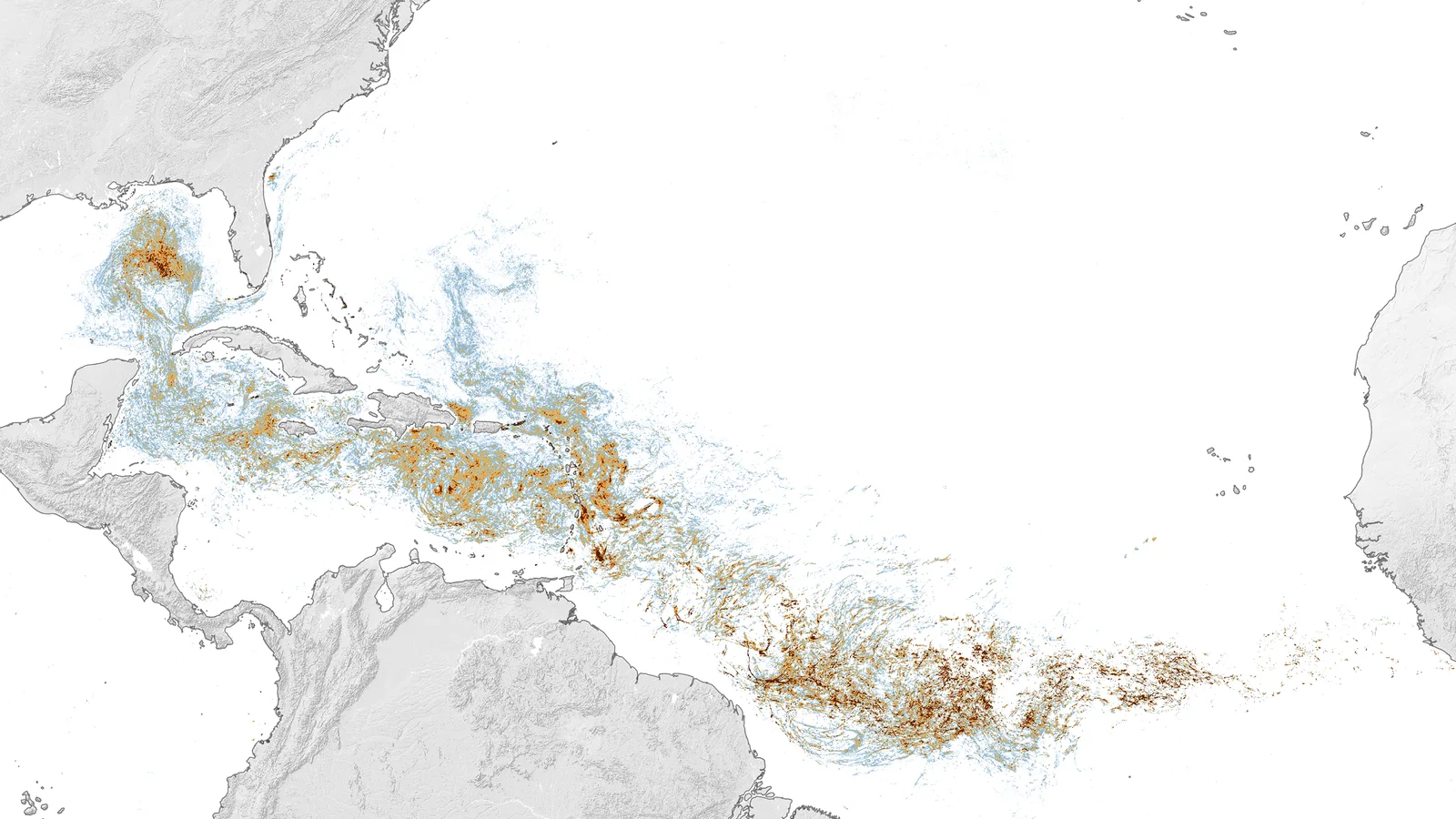
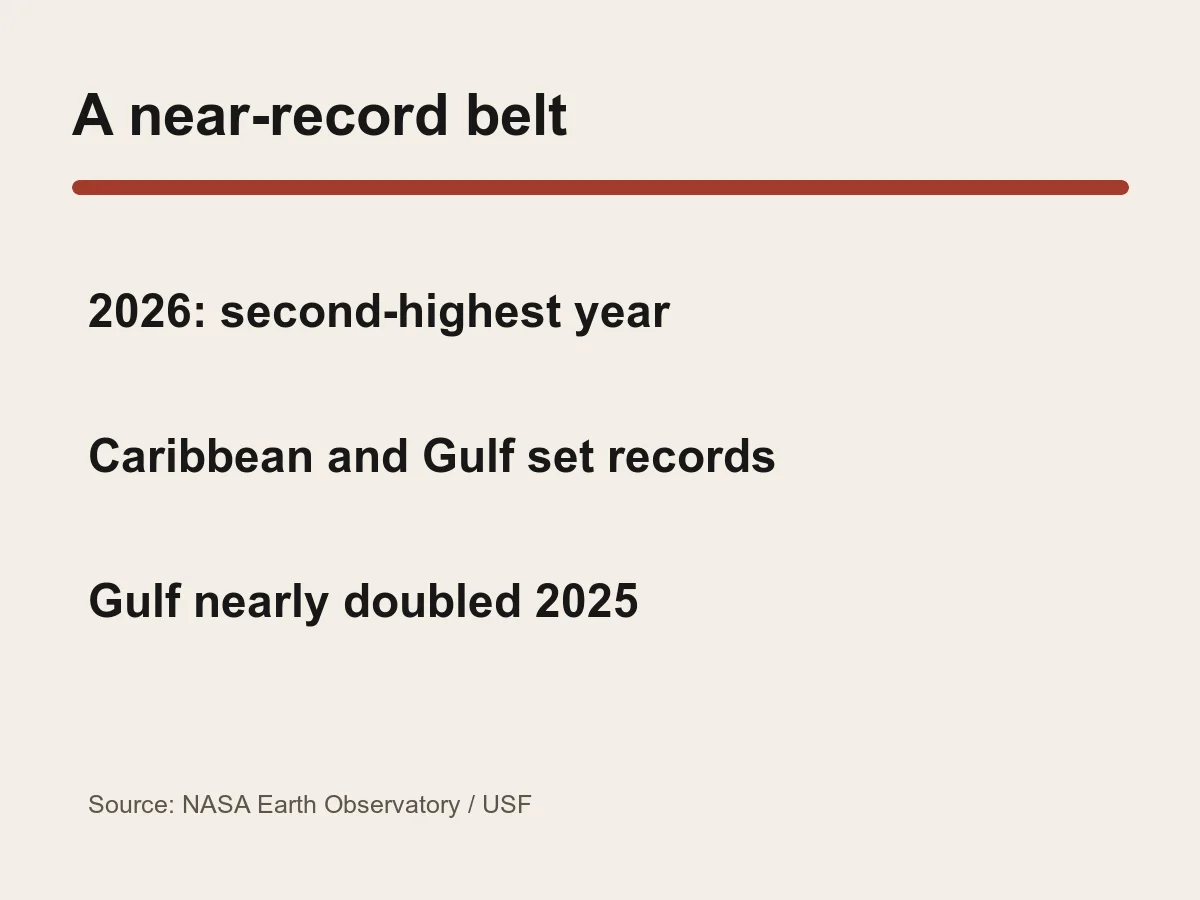
The Great Atlantic Sargassum Belt reached its second-highest annual level in the satellite record in June 2026, while the Caribbean Sea and Gulf of Mexico each set regional records, according to NASA Earth Observatory and University of South Florida researchers.
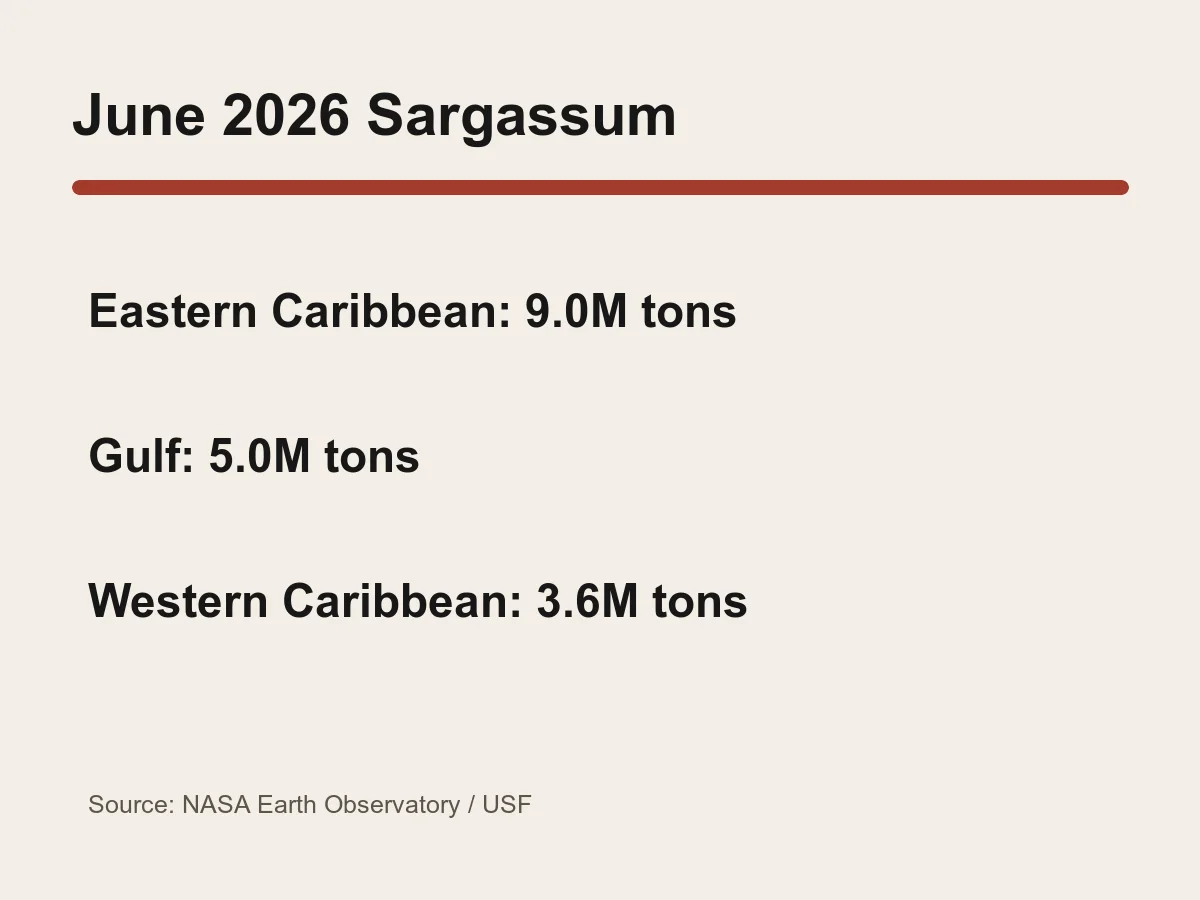
NASA’s PACE satellite mapped dense concentrations across the tropical Atlantic. The western Caribbean held an estimated 3.6 million metric tons, the eastern Caribbean 9 million and the Gulf 5 million.
The Gulf total was nearly twice its previous record, which was set in 2025. Across the basin, 2026 trailed only the 2025 peak in the satellite record.
Sargassum is floating brown algae. In moderate amounts offshore, it provides habitat for fish, turtles, birds and invertebrates. Large nearshore mats can reduce oxygen, smother corals and seagrass and release hydrogen sulfide as they decompose on beaches.
The word belt can be misleading at local scale. NASA’s map shows a nearly continuous basin-wide feature, but it is made of discrete, moving mats whose paths depend on currents and winds.
Those patterns spared much of Florida’s west coast from heavy inundation earlier in the summer while steering more material toward the Florida Keys, the east coast and parts of the Caribbean, NASA reported.
PACE’s Ocean Color Instrument detects the algae because chlorophyll and plant structure reflect near-infrared light differently from seawater. Scientists use that reflectance signal to estimate the fraction of ocean surface covered in each pixel and then convert coverage to biomass.
The newer hyperspectral instrument builds on the longer MODIS and VIIRS record. Researchers said PACE observes more ocean and has greater sensitivity, which may improve winter mapping and help distinguish Sargassum from other floating algae.
June was the annual peak, not a statement that biomass continued rising afterward. NASA said newer observations showed a decline through July, and researchers are still investigating the mix of ocean warming, nutrient sources and biological feedbacks behind the belt’s longer-term growth.