
June 2026 was the world’s second-warmest June in records dating to 1850, with global ocean surface temperatures setting a monthly record and the Arctic logging its warmest June, NOAA reported.
The combined land-and-ocean surface temperature was 1.09 degrees Celsius, or 1.96 degrees Fahrenheit, above the 20th-century average. Only June 2024 ranked warmer in the National Centers for Environmental Information record.
The ocean drove the headline. Global ocean surface temperature was the highest recorded for any June, while land temperature ranked fourth highest. All 10 of the warmest Junes in the 177-year record have occurred since 2015.
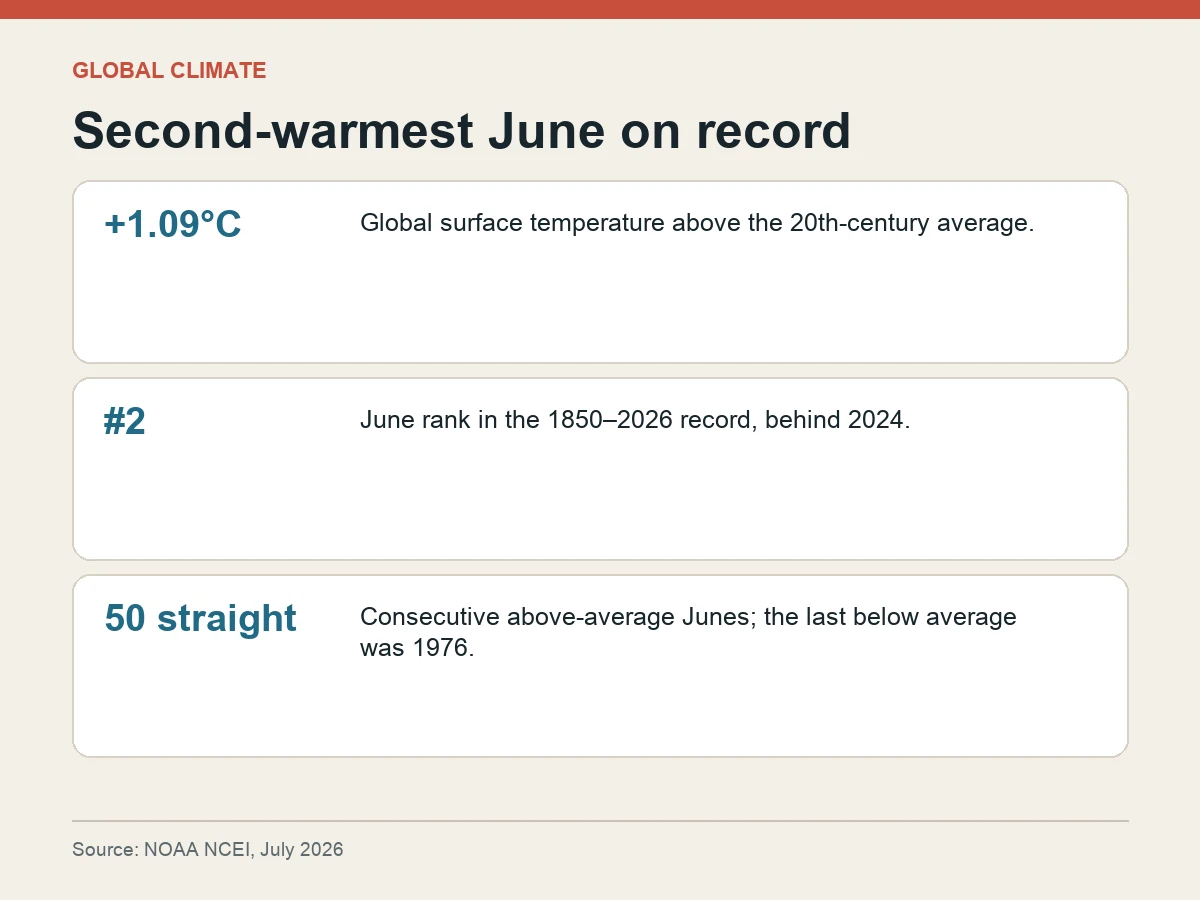
The month also extended a long run: it was the 50th consecutive June with a global temperature above the 20th-century average. The last below-average June was 1976. A global mean does not imply uniform conditions; parts of Antarctica, South America, Asia and northwestern Alaska were cooler than average.
Regional extremes were pronounced. The Arctic had its warmest June, while North America, Europe and Africa each had their second warmest. Oceania ranked third warmest and Asia fourth. No land or ocean area registered record-cold conditions for the month.
Sea ice was also low. Combined global extent covered 8.78 million square miles, 780,000 square miles below the 1991–2020 average and the fourth-smallest June extent in the 48-year satellite record.
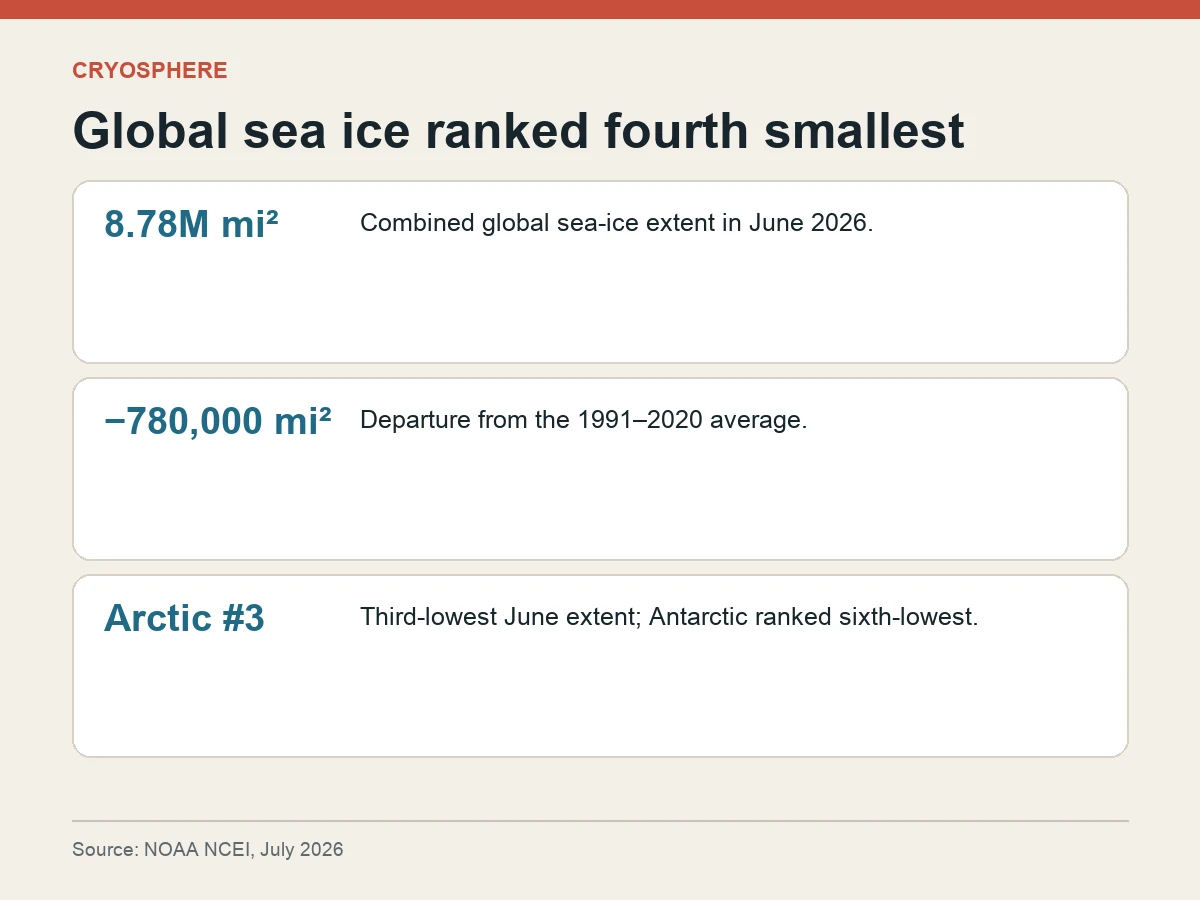
Arctic sea ice ranked third lowest for June, 340,000 square miles below average. Antarctic extent was 440,000 square miles below average and ranked sixth lowest. These sea-ice comparisons use a different baseline from the global temperature anomaly and should not be combined into one index.
From January through June, global surface temperature ranked third highest on record. NOAA’s annual temperature outlook said 2026 was very likely to finish among the five warmest years, but that remains a probability until the full year is observed and processed.
Seven named tropical storms formed worldwide during June, above the monthly average, including three in the eastern Pacific and three in the western Pacific. Taken together, the temperature, ocean and ice measures show another month near the top of the modern climate record—without erasing substantial regional variation.