
Only five of 20 major federally funded programs administered by states or other government entities had documented evidence consistent with identifying fraud risks and assessing how likely those risks were, according to a new review by the U.S. Government Accountability Office.
The 20 programs collectively accounted for $1.1 trillion in federal obligations during fiscal year 2025. They included large systems spanning health care, nutrition assistance, disaster aid and other services in which federal money is distributed through state, local or other governmental partners.
GAO said that structure can help deliver benefits and services, but it can also create more points at which fraud can occur. State agencies, subrecipients, contractors and other participants may all handle money, eligibility decisions or program records.
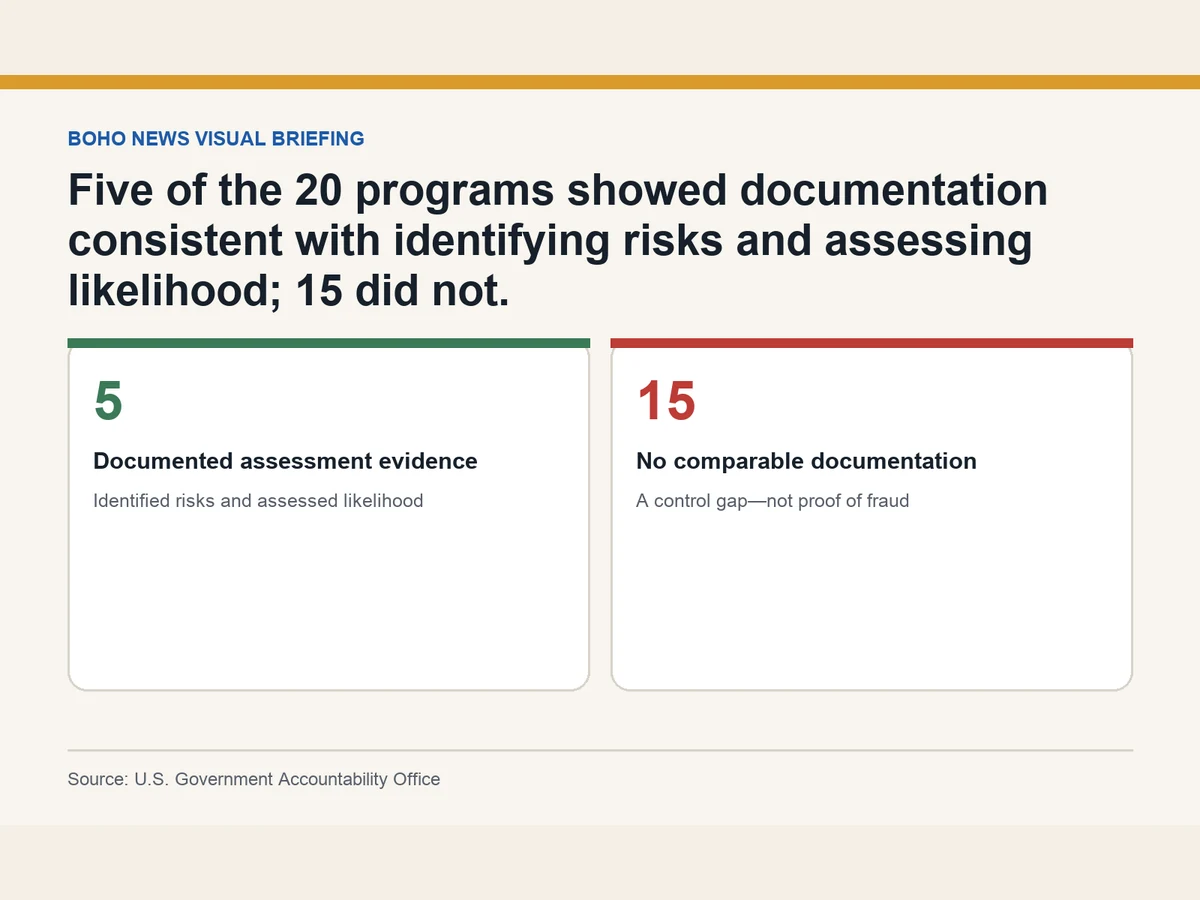
The watchdog found uneven documentation across the programs. Five showed evidence consistent with identifying risks and assessing their likelihood so officials could prioritize action. The other 15 did not have comparable documented evidence, GAO said.
The report does not conclude that all 15 programs experienced fraud, nor does the absence of a documented assessment establish a specific loss. It identifies a control gap: agencies may have less systematic information for deciding which threats deserve the most attention.
GAO highlighted practices agencies can use, including its Fraud Risk Framework, federal identity and eligibility tools such as the Do Not Pay program, and recommendations from inspectors general and other oversight bodies. It also pointed to stronger analytics and more transparent reporting as areas where Congress and agencies could act.
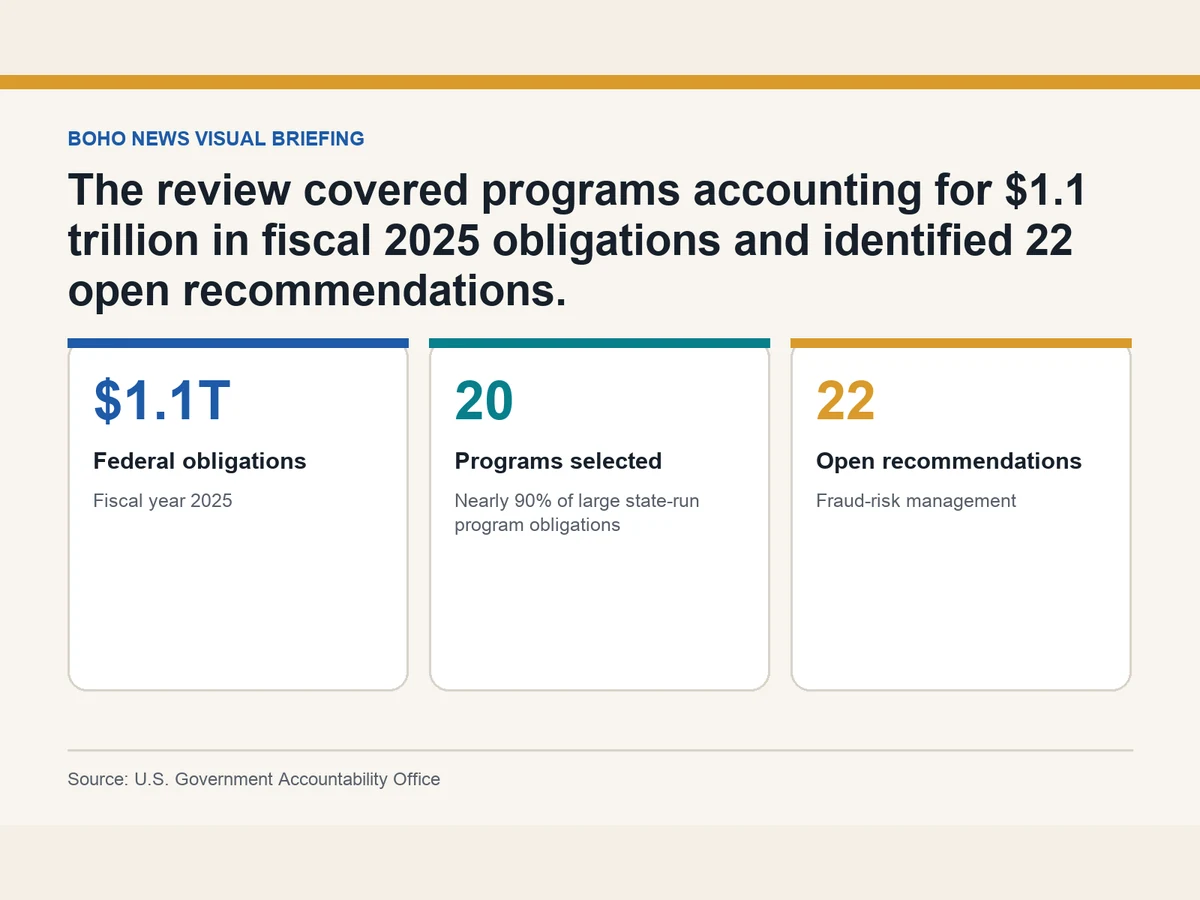
The review identified 22 open GAO recommendations to agencies related to fraud-risk management in the selected programs. GAO said it will continue monitoring agency actions and proposed legislation that could address those recommendations.
GAO separately estimated, using government-wide data from fiscal years 2018 through 2022, that federal fraud losses may range from $233 billion to $521 billion annually. That broader estimate is not a tally of losses in the 20 programs covered by the new report.
The report is the first installment in a planned body of work examining fraud risks in federally funded, state-administered programs. Future oversight may provide a clearer picture of how agencies improve assessments and whether prevention controls become more consistent.