
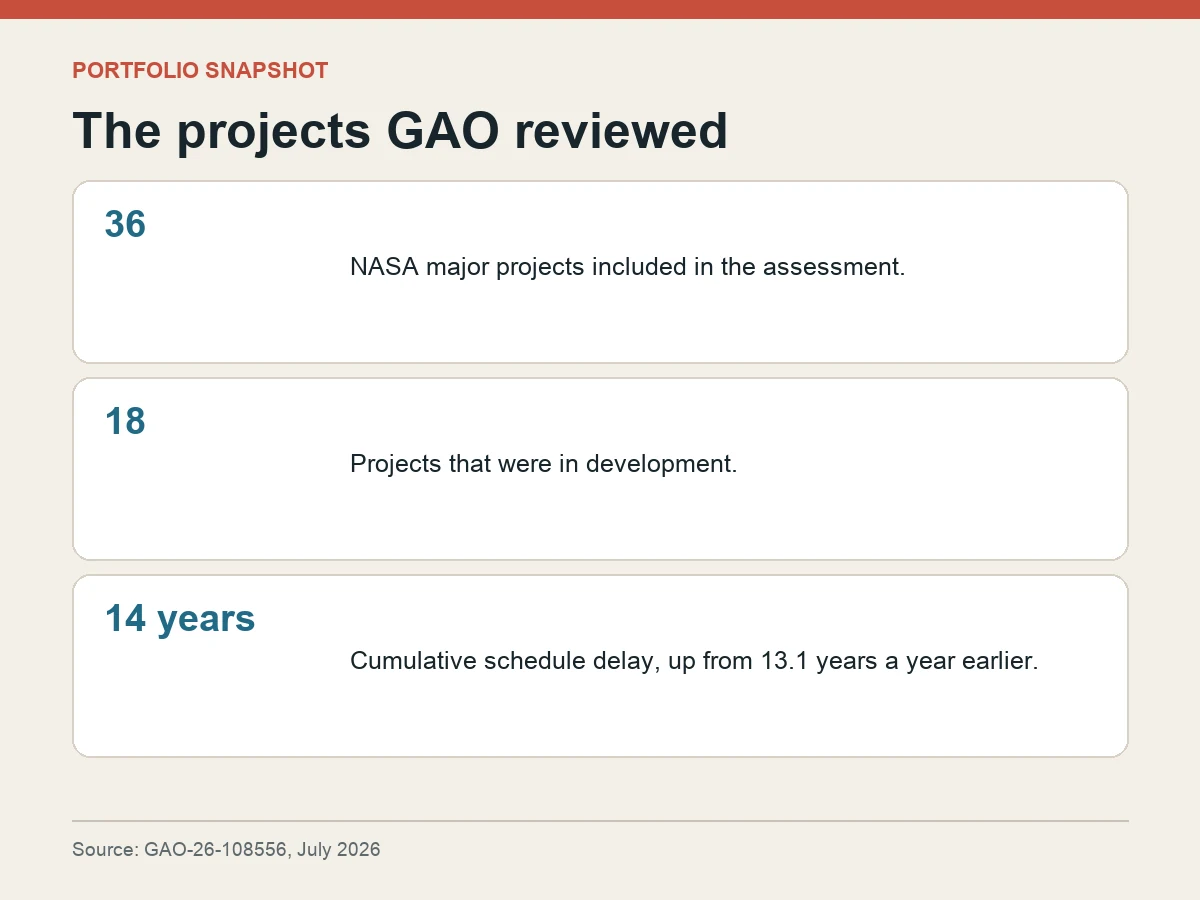
NASA’s Orion crew capsule accounts for almost three-quarters of the cumulative cost overruns in the agency’s major-project portfolio, according to the Government Accountability Office’s annual assessment of 36 projects.
GAO examined 18 projects that were in development, the phase in which NASA has established cost and schedule baselines. Two reported annual schedule delays totaling two months, while three reported annual cost overruns totaling $501.4 million.
Across the wider portfolio, cumulative cost growth increased from $4.4 billion to nearly $4.7 billion. Cumulative schedule delay rose from 13.1 years to 14 years. Those figures measure growth against project baselines; they are not NASA’s total spending or total operating budget.
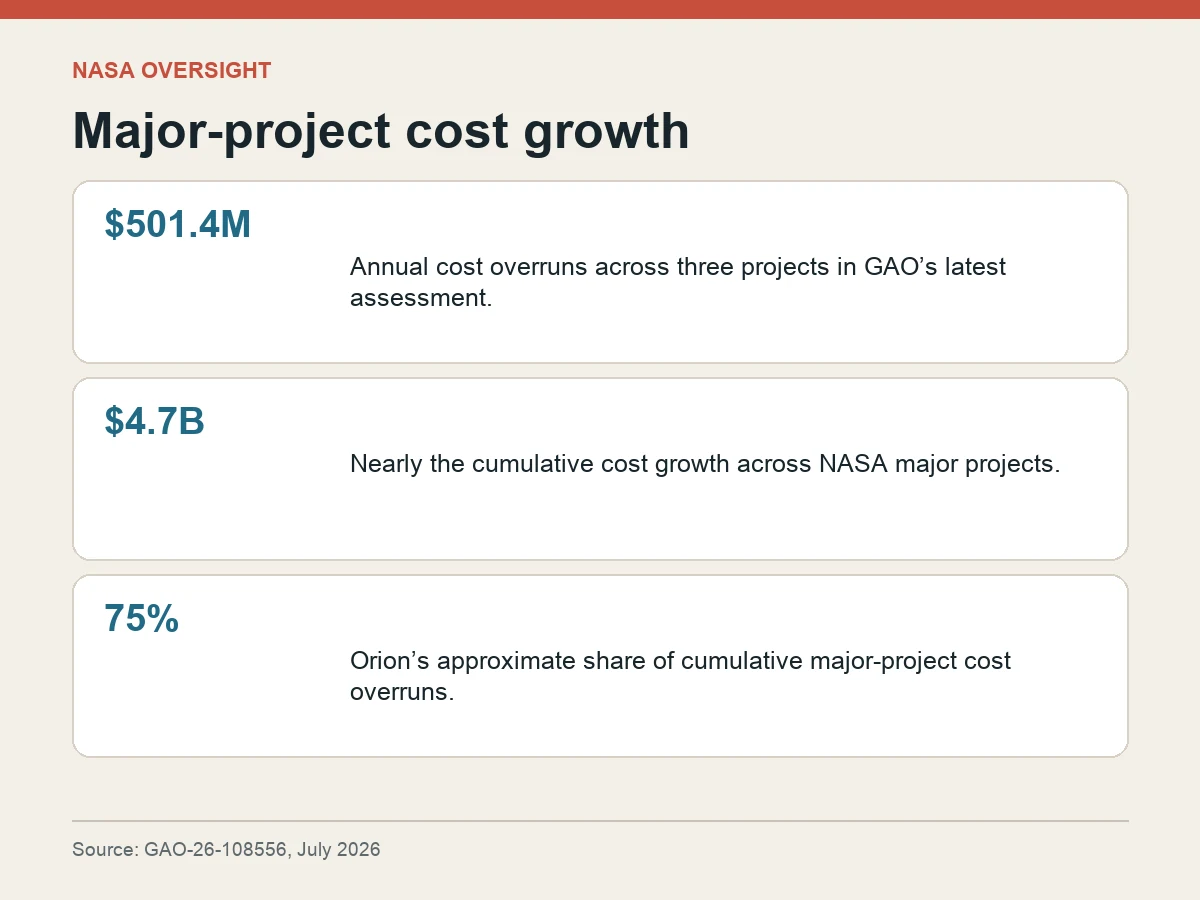
Orion is the dominant driver. GAO says the capsule accounts for more than half of the annual cost overruns and almost 75 percent of cumulative overruns among the major projects it tracks.
That concentration matters because a portfolio-level total can make a problem look evenly distributed. In this assessment, most projects did not report a new annual overrun, while one long-running human-spaceflight program explains much of the accumulated increase.
The portfolio is also being managed through institutional change. GAO said workforce reductions since March 2025 have affected NASA’s ability to manage major projects, while the agency has paused or changed work on future Artemis missions.
GAO has previously called for stronger cost and schedule practices across major acquisitions. The latest assessment does not say every project is failing; it records relatively small annual schedule movement but continuing cumulative growth, especially around Orion.
Future totals remain uncertain. Project estimates can move when designs mature, contractors revise plans, missions are restructured or Congress enacts a different budget from the administration’s request.
The durable conclusion is the distribution of risk: NASA’s 36-project portfolio contains varied science and exploration work, but Orion remains the largest source of accumulated cost growth and therefore the clearest target for tighter program control.