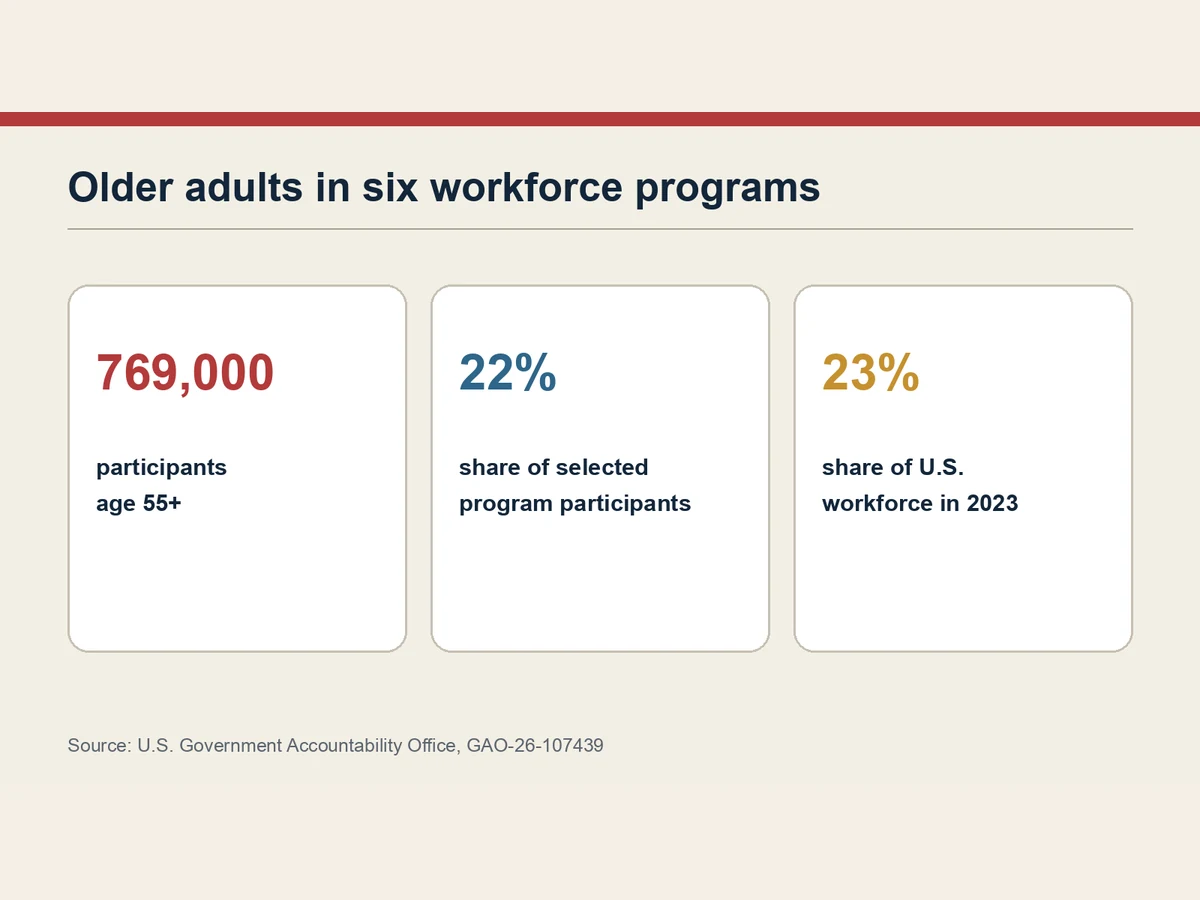
Workers age 55 and older made up about 22% of participants in six federal workforce programs, yet they reported lower employment after leaving major programs than younger participants, the Government Accountability Office found.
The six programs served about 769,000 older adults in program year 2023. That reach matters because workers 55 and older grew from 15% of the U.S. labor force in 2003 to 23% in 2023.
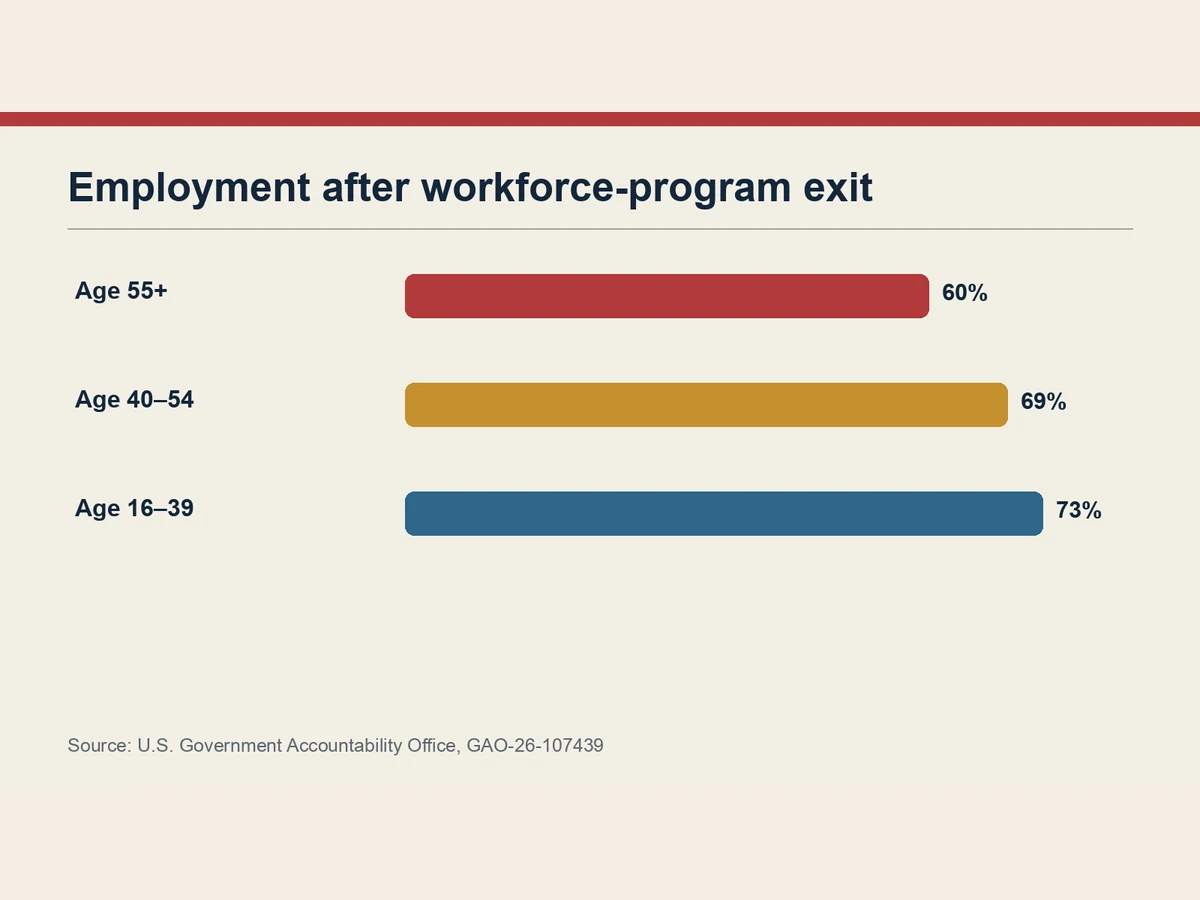
In Workforce Innovation and Opportunity Act programs, about 60% of older participants reported a job in the second quarter after exit. The comparable rates were 69% for ages 40 to 54 and 73% for ages 16 to 39.
Vocational rehabilitation showed a smaller but similar gap: about 50% for older adults, 54% for ages 40 to 54 and 58% for the youngest group.
Those comparisons do not prove the programs caused the gaps. Participants differ in work history, health, disability, local job markets and the barriers that led them to seek services.
GAO also held non-generalizable discussions with 41 older workers at 10 job centers in five states. Participants credited programs with digital-literacy training and access to employment opportunities, while describing application difficulties, skill gaps and potential age discrimination.
Local officials reported initiatives tailored to older workers, but GAO found no regular Labor Department process for sharing promising practices across state and local partners.
GAO recommended that Labor coordinate with Education to facilitate that exchange. Labor agreed and said in an April 2026 update that it planned to use platforms such as WorkforceGPS; GAO still listed the recommendation as open.
The implementation measure is not a new portal alone. It is whether local programs can identify practices, document who they help and improve employment outcomes without assuming that every older worker faces the same barrier.GAO also asked Education to participate in sharing practices across the federal programs. The recommendation is aimed at coordination: local operators need examples that cross agency boundaries because older job seekers may encounter workforce, rehabilitation and community-service programs through different doors.