Almost one in three immigration hearings was conducted remotely in fiscal 2025, according to a new federal review of how video and telephone proceedings have become embedded in the nation’s immigration courts.
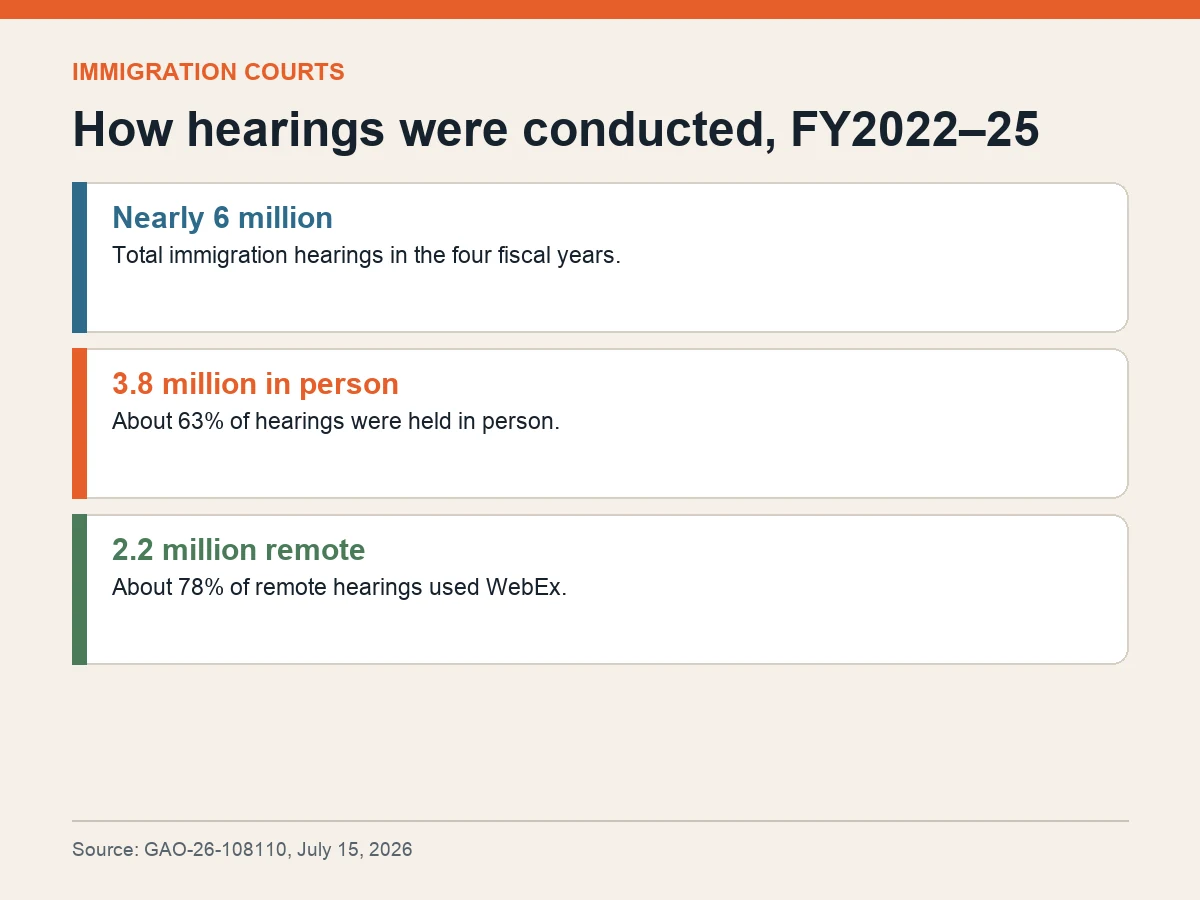
The Government Accountability Office counted about 2 million hearings that year. Across fiscal years 2022 through 2025, nearly 6 million hearings took place: about 3.8 million, or 63%, were in person, while approximately 2.2 million were remote.
Video dominated the remote calendar. GAO said roughly 1.7 million remote hearings—about 78%—used WebEx, while the rest used telephone. The number of remote hearings increased almost 50% over the four-year period, even as in-person hearings grew more sharply when courts scheduled more proceedings after the pandemic.
Remote does not describe everyone’s location. The Executive Office for Immigration Review records the medium used by the judge and the respondent, but not every lawyer, interpreter or other participant. That data limit matters when assessing how fully a hearing occurred online.
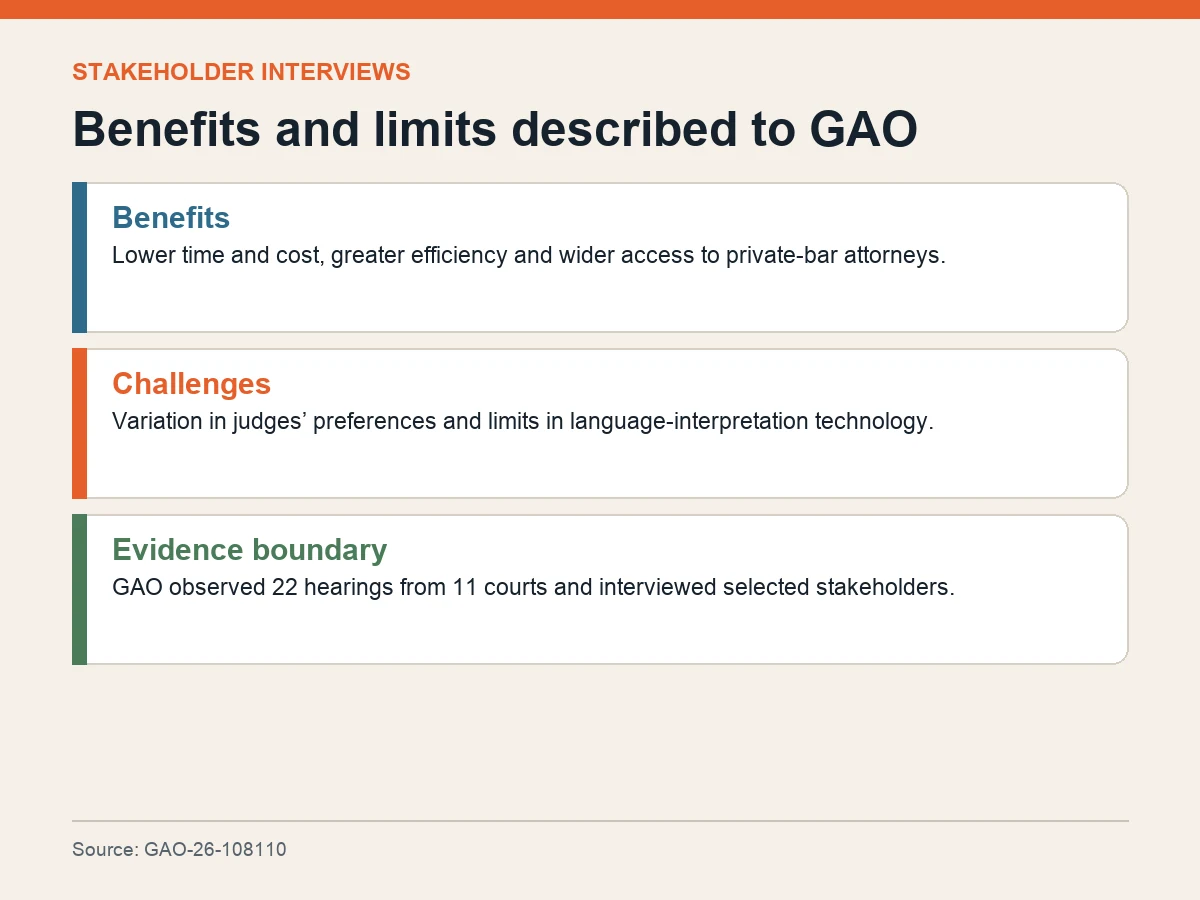
Selected immigration judges, government lawyers and attorneys for respondents described their experiences as generally favorable. They cited flexibility, lower travel time and cost, more efficient hearings and greater access to private-bar lawyers who could appear from elsewhere.
They also identified constraints. Judges differed in how they preferred to use remote technology, and language-interpretation options did not always work equally well. Interviewees told GAO those challenges did not outweigh the benefits, but the report does not turn that judgment into a universal finding about every respondent or proceeding.
Immigration judges retain discretion under agency policy to decide whether and how participants use a remote medium. That makes courtroom practice partly a technology question and partly a case-management choice rather than a single national switch between online and in-person hearings.
GAO reviewed policies and hearing data, interviewed officials and selected stakeholders, and observed 22 proceedings from 11 courts. The evidence establishes the scale and describes recurring experiences; it does not measure whether remote appearance changes case outcomes.
The central operational finding is therefore narrower than a verdict for or against remote court. Remote hearings now carry a substantial share of the calendar, and their value depends on consistent judicial practice, reliable connections and interpretation tools that preserve meaningful participation.