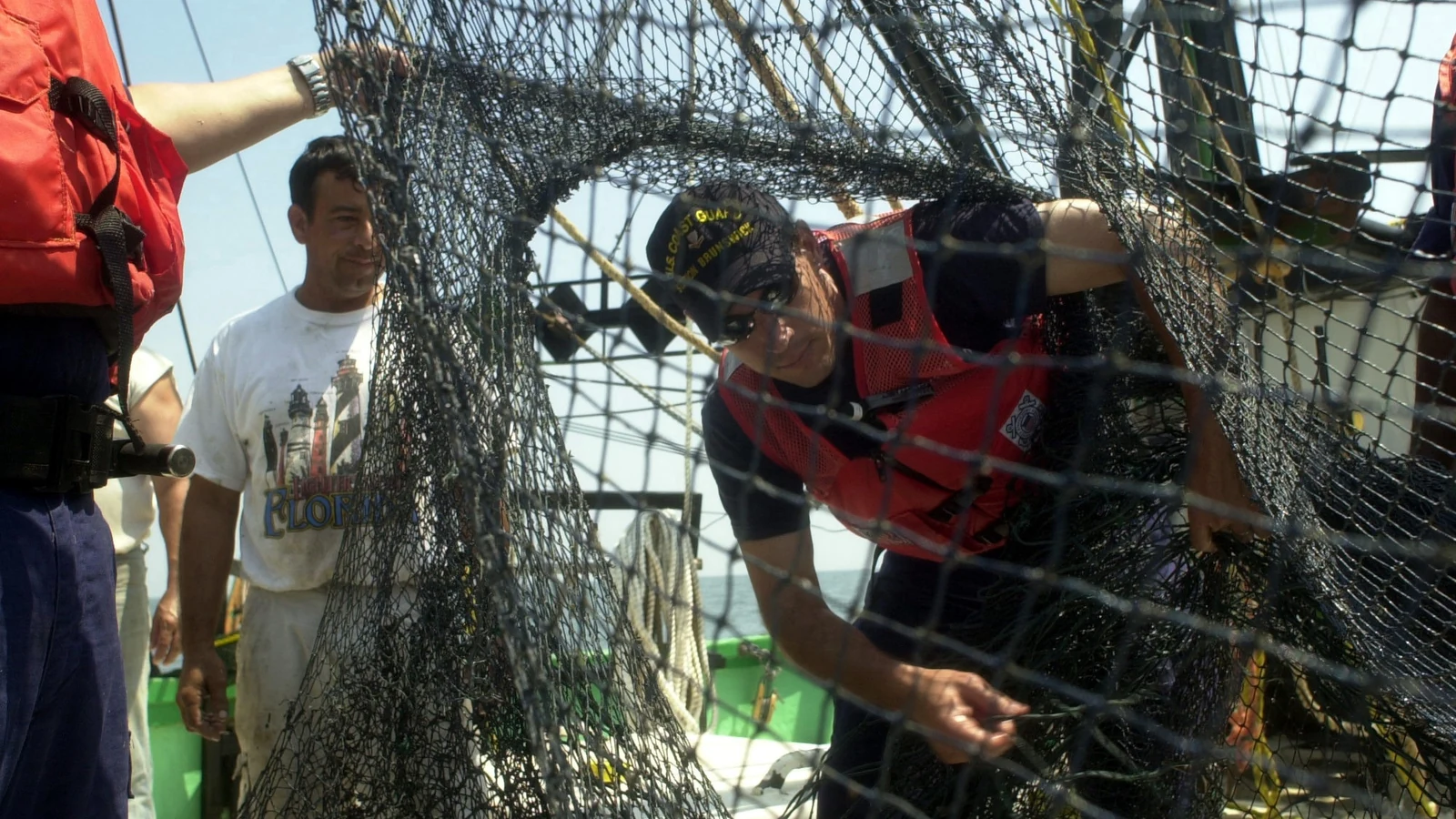
DNA analysis and digital tracking can help test whether imported seafood came from the place on its label, but the Government Accountability Office says the available tools are neither universal nor simple to deploy.
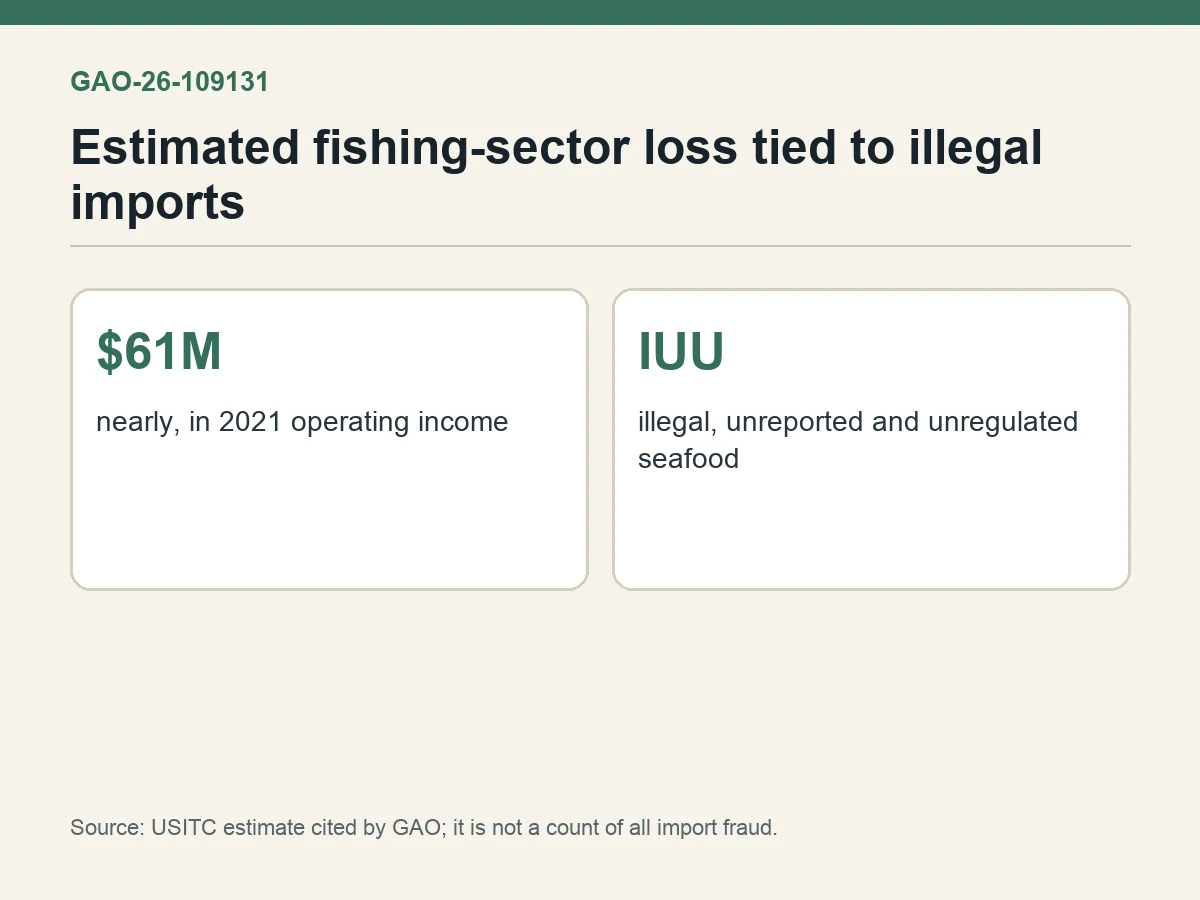
The economic stakes are measurable. GAO cites a U.S. International Trade Commission estimate that illegal, unreported and unregulated seafood imports cost U.S. commercial fishing nearly $61 million in operating income in 2021.
One approach follows the product. Digital systems record harvest, processing, shipping and sale information along the supply chain. Tamper-resistant records can make unauthorized changes harder, but no database can correct false information entered at the start.
A second approach tests the product itself. DNA can identify species and whether it is consistent with a claimed source. Chemical or elemental signatures can reflect the environment where seafood, crops or trees grew.
Those results require a comparison set. Analysts need reference libraries containing authenticated samples from known locations, and such libraries are expensive to build, update and share. Proprietary collections can also limit access.
Processing complicates the science. Canning, cooking or other treatment may alter biological and chemical properties, which can make a processed product harder to compare with a fresh reference sample.
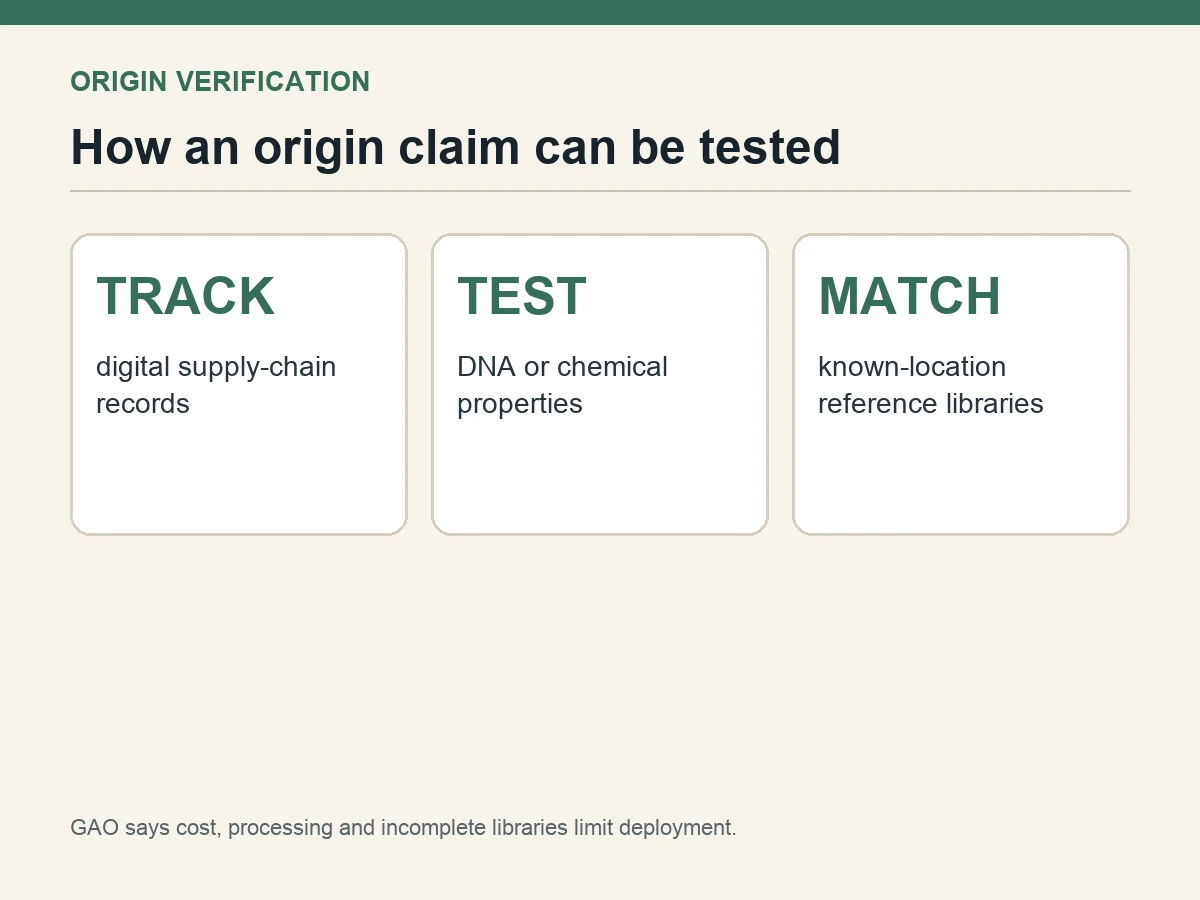
Cost limits coverage. Laboratory equipment, skilled analysts and multiple samples can make routine testing impractical, pushing agencies and companies toward selected high-risk products rather than universal screening.
GAO says Customs and Border Protection is enhancing its laboratories and NOAA is piloting field-based testing. More portable tools could move verification closer to ports and inspections, but maturity varies by product.
Importers already face reporting duties for specified seafood from catch through U.S. entry. Better verification can test those records, but it cannot replace the compliance system that creates the traceable claim in the first place.
The policy choice is therefore not digital records versus laboratory science. Stronger origin control links traceable custody, credible reference data and targeted analytical testing—while recognizing that each layer can fail on its own.