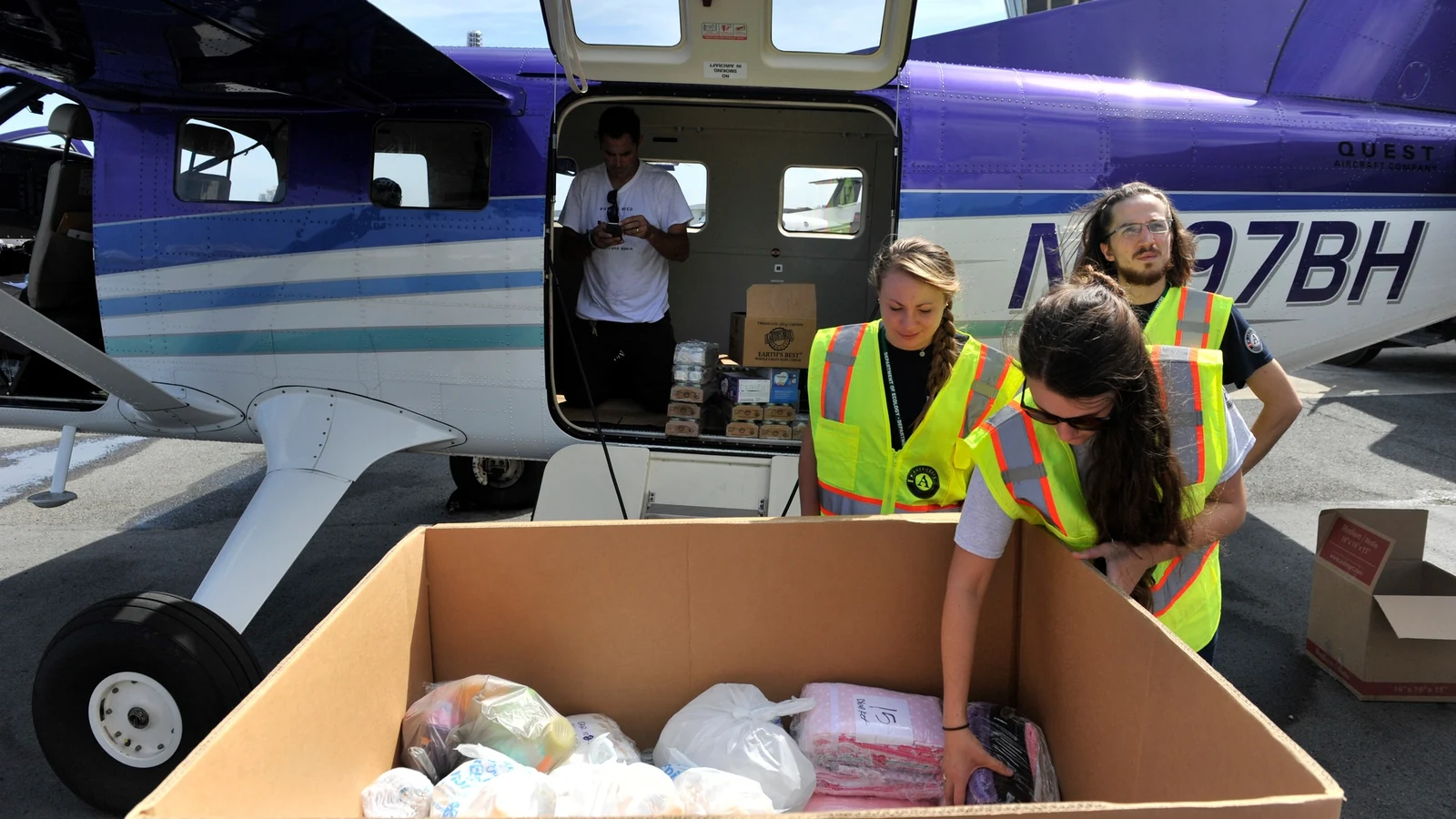
Disaster plans need specific provisions for infant feeding, private shelter space, medical transport and family evacuation, according to a Government Accountability Office review of how responders support mothers and young children.
GAO found that standard mass shelters may not fit families with infants. Service providers described using hotel rooms or private nursing spaces and supplying diapers, baby food, formula and other care items that ordinary food and shelter inventories may not cover.
Feeding logistics can become a safety problem when electricity or clean water is unavailable. Providers told GAO to prioritize formula that can be used without power or safe drinking water and to make sure families receive accurate infant-feeding guidance.
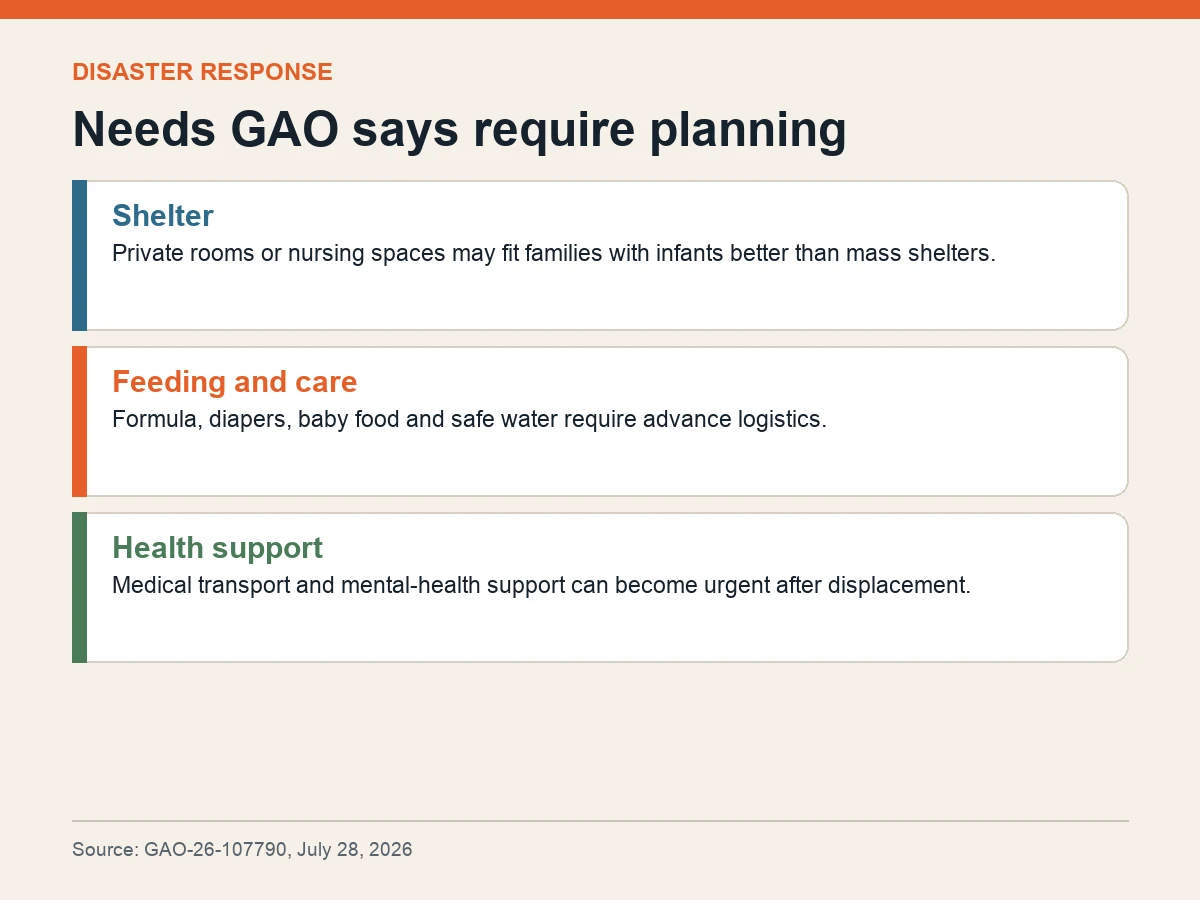
Medical and mental-health needs also differ. GAO cited support ranging from transport for newborn infants to books and activities designed to help young children process fear and trauma during and after a disaster.
The Federal Emergency Management Agency has issued guidance and kept stockpiles of infant and toddler supplies, according to the report. GAO identified four instances in 2024 when FEMA fulfilled provider requests, including newborn medical transportation.
Evacuation planning should keep children with their families whenever possible, FEMA officials told auditors. Separating them creates reunification problems at the same time communications, transportation and records may already be disrupted.
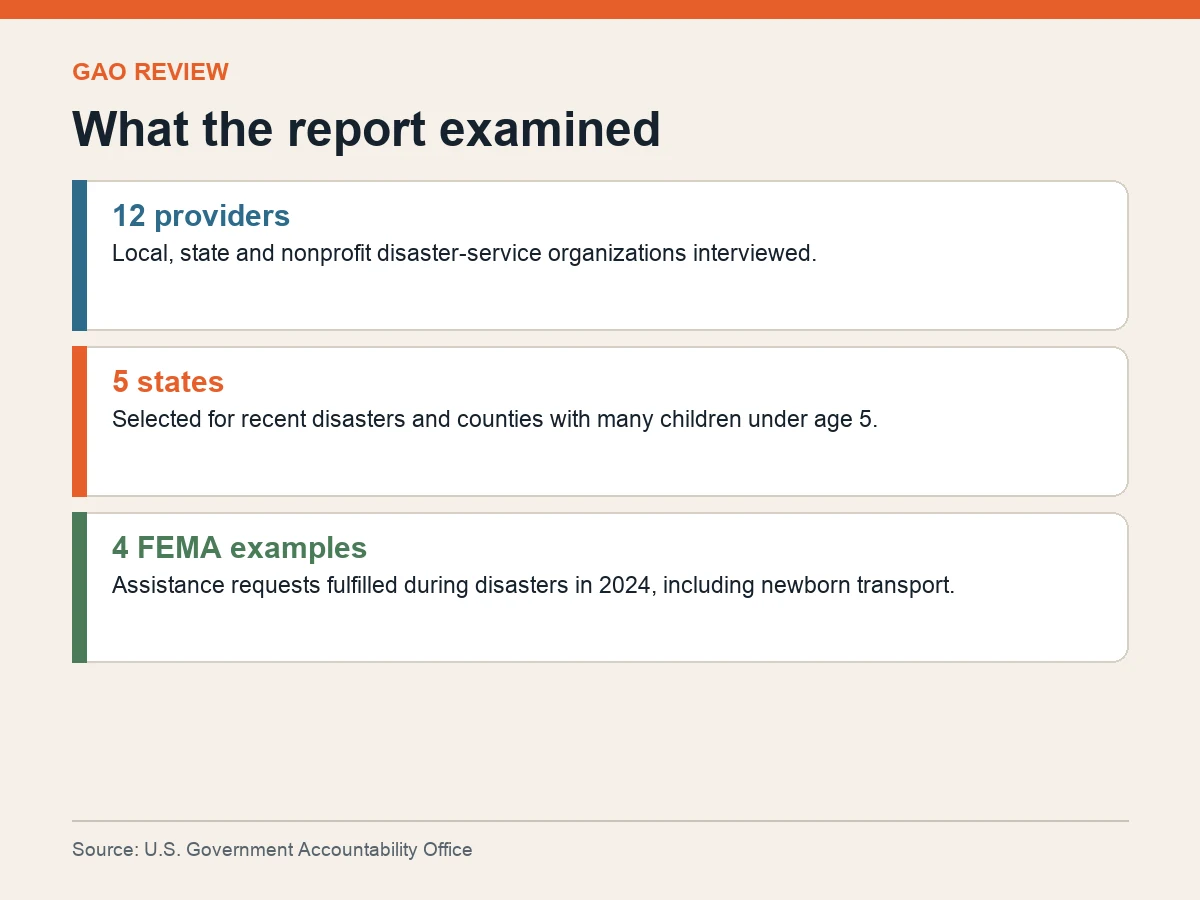
The evidence base is targeted. GAO interviewed 12 local, state and nonprofit providers and selected five states using factors including major 2024 disasters and counties with relatively large populations of children under age five.
That design produces practical lessons but not national failure rates. The report does not claim that every shelter lacks private space or that FEMA failed all requests; it documents recurring needs and examples of how agencies and providers addressed them.
The accountability test is operational: whether plans identify appropriate shelter, feeding and care supplies, medical and mental-health support before a disaster, and whether responders can deliver those resources when power, water and transportation are already compromised.