
Federal agencies have made progress toward immediate public access for taxpayer-funded research, but most have not planned for the publishing costs that could follow, the Government Accountability Office reported.
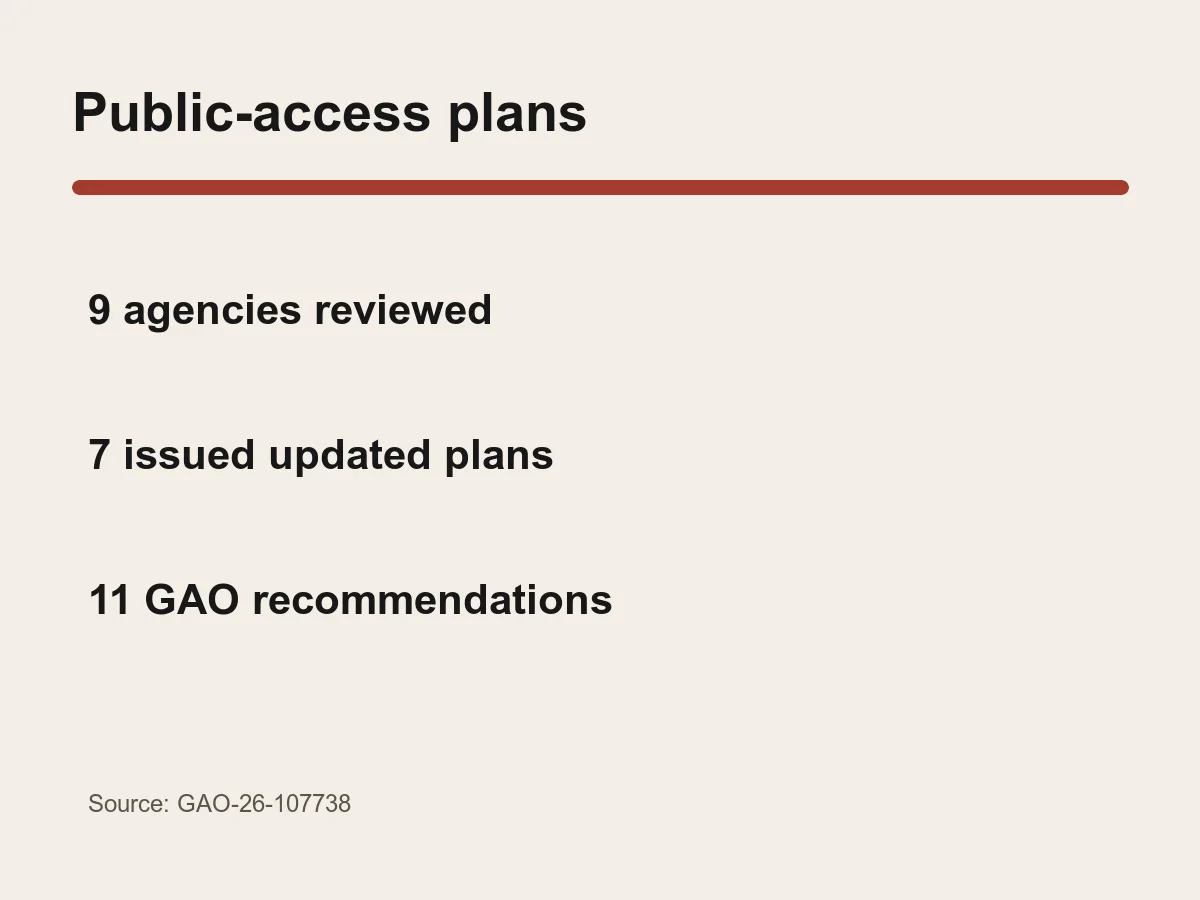
GAO reviewed nine agencies affected by a 2022 White House policy directing agencies to make federally funded research articles publicly available without an embargo. Seven had issued updated public-access plans when the audit was completed.
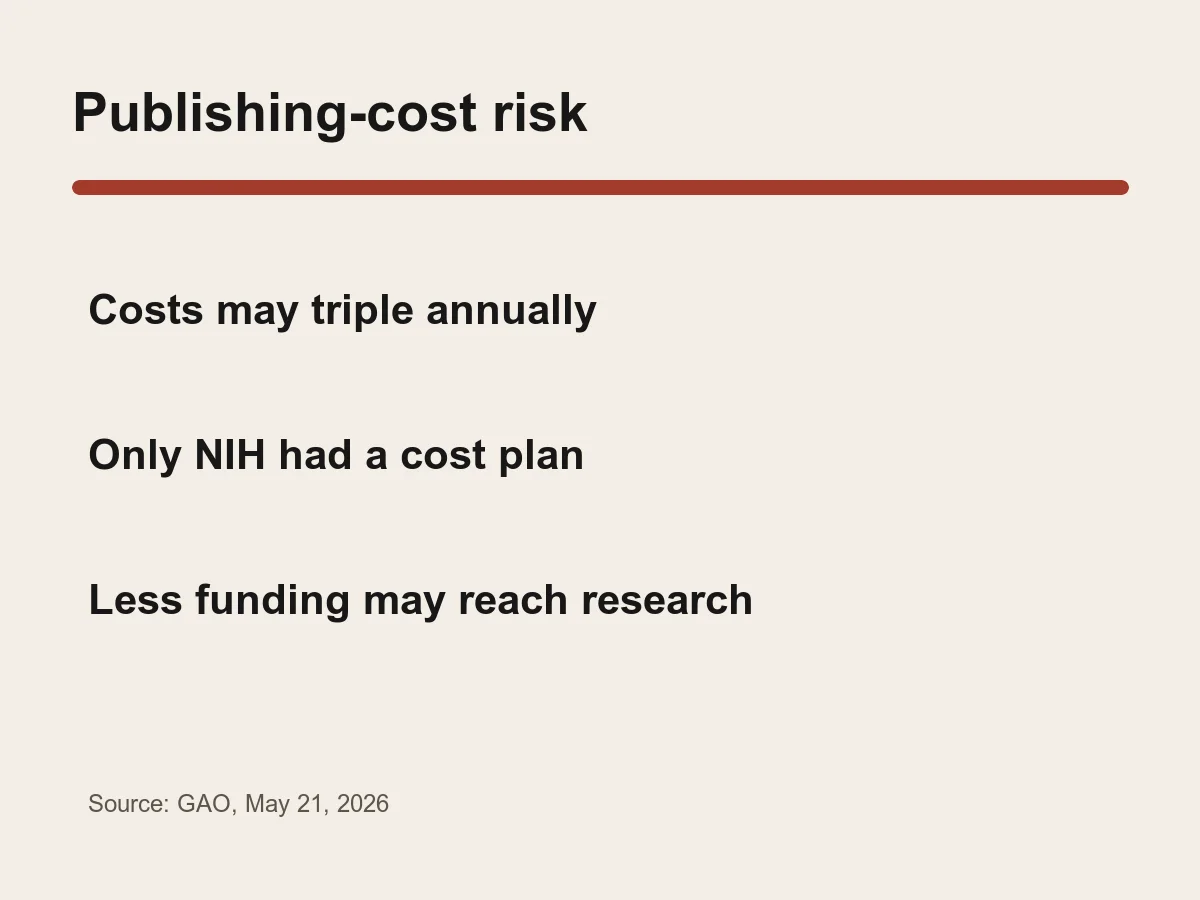
The watchdog estimated that federal spending on article-processing charges and related publishing costs could roughly triple each year under the expanded policy. The estimate is not a bill already incurred; it models what broader immediate access may cost if current publishing practices continue.
Only the National Institutes of Health had developed a plan for handling those costs, GAO said. Without comparable plans elsewhere, added publication fees could consume money that otherwise supports experiments, staff, equipment or new awards.
The issue is not whether the public should receive access. The policy is designed to remove waiting periods and make federally supported findings available to researchers, clinicians, businesses and readers without subscription barriers.
The accountability question is who pays and how agencies prevent the policy from shrinking the amount of research they can support. Researchers may face different fee structures across journals, while some publishers offer no-fee routes or institutional agreements.
GAO made 11 recommendations across the nine agencies, principally calling for cost estimates, implementation plans and monitoring. Four agencies agreed with their recommendations; the other five did not provide comments, according to the report.
Those response categories should not be read as evidence that an agency rejected public access. They describe whether agencies formally concurred with GAO's specific planning recommendations at the time of publication.
The next measurable steps are agency cost plans and actual spending data. Those records will show whether publication expenses approach GAO's projection and whether agencies protect research awards while meeting the access deadline.