
The Energy Department’s nuclear cleanup office often names a preferred construction solution before it has fully compared alternatives, a planning pattern that can push cheaper viable options out of consideration, the Government Accountability Office found.
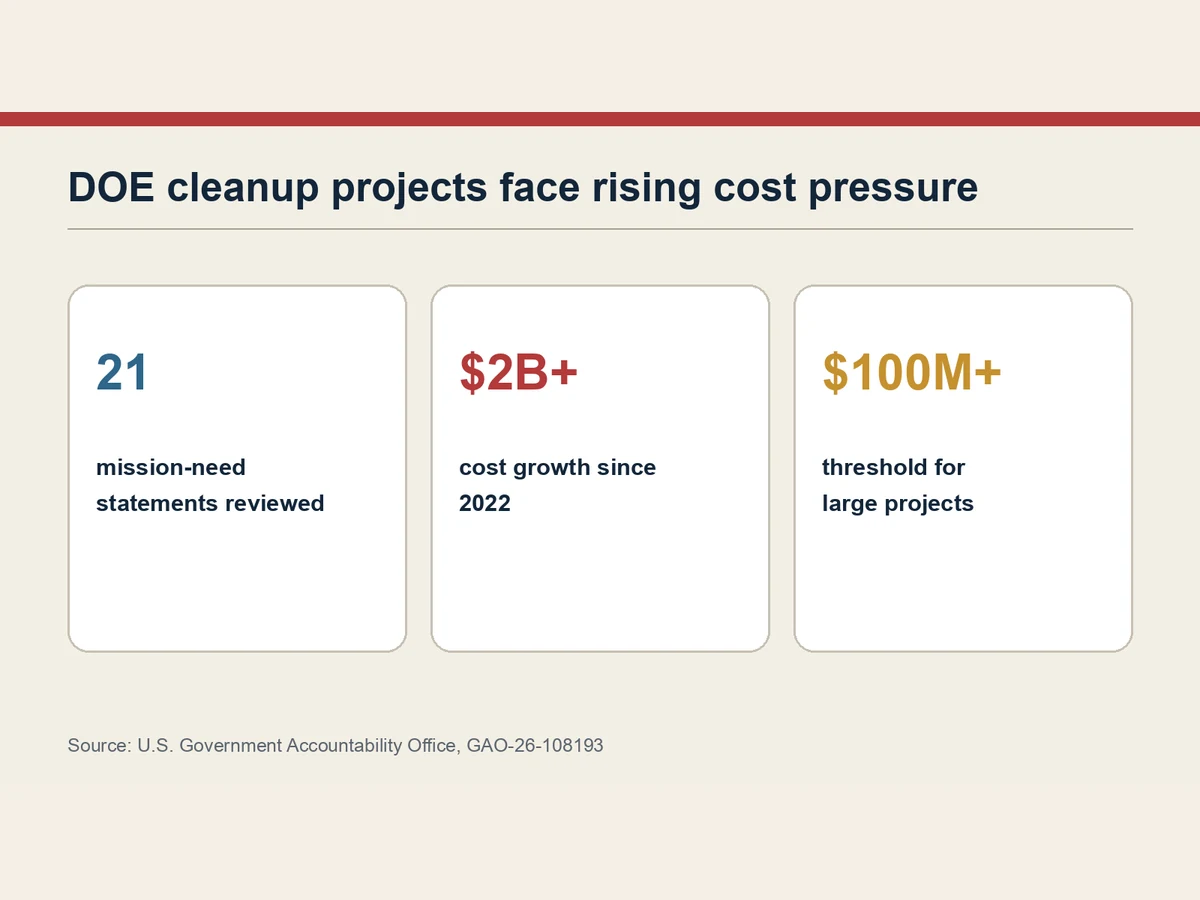
GAO reviewed 21 mission-need statements for Office of Environmental Management projects estimated to cost at least $100 million. DOE standards say the statement should define the need without specifying how to solve it.
A majority of the statements nevertheless identified a particular solution. One Oak Ridge statement called for “a new mercury treatment facility” at the stage that should have described the mission problem.
DOE officials told GAO that alternatives are examined later. GAO found instances, however, where the early preference shaped later decisions and potential cost-saving options were not pursued.
At Idaho National Laboratory, GAO says legal and regulatory agreements contributed to rejection of a cheaper, technically sound treatment option. DOE spent money over years on an approach it later deemed suboptimal and suspended.
The financial context is material. Costs for the cleanup office’s most expensive capital projects have risen by more than $2 billion since 2022, and at least five sites anticipate future projects likely to exceed $100 million each.
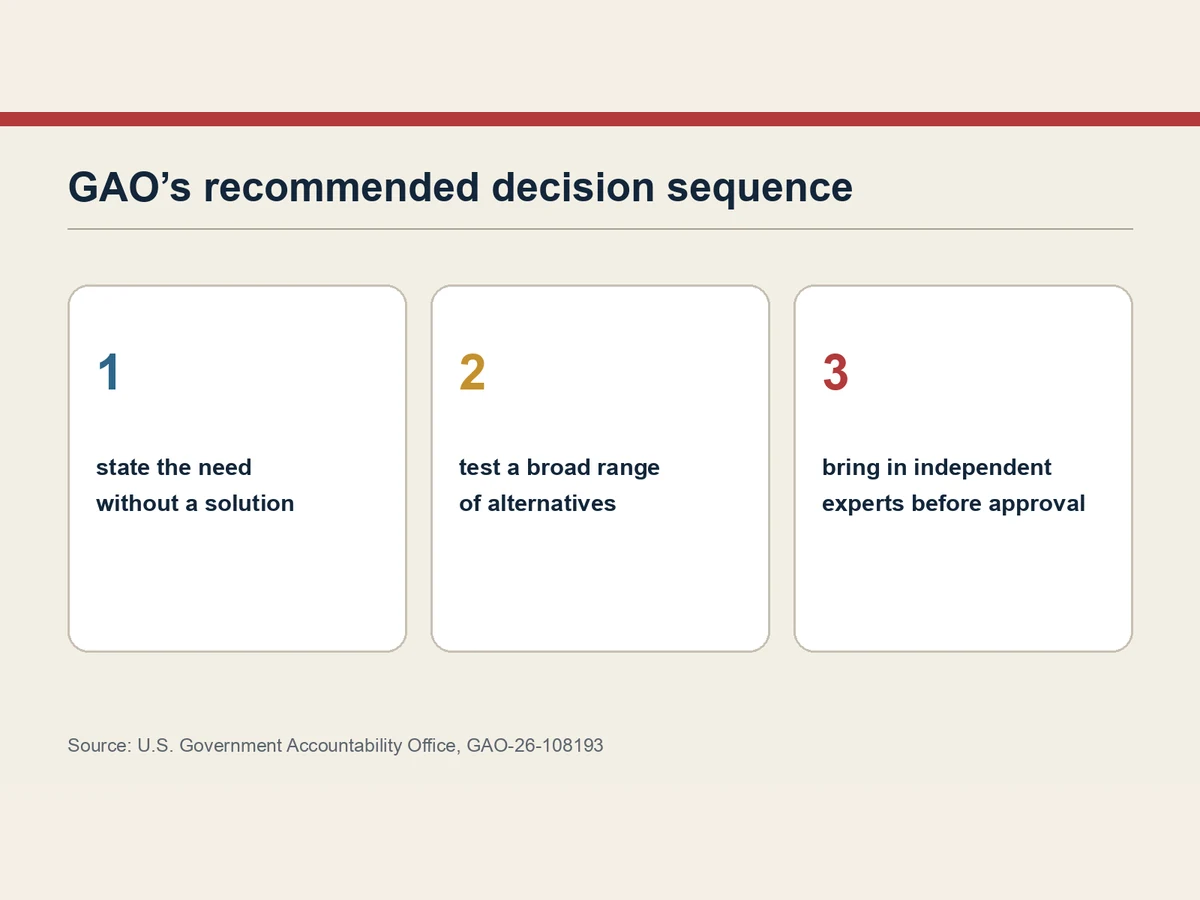
GAO recommended that future mission-need statements be revised when they identify a solution and that outside experts join early reviews before DOE agrees on an approach with regulators. DOE concurred with both recommendations.
Independent review does not eliminate regulatory constraints. It adds a documented challenge to assumptions before the government commits to a path that becomes expensive to reverse.
The test for implementation will be future project records: a clearly defined need, a broad comparison of technically and legally viable options, and evidence that reviewers without a stake in the selected project examined the alternatives.DOE’s concurrence is a commitment to act, not evidence that the new process has already changed a project. Follow-up records will need to show whether the department revised solution-specific statements and brought independent experts in before key alternatives disappeared.