
The three federal banking agencies cannot clearly demonstrate that their once-a-decade regulatory reviews identify and remove unnecessary burdens, the Government Accountability Office found in an assessment released while the latest review was still underway.
The Economic Growth and Regulatory Paperwork Reduction Act requires the Federal Reserve, Federal Deposit Insurance Corporation and Office of the Comptroller of the Currency to solicit public comment and review regulations at least every 10 years.
GAO found that outcomes from earlier reviews are often hard to identify and their relationship to later regulatory actions is unclear. Some actions cited in the 2017 report were driven by other laws, while others began before or alongside the review.
The accountability gap starts with process. The agencies did not have fully implemented documented procedures for deciding which regulations are outdated or unnecessary, determining whether a comment warrants action and recording why a change was or was not made.
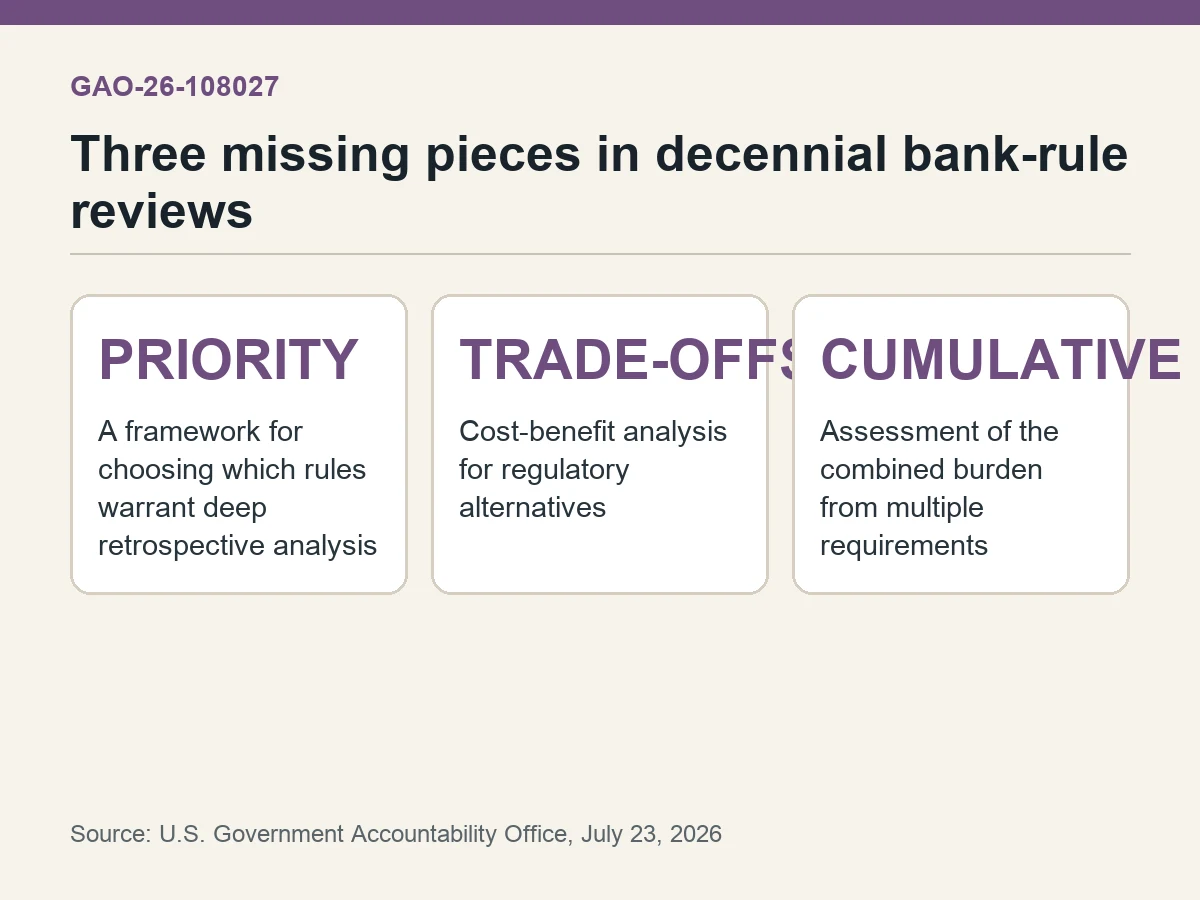
Their methods included some leading practices, such as interagency coordination and public input. But GAO said they did not fully incorporate frameworks for prioritizing rules, cost-benefit analysis or assessment of the combined burden imposed by multiple regulations.
Those omissions matter because a review can collect thousands of pages of comment without answering the central policy question: which requirements create avoidable cost, which protections remain justified and what evidence supports the trade-off.
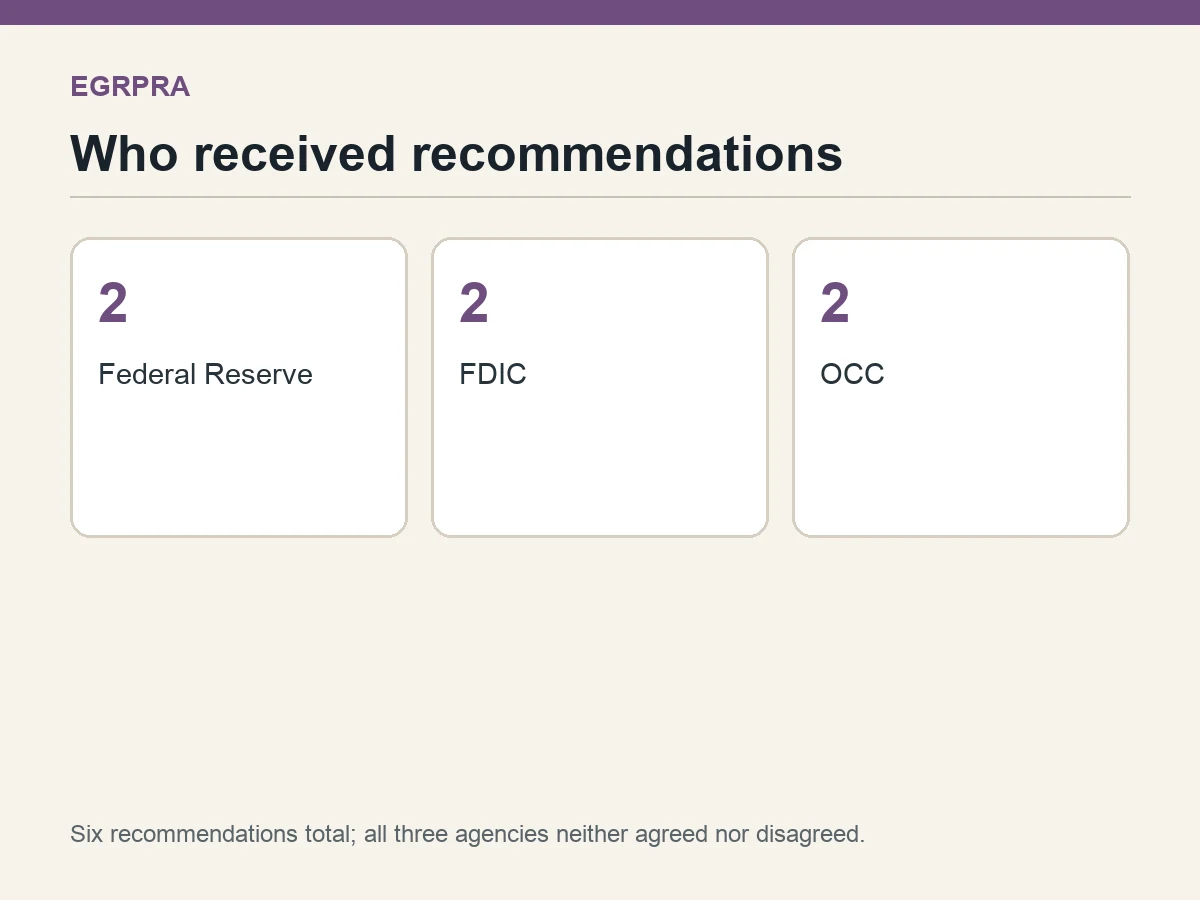
GAO issued six recommendations—two to each agency. Each regulator was told to implement documented decision procedures and incorporate prioritization, cost-benefit and cumulative-burden analysis where practicable.
The agencies neither agreed nor disagreed. Two had draft procedures, according to GAO, but the watchdog said those processes were not fully developed or demonstrated in practice. Their third statutory review was ongoing as of July 2026.
The report does not declare that a particular bank rule should be repealed. Its finding is about traceability: after a decennial review, Congress and the public should be able to see what was evaluated, how evidence was weighed and whether the exercise caused a regulatory decision.