
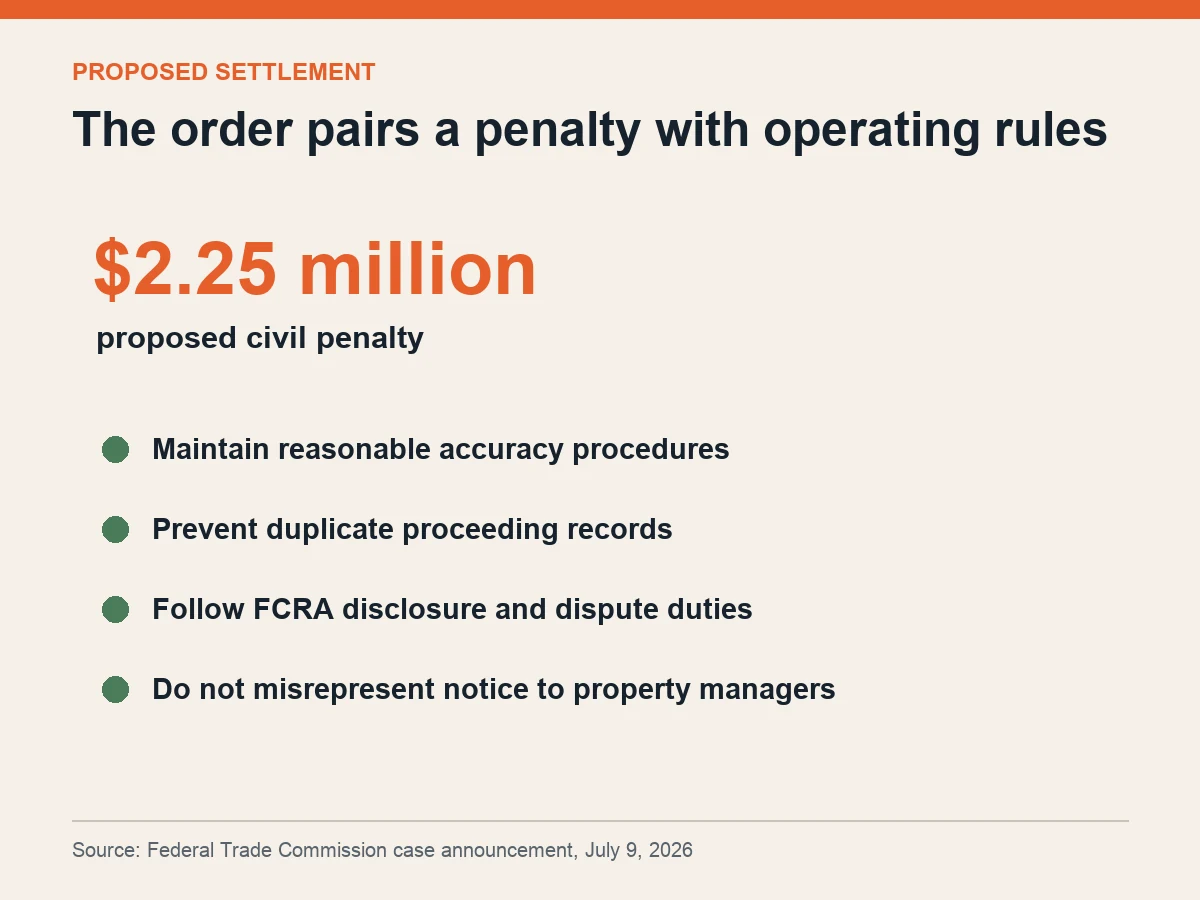
Tenant-screening provider RentGrow would pay a $2.25 million civil penalty and change its reporting practices under a proposed settlement of Federal Trade Commission allegations involving inaccurate or incomplete background reports.
RentGrow compiles information for reports sold to landlords and property managers. Because those reports can influence access to housing, the company operates as a consumer reporting agency subject to the Fair Credit Reporting Act, according to the FTC complaint.
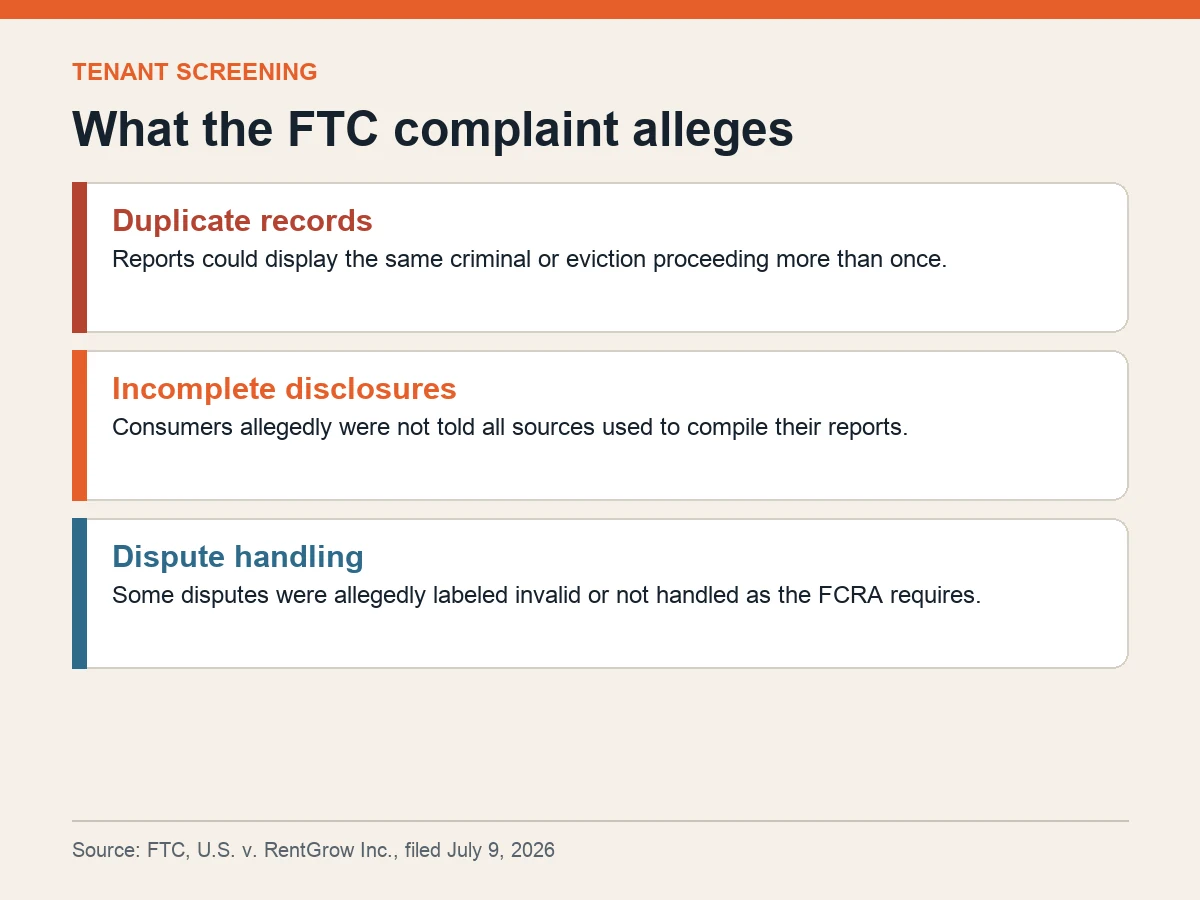
The government alleges that some reports displayed the same criminal or eviction proceeding more than once, making an applicant appear to have more convictions or eviction cases than the underlying records showed. The complaint says duplicate entries could appear even when a vendor delivered accurate source information.
That distinction places the alleged problem inside RentGrow’s own presentation and matching process, not solely with outside records. The FTC says the company knew about duplicate-record problems but did not adopt reasonable procedures to address them until the agency began investigating.
The complaint also alleges incomplete file disclosures. When consumers requested the information in their reports, RentGrow allegedly failed to identify every source it used — including a service that supplied historical addresses and middle names used to match criminal or eviction records.
Disputes are the third focus. The FCRA requires consumer reporting agencies to follow procedures when a person challenges the completeness or accuracy of a report. The FTC alleges RentGrow sometimes labeled disputes invalid and stopped without taking the required further steps.
A separate FTC Act allegation concerns the notice sent after a successful dispute. The complaint says RentGrow told some consumers that it had notified the property manager of a change, while telling the property owner there was no change.
The proposed order bars those practices and requires reasonable procedures designed to prevent duplicate proceedings. It also requires compliance with source-disclosure and dispute duties and prohibits misrepresentations about updated reports sent to landlords or property managers.
The FTC voted 2-0 to refer the matter to the Justice Department and approve the proposed settlement. DOJ filed the complaint and stipulated order in the U.S. District Court for the District of Columbia.
The allegations are not court findings. The stipulated order becomes enforceable only if a judge approves and signs it. For renters, the case underscores two practical rights: obtaining the information and sources in a screening file and disputing entries that are duplicated, incomplete or inaccurate.