
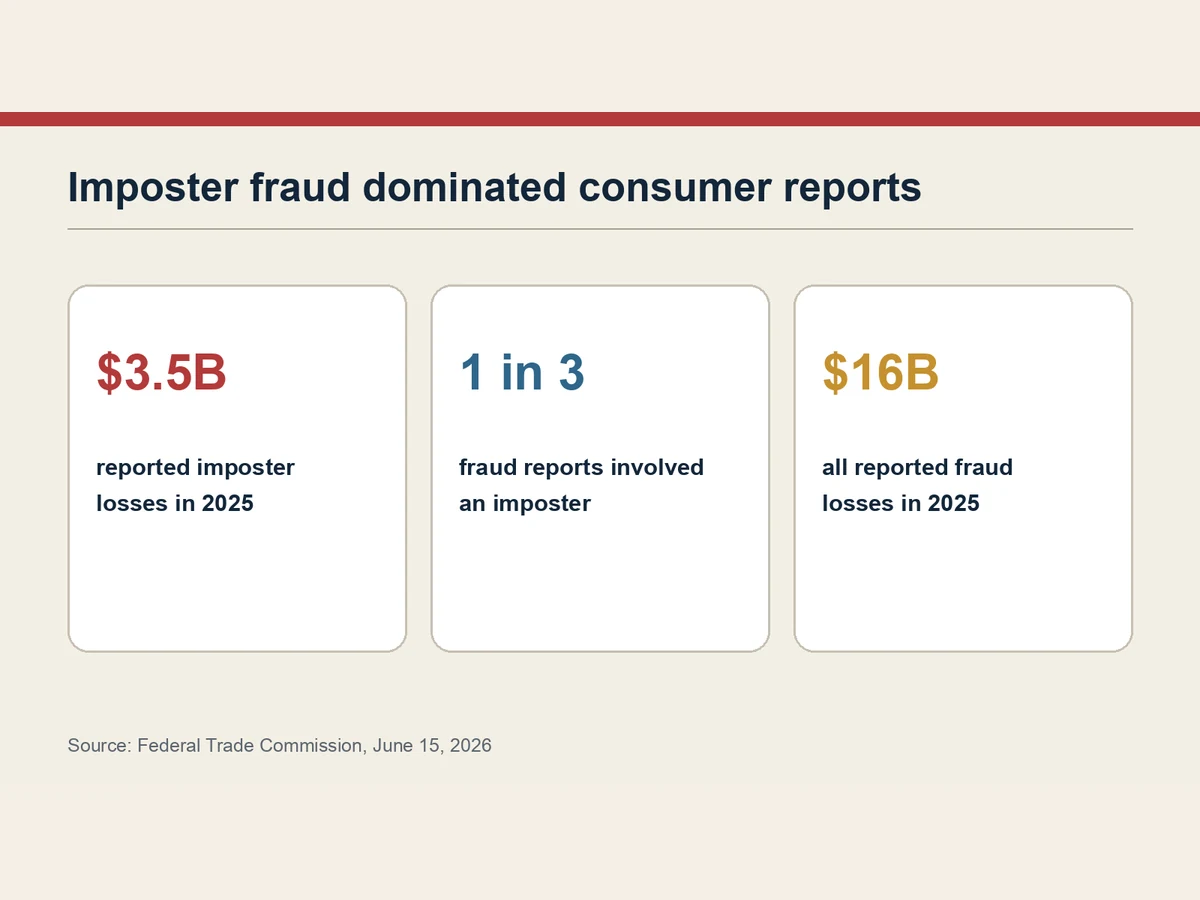
Consumers reported losing $3.5 billion to imposter scams in 2025, nearly triple the amount reported in 2020, according to new Federal Trade Commission data.
Imposter scams were the agency’s most frequently reported fraud category. Nearly one in three fraud reports involved someone pretending to be a business, government agency, bank, relative or other trusted party.
The loss figures are large but incomplete. They come from reports submitted to the FTC, not a census of every scam, and underreporting means the true scale cannot be inferred from the dashboard alone.
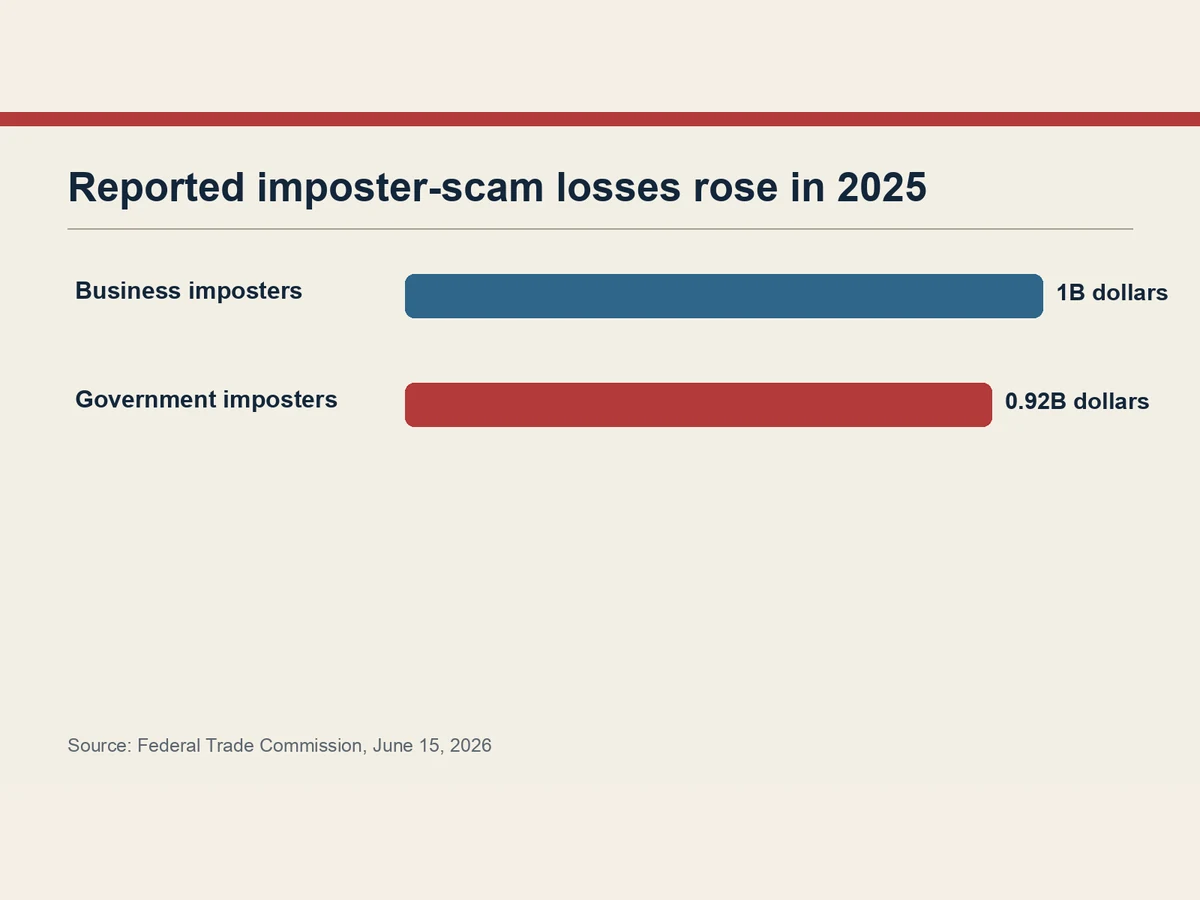
Business impersonators accounted for nearly $1 billion in reported losses, with bank impersonation producing the highest losses in that group. Government impersonators accounted for about $920 million, up from $789 million a year earlier.
Many high-loss schemes begin with a fake security alert. The consumer is told an account is endangered and is instructed to move money to “protect” it. The transfer sends funds to the scammer instead.
Across every fraud category, consumers reported losing about $16 billion in 2025, the highest amount on record and about 25% more than in 2024. The imposter total therefore represented more than one-fifth of all reported fraud losses.
The FTC says its 2024 Impersonation Rule gives the agency tools to seek civil penalties and money for harmed consumers. It reported a dozen enforcement actions under the rule and more than $70 million in redress.
For consumers, the operational test is simple: independently contact the institution through a known website, app or phone number. The FTC says it will never demand money, make threats, direct a transfer or promise a prize.
A report to ReportFraud.ftc.gov cannot guarantee recovery, but it adds a data point investigators can connect to other reports. The aggregate numbers show why verification before payment matters more than recognizing any one script.