
The Federal Motor Carrier Safety Administration has proposed adding English-language proficiency violations to its out-of-service regulations for commercial drivers, aligning federal text with criteria already used in roadside enforcement.
Federal rules require a driver to read and speak English well enough to communicate with the public, understand highway signs, respond to official questions and make entries on reports and records. The proposal addresses how inspectors assess and enforce that requirement.
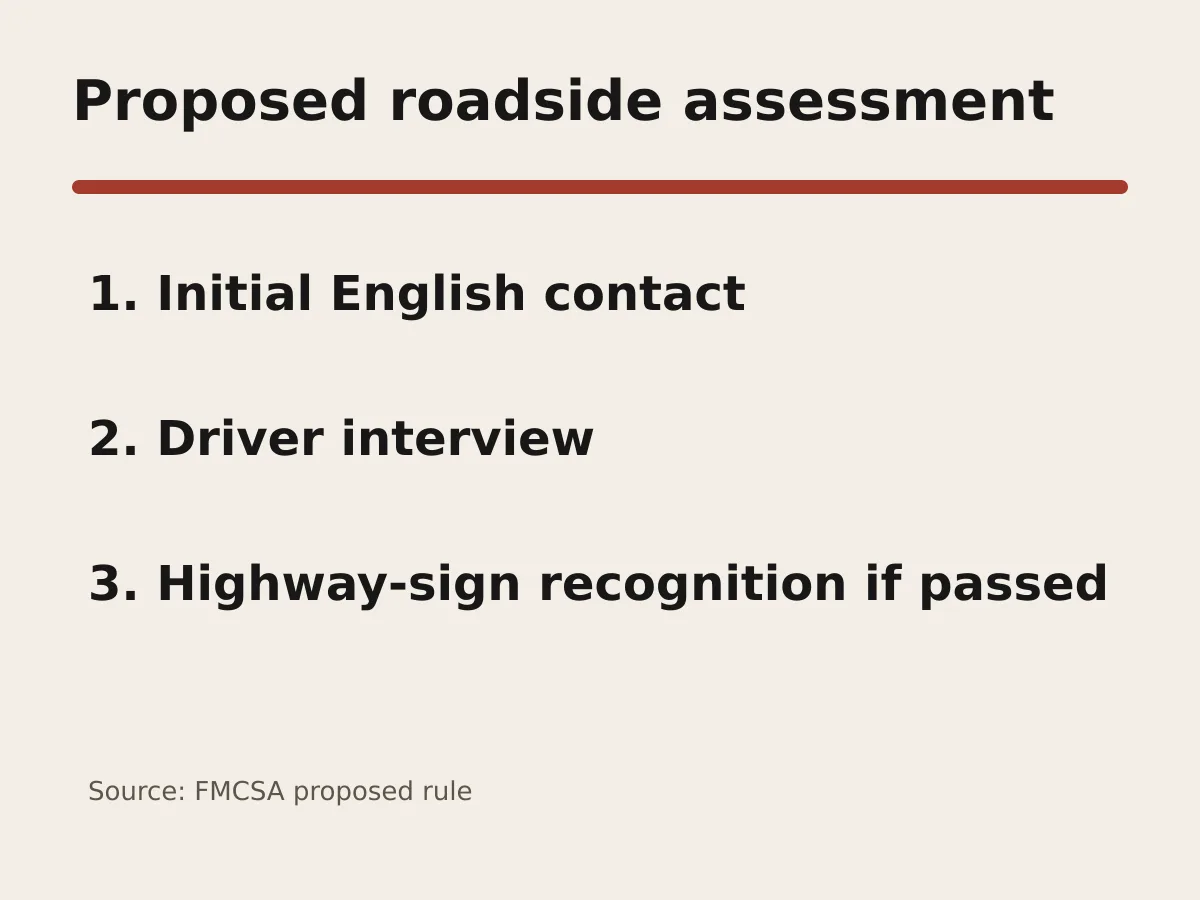
Under the proposed process, an inspection begins with ordinary contact in English. If that interaction raises a concern, the inspector conducts an English-language interview focused on the driver's ability to respond without interpretive assistance.
A driver who passes the interview would then be asked to recognize and explain official highway signs. A driver who does not meet either applicable step could be cited and placed out of service under the codified criteria.
FMCSA says the proposal would conform its regulations to the Commercial Vehicle Safety Alliance's current out-of-service criteria and existing federal enforcement guidance. It is not a newly effective roadside standard merely because the notice has been published.
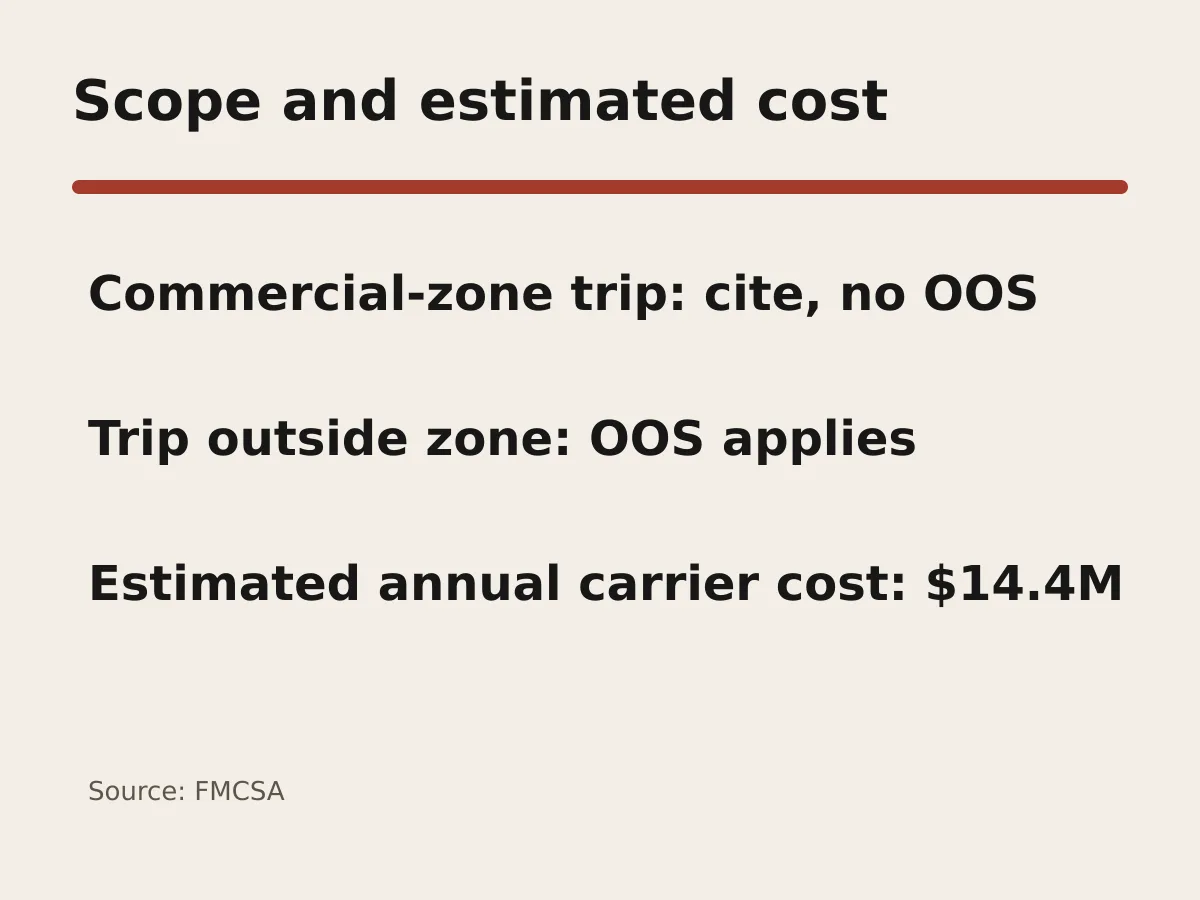
A limited exception would apply to certain drivers operating on a current trip wholly within a U.S.–Mexico commercial zone. An inspector could issue a citation without placing that driver out of service; a trip beyond the zone would not receive that treatment.
The notice also discusses accommodations and guidance for hearing-impaired drivers and other situations governed by existing law. The assessment is about functional communication for regulated driving tasks, not a driver's nationality or accent.
FMCSA estimates annual motor-carrier costs of about $14.4 million, largely from out-of-service time and replacement-driver arrangements. That is an agency estimate, not a measured post-rule cost.
Comments are due Oct. 9, 2026. FMCSA may revise or decline the proposal after reviewing the record, and the final regulatory text would control any change.