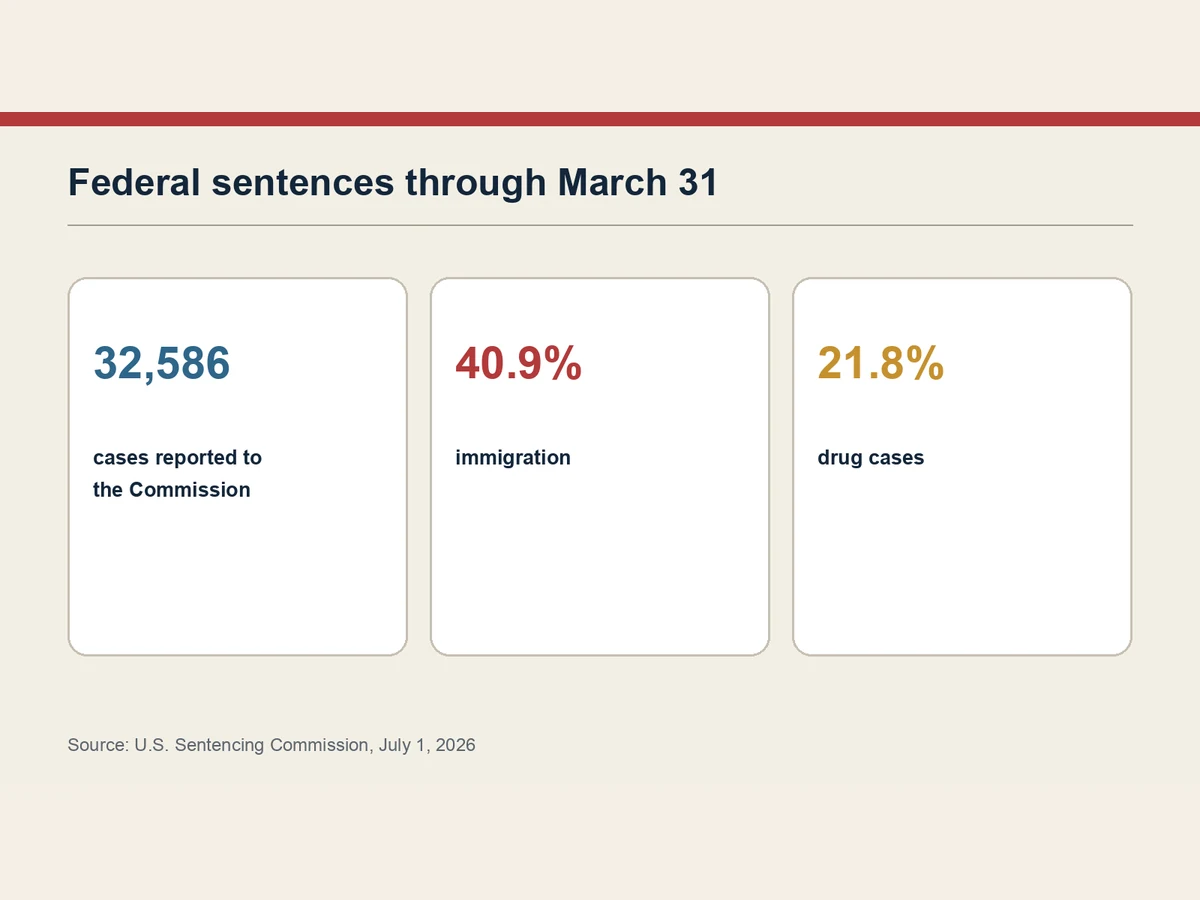
Immigration cases made up 40.9% of the 32,586 federal sentencing cases reported to the U.S. Sentencing Commission through March 31, according to its second-quarter fiscal 2026 update.
The Commission counted 13,314 immigration cases from Oct. 1, 2025 through the end of March. Drug cases were the next largest category at 21.8%, including 7,071 drug-trafficking cases.
Firearms cases accounted for 3,935 sentences, or 12.1%. Fraud, theft and embezzlement represented 2,375 cases, or 7.3%, while money laundering accounted for 623 cases, or 1.9%.
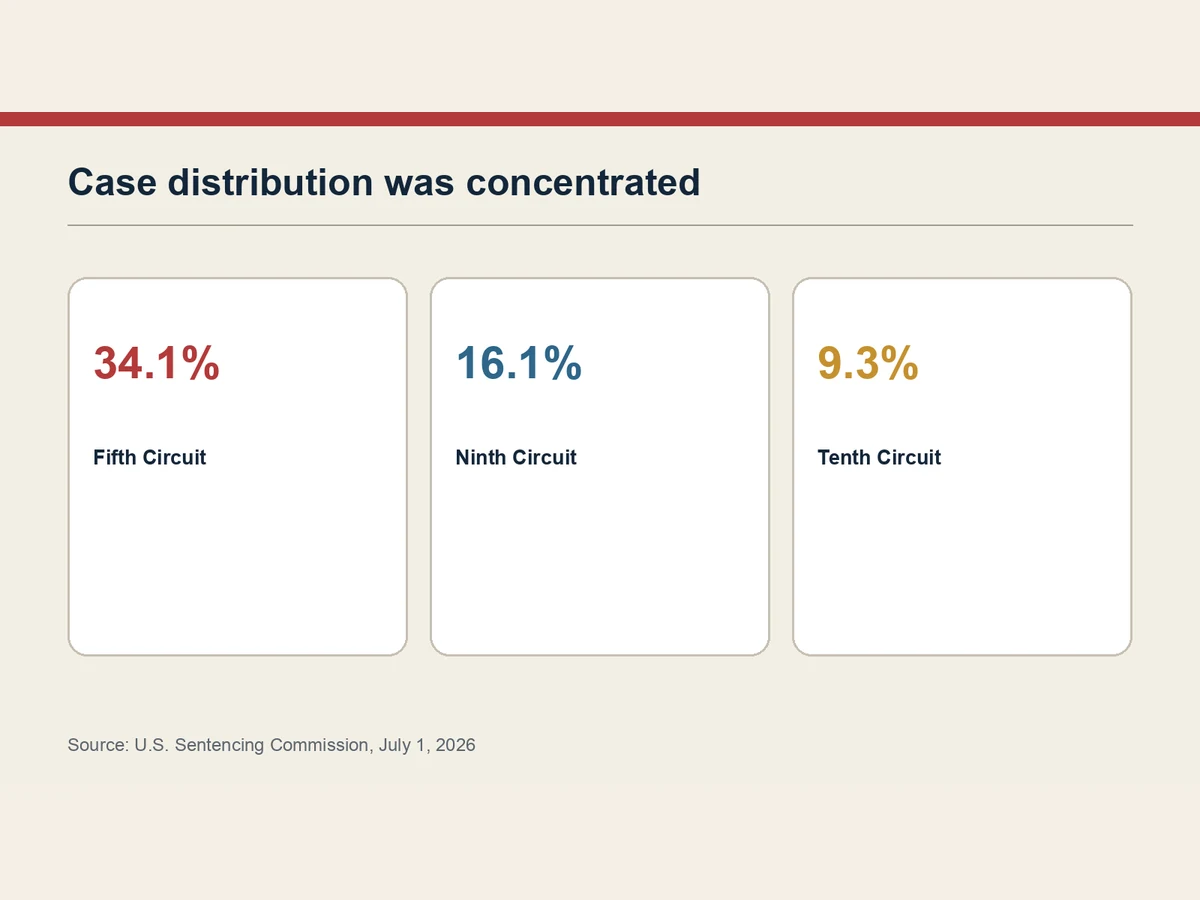
The geography was concentrated. The Fifth Circuit accounted for 11,119 cases, or 34.1% of the national total. The Ninth Circuit represented 16.1% and the Tenth Circuit 9.3%.
Within the Fifth Circuit, the Southern and Western Districts of Texas alone accounted for 13.8% and 14.7% of all cases reported nationwide. Arizona was 5.8%, New Mexico 5.3% and the Southern District of California 3.9%.
Those distributions help explain the immigration share: federal districts along the southwest border carry a large number of immigration prosecutions and are grouped inside the circuits with the heaviest preliminary totals.
The report also changes how some guideline outcomes are presented after Amendment 836 eliminated departures and created an adjustment for participation in an Early Disposition Program. The Commission now uses four broad sentence-position categories, so direct comparisons require care.
The numbers are preliminary. Courts have up to 30 days after judgment to submit documents, and the Commission excludes cases until entry and quality review are complete. Later quarterly releases can revise earlier totals.
The dataset therefore measures sentences documented and reviewed by the Commission, not every arrest, charge or suspected offense. It also should not be used to infer a crime rate from the category shares or to describe unresolved cases. Its strongest use is as a current snapshot of the federal sentencing system’s composition, geography and workload.