
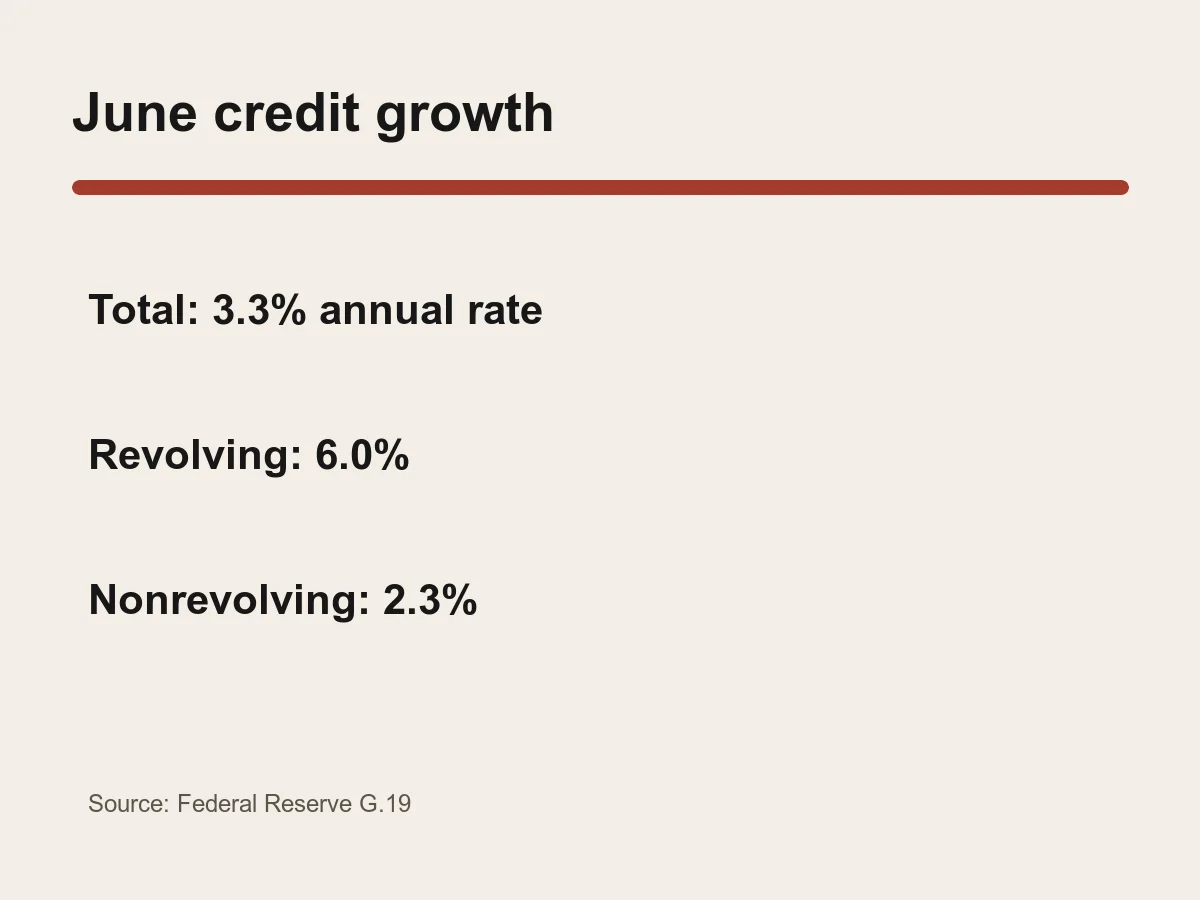
U.S. consumer credit increased at a seasonally adjusted annual rate of 3.3% in June, the Federal Reserve reported in its Aug. 7 G.19 release.
Revolving credit, which includes credit-card balances, grew at a 6% annual rate. Nonrevolving credit, including auto, education and other installment loans but excluding real-estate-secured borrowing, increased at a 2.3% rate.
The June expansion followed a revised 0.3% annual-rate decline in total credit in May. A one-month annualized rate magnifies that month's movement and should not be read as a forecast that balances will grow 3.3% over the next year.
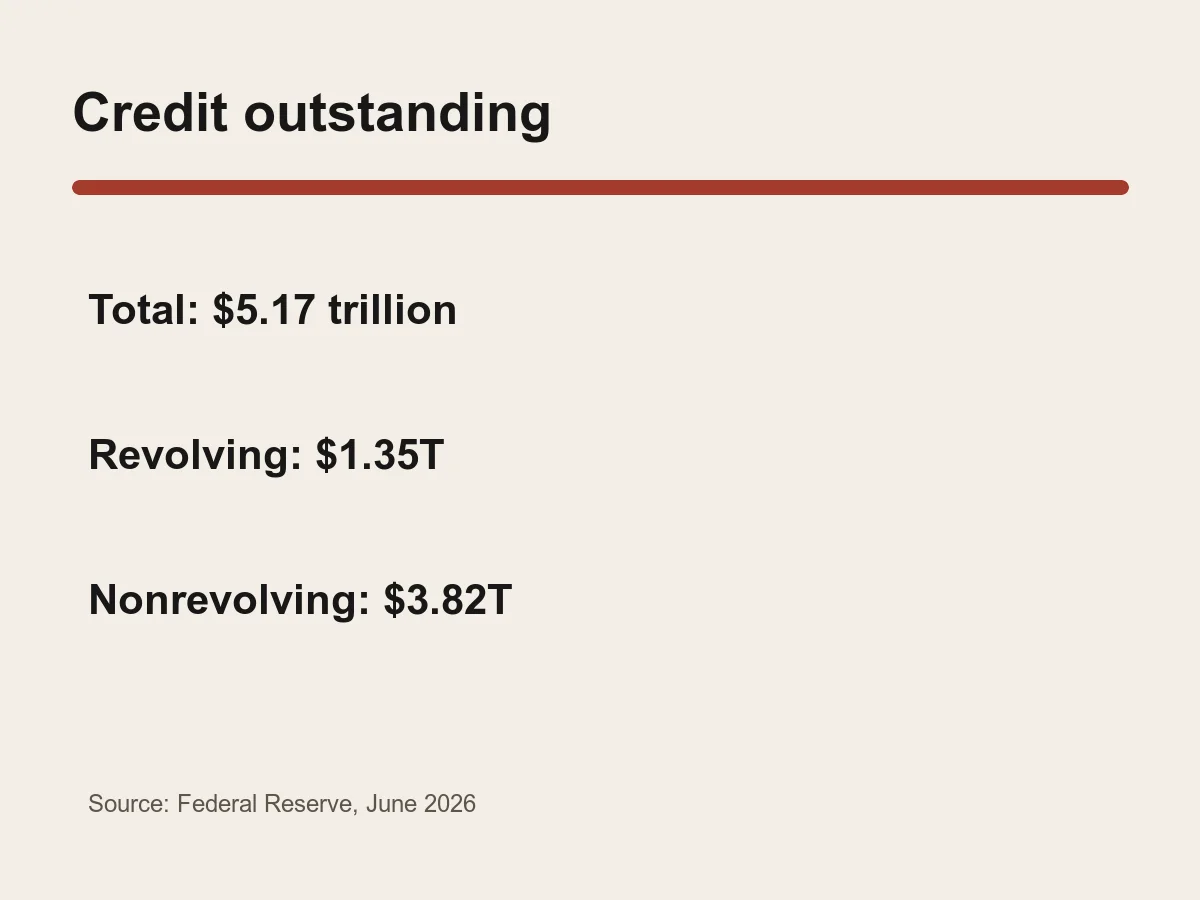
Seasonally adjusted consumer credit outstanding reached $5.1669 trillion in June. Revolving balances were $1.3511 trillion and nonrevolving balances were $3.8158 trillion.
For the second quarter as a whole, total consumer credit grew at a 2.6% annual rate. Revolving credit increased 3.9% and nonrevolving credit 2.1% on the same basis.
The release also reported an average 20.94% annual percentage rate across all commercial-bank credit-card accounts in the second quarter. Accounts assessed interest averaged 22.15%.
Those rate figures are broad bank averages, not offers available to every borrower. Individual pricing depends on product terms, credit history, promotions and other underwriting factors.
The G.19 measure covers most credit extended to individuals but excludes loans secured by real estate. It therefore cannot be used as a complete measure of household debt or financial health.
The next monthly release can show whether June's rebound in revolving credit persisted. Assessment of household strain also requires delinquency, income, repayment and distributional data beyond the aggregate balance.