
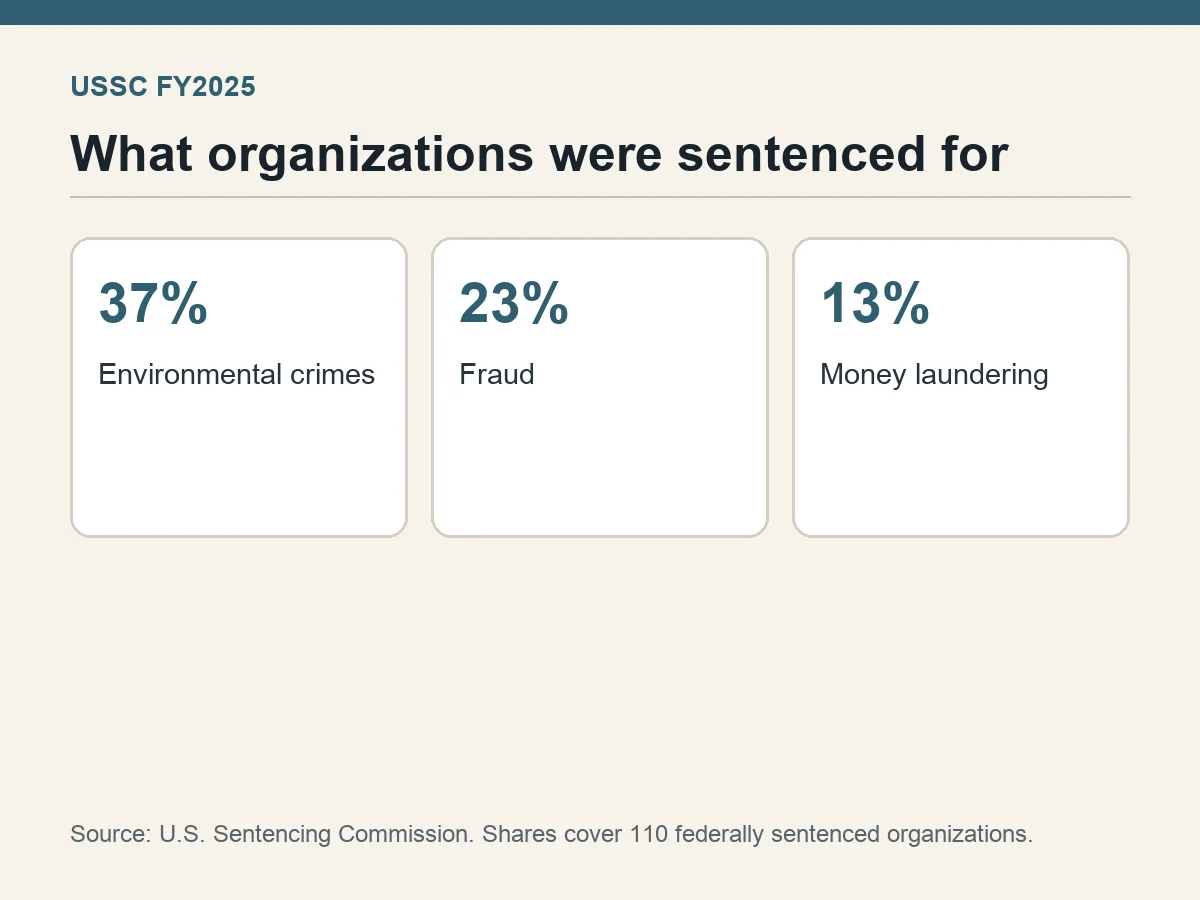
Federal courts sentenced 110 organizations in fiscal year 2025, with environmental crimes accounting for the largest share of cases, according to a new U.S. Sentencing Commission profile of corporate and other organizational defendants.
Environmental offenses represented 37% of the total, followed by fraud at 23% and money laundering at 13%. Antitrust or price fixing, food and drug offenses, and import-export violations each accounted for 5%.
Within the environmental category, the Commission classified 51% as air-related, 32% as water-related, 12% as hazardous-material cases and 5% as wildlife-related. The categories describe the principal offense in federal sentencing data, not the universe of civil environmental enforcement.
The defendants were often smaller businesses. Sixty-six percent had fewer than 50 employees, while 19% had at least 1,000. Closely held or private corporations made up 53%, limited liability companies 37% and publicly traded corporations 7%.
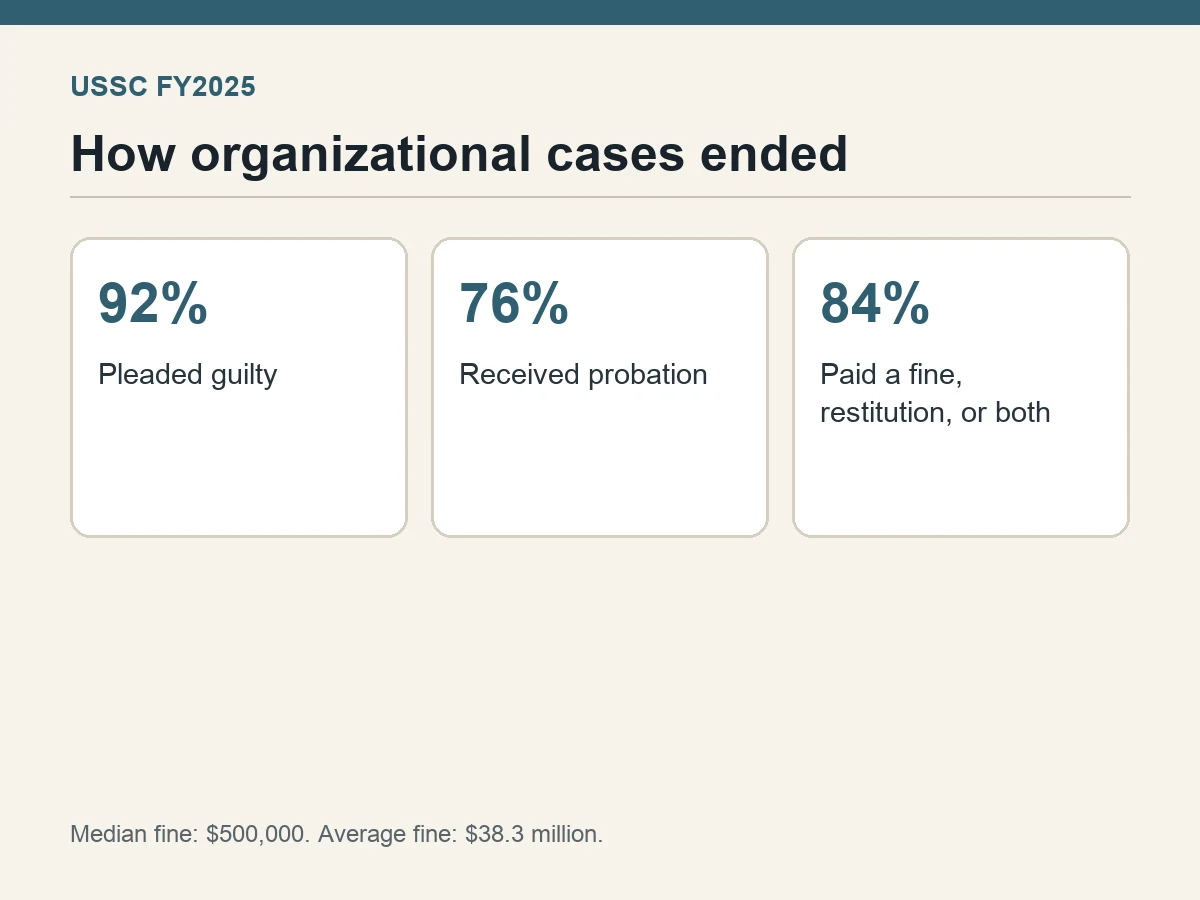
Guilty pleas dominated the outcomes: 92% of organizations pleaded guilty. Seventy-six percent received probation, 16% were ordered to develop a compliance and ethics program, and 84% were ordered to pay a fine, restitution, or both.
Fine figures show why averages can mislead. The median fine was $500,000, but the average was $38,323,699. A comparatively small number of very large penalties can lift an average far above the amount imposed in the middle case.
Chapter Eight’s corporate fine provisions applied to 36 organizations. Among them, only one received recognition for an effective compliance and ethics program. Twenty-four received culpability points because a person with substantial authority participated, condoned or was willfully ignorant of the offense.
The Commission also reported that 62% of organizational cases involved at least one related individual who was separately indicted. That measure links organizational wrongdoing with personal exposure, but it does not say every related individual was convicted.
The profile excludes non-prosecution and deferred-prosecution agreements, so it should not be read as a full census of federal corporate enforcement. It is a sentencing snapshot: organizations that reached conviction, the offenses courts handled and the penalties recorded in fiscal 2025.