
The General Services Administration has raised the federal reimbursement rate for use of a privately owned automobile on authorized official travel to 76 cents per mile for the second half of 2026.
The midyear adjustment applies to federal travel and relocation performed from July 1 through Dec. 31. GSA issued the bulletin July 27 and published notice of it in the Federal Register on Tuesday.
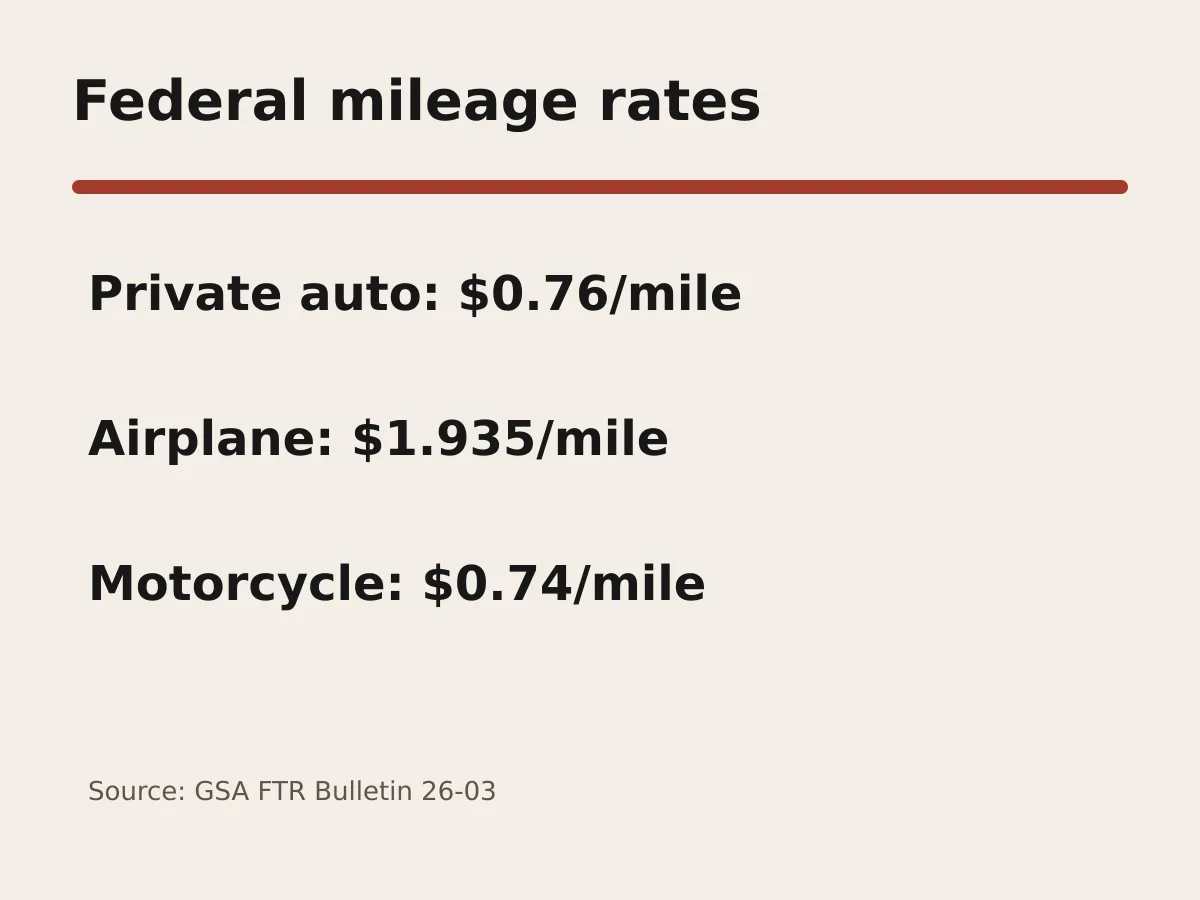
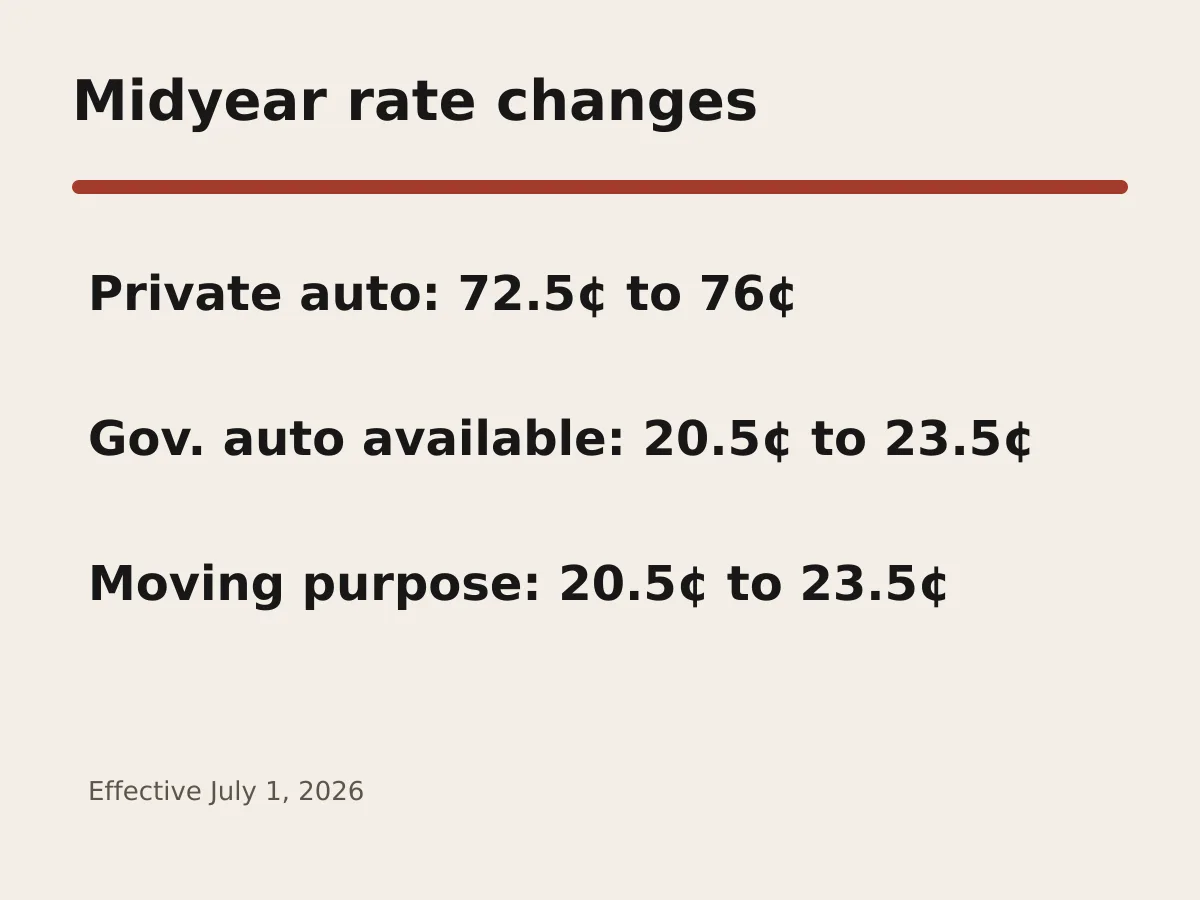
The private-auto rate was 72.5 cents per mile for the first half of the year. The new bulletin cancels the earlier calendar-year rate schedule effective July 1.
GSA also set the rate for a privately owned airplane at $1.935 per mile, up from $1.78, and the motorcycle rate at 74 cents, up from 70.5 cents.
When a government automobile is available and authorized, the privately owned automobile rate is 23.5 cents per mile, up from 20.5 cents. The moving-purpose rate for a privately owned vehicle is also 23.5 cents.
These are Federal Travel Regulation reimbursement rates for eligible federal employees and relocation travel. They are not a general Internal Revenue Service mileage deduction for every driver or business.
Actual reimbursement still depends on authorization, travel purpose, vehicle availability and agency application of the Federal Travel Regulation. A higher published rate does not make every commute or trip reimbursable.
The bulletin calls the change a midyear adjustment rather than a retroactive rewrite of travel before July. The July 1 start date separates trips under the first-half and second-half schedules.
Travelers submitting vouchers should use the rate tied to the date and type of authorized travel, along with their agency's documentation rules.
The GSA bulletin and agency travel office are the controlling sources for individual claims. This report explains the federal schedule and does not provide tax or personal reimbursement advice.