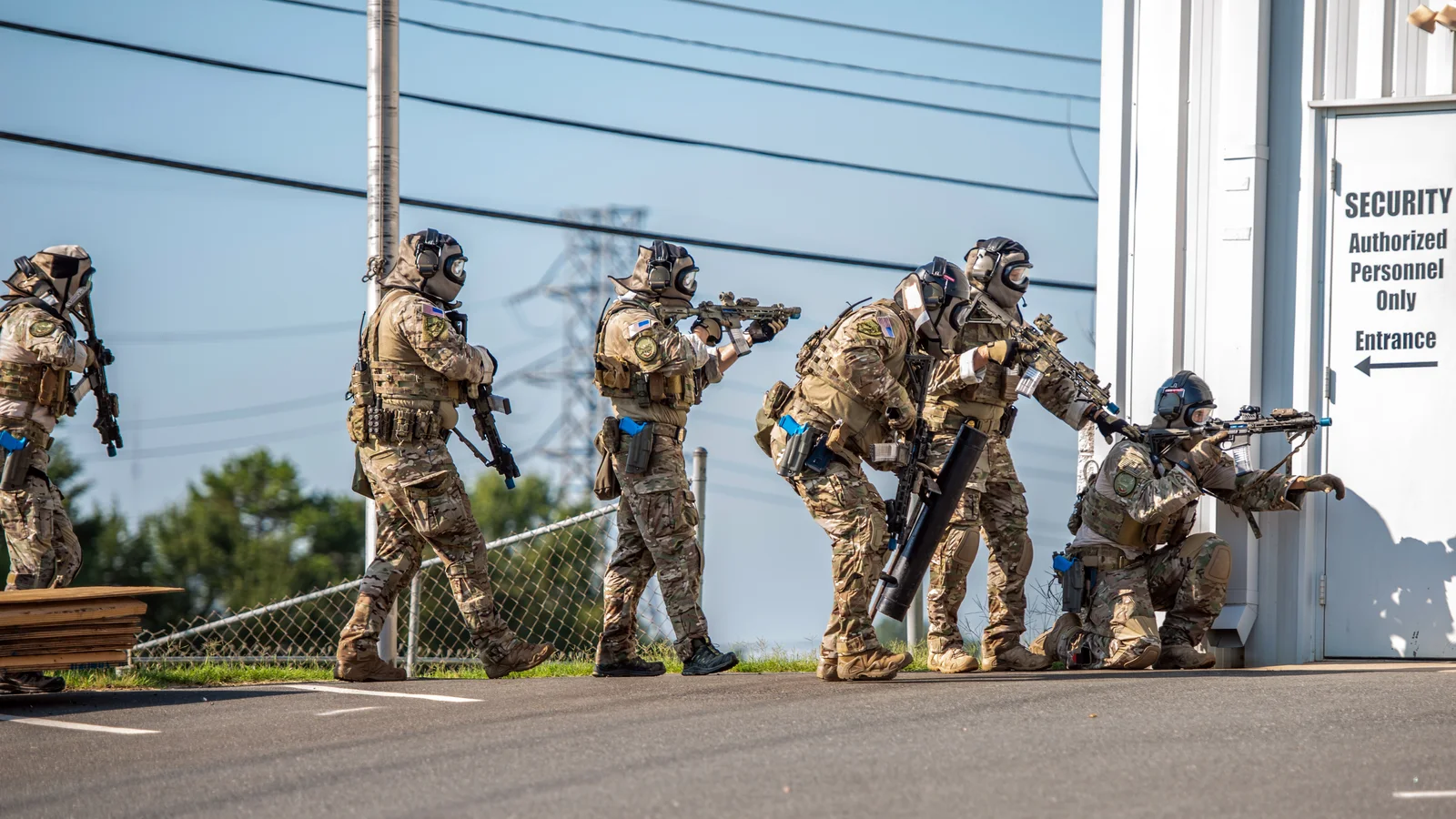
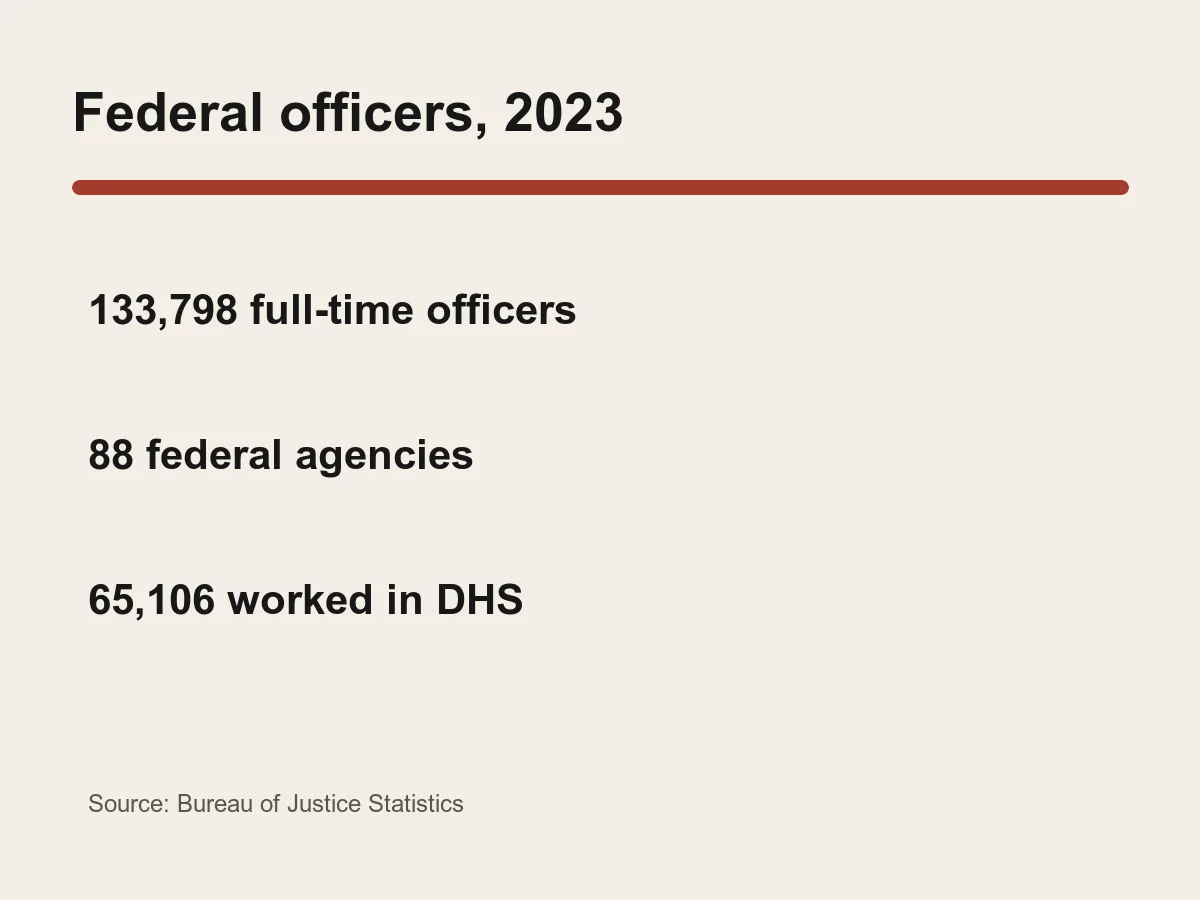
Federal agencies employed 133,798 full-time law-enforcement officers authorized to make arrests and carry firearms in 2023, according to statistical tables released by the Bureau of Justice Statistics.
The census covered 88 federal agencies. The Department of Homeland Security accounted for 65,106 officers, or 49% of the total, reflecting the size of its border, immigration, protective and investigative components.
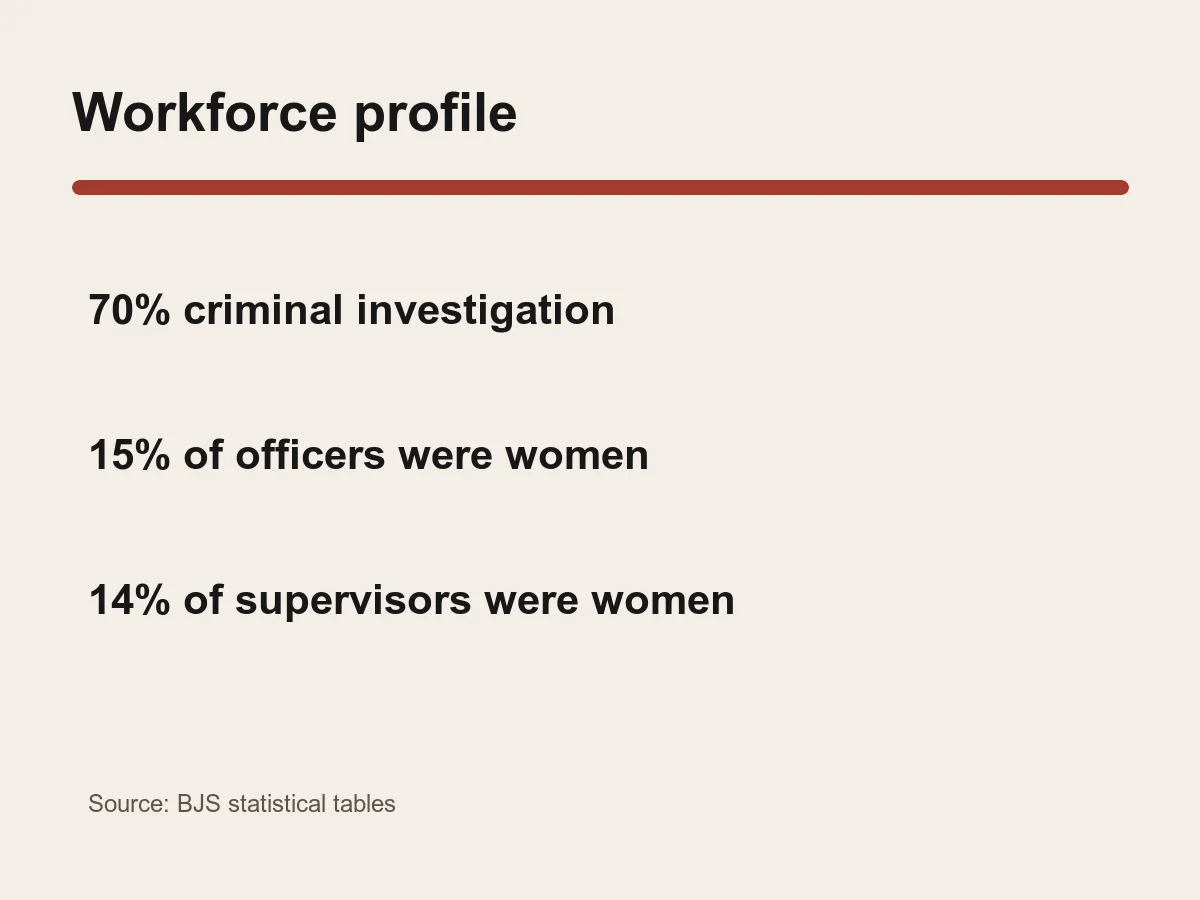
Criminal investigation was the primary function for 70% of federal officers. The remaining officers worked principally in policing and patrol, security and protection, court operations, corrections or other functions defined in the tables.
Those categories identify a primary assignment, not every task an officer may perform. An investigator can have protective duties, and an officer assigned to security can also exercise arrest authority within a broader mission.
Women made up 15% of federal law-enforcement officers and 14% of supervisors in 2023, BJS reported. The tables provide a workforce baseline but do not by themselves explain hiring, promotion or retention patterns.
BJS reported that 57% of officers were White, 20% Hispanic or Latino and 10% Black. Other groups and records with missing or different classifications make up the remainder, so the listed shares should not be treated as a complete three-category profile.
The federal definition differs from counts of state, county, municipal or tribal officers. It also excludes employees who do not meet the report's full-time arrest-and-firearms criteria, even if they support federal enforcement work.
Because the reference year is 2023, the figures are not a live 2026 staffing roster. Agency reorganizations, hiring, departures and policy changes after the census require newer administrative records.
The release's clearest contribution is a common denominator across a fragmented system: one census of officer counts, missions and workforce characteristics that can be compared with future editions.