
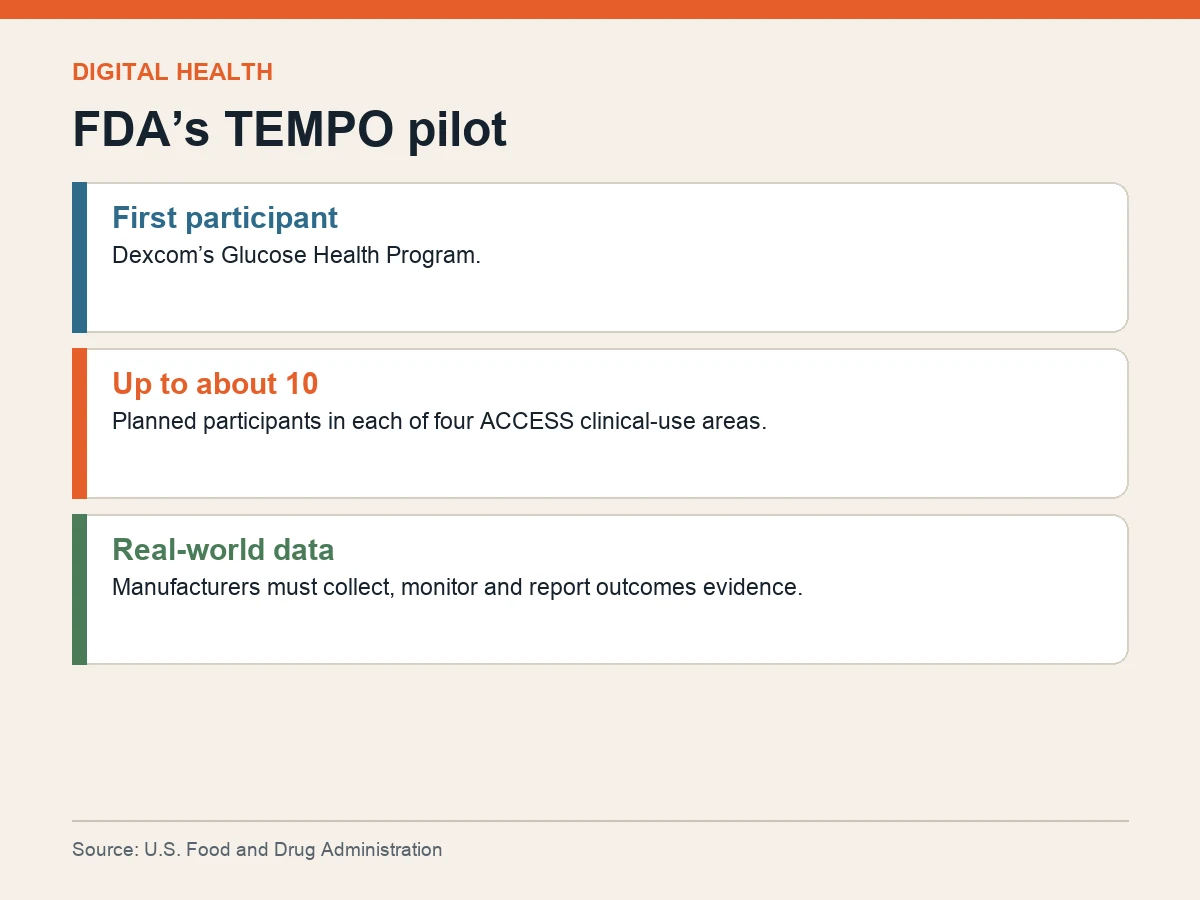
The Food and Drug Administration selected Dexcom as the first participant in a pilot designed to evaluate digital health devices with real-world patient-outcome data inside a new Medicare care model.
The Technology-Enabled Meaningful Patient Outcomes program, known as TEMPO, works alongside the Centers for Medicare & Medicaid Services Innovation Center’s ACCESS model. ACCESS rewards measurable health improvements rather than paying only for individual services.
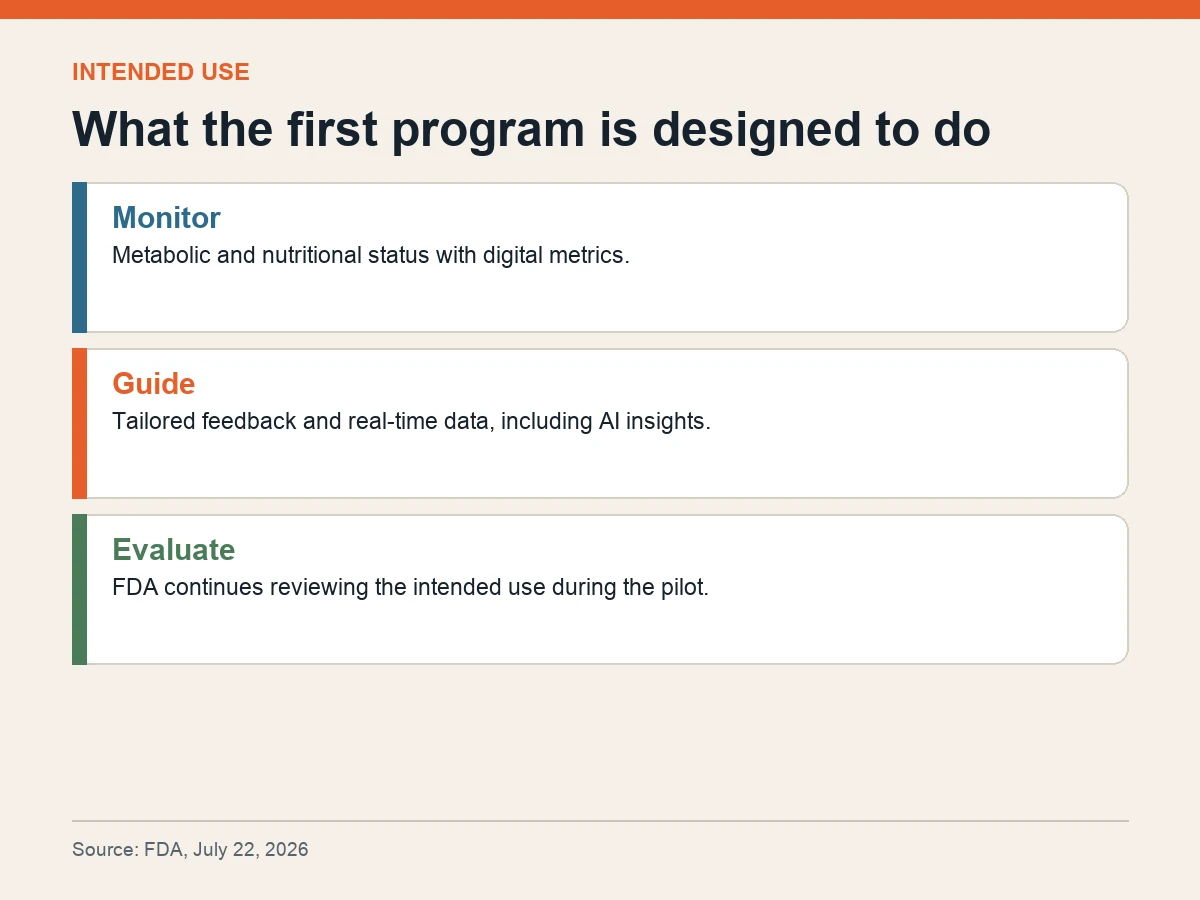
Dexcom’s Glucose Health Program is intended to let participating patients and their clinicians or caregivers monitor metabolic and nutritional status, receive tailored guidance and use real-time data and artificial-intelligence insights to support decisions and behavior changes.
FDA says the program is intended to aid screening for prediabetes and type 2 diabetes through integrated digital metrics. It may also contribute to better glycemic control and lower HbA1c in people with prediabetes.
Those descriptions are intended uses, not completed findings. FDA said it will continue evaluating the program during the pilot, and selection does not establish that the device has already improved outcomes for every patient or setting.
Manufacturers participating in TEMPO must collect, monitor and report real-world data connected to their devices’ intended outcomes. That evidence is meant to show how technologies perform outside the controlled conditions of a traditional study.
FDA plans to select up to about 10 participants in each of four ACCESS clinical-use areas. Selection factors include potential health risks, reasonable expectation of benefit, data collection and analysis plans, and alignment with ACCESS outcome measures.
The first ACCESS cohort began in July 2026 and covers technology-supported care for certain cardio-kidney-metabolic, musculoskeletal and behavioral-health conditions. FDA says it continues accepting statements of interest for TEMPO and has not set a closing date.
The policy experiment is about both access and evidence. Payment can help a technology reach patients, while structured outcome reporting can reveal whether broader use delivers the promised benefit or produces new safety questions.
For the first participant, the next meaningful result will not be enrollment itself. It will be the quality of the real-world data, whether the intended population is clearly defined and whether measured changes can be distinguished from engagement, selection and other influences outside the device.