
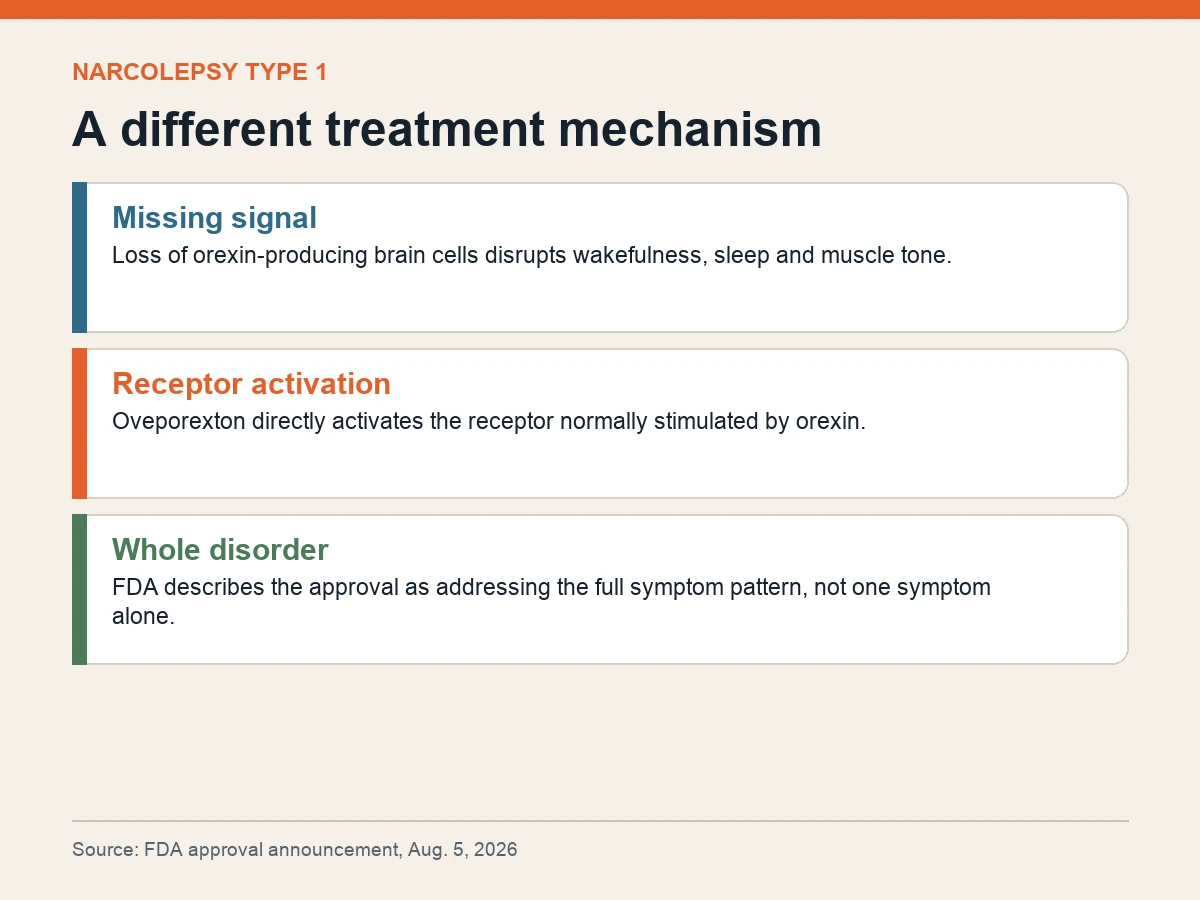
The Food and Drug Administration has approved the first medicine that directly replaces the missing orexin signal behind narcolepsy type 1, a change from therapies that address pieces of the disorder separately.
Orzeyful, the brand name for oveporexton, is approved for adults and taken as a tablet twice daily. The drug activates the same brain receptor that the body’s orexin messenger normally stimulates, targeting the biological pathway that regulates wakefulness, sleep and muscle tone.
Narcolepsy type 1 is caused by the loss of brain cells that produce orexin. The disorder can combine excessive daytime sleepiness with cataplexy—sudden muscle weakness triggered by emotion—along with sleep paralysis, hallucinations around sleep and disrupted nighttime sleep.
FDA evaluated the medicine in two randomized, double-blind, placebo-controlled trials lasting 12 weeks and enrolling 273 adults. At the approved two-milligram dose, the agency said participants improved their ability to remain awake compared with placebo and reported less daytime sleepiness and fewer cataplexy episodes.
The agency also described improvement across sleep paralysis, hallucinations and disrupted nighttime sleep. Its public announcement does not provide every numerical effect size, confidence interval or subgroup result, so the approval should not be read as proof that every participant experienced the same benefit.
The most common side effects reported by FDA were insomnia, increased urinary frequency or urgency and increased saliva production. The agency said discontinuation because of side effects was low, while also warning that Orzeyful should not be used with strong CYP3A inhibitors.
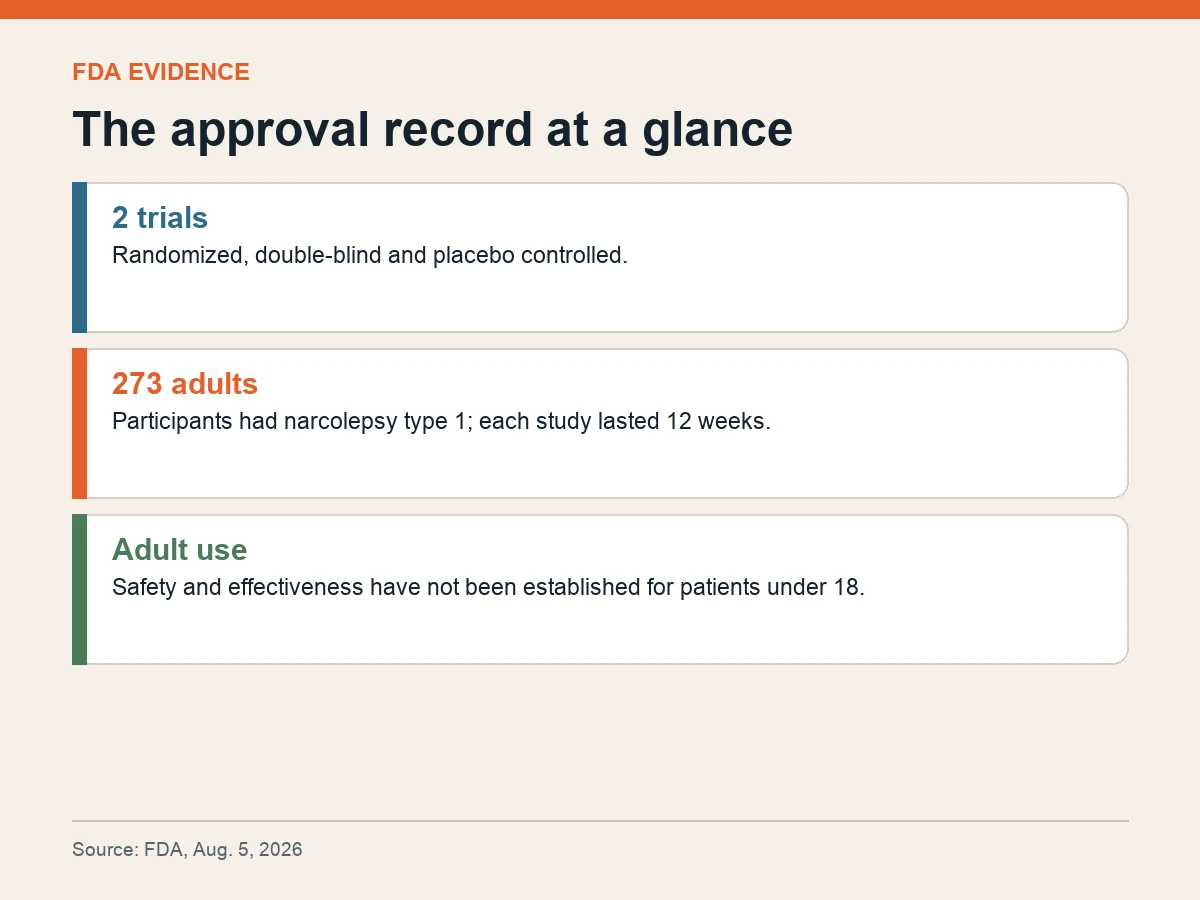
Safety and effectiveness have not been established for people younger than 18. That age boundary matters because the adult approval cannot be automatically extended to children or adolescents without supporting evidence and regulatory review.
The product cannot enter ordinary marketing immediately. FDA recommended that it be scheduled under the Controlled Substances Act, and the agency said lawful marketing follows a scheduling decision from the Drug Enforcement Administration.
The approval is a regulatory finding for a defined use, not individualized medical advice. The most consequential scientific change is the mechanism: for the first time, an approved therapy for narcolepsy type 1 is intended to restore orexin signaling across the disorder rather than treat each manifestation as an isolated symptom.