The Food and Drug Administration is proposing to require notices for many human- and animal-food substances that companies conclude are generally recognized as safe, replacing a notification program that is currently voluntary.
Comments on the proposed rule are due Dec. 9, 2026. The requirement is not yet final, and the Federal Register proposal—not a press summary—defines the covered uses, exceptions and transition provisions.
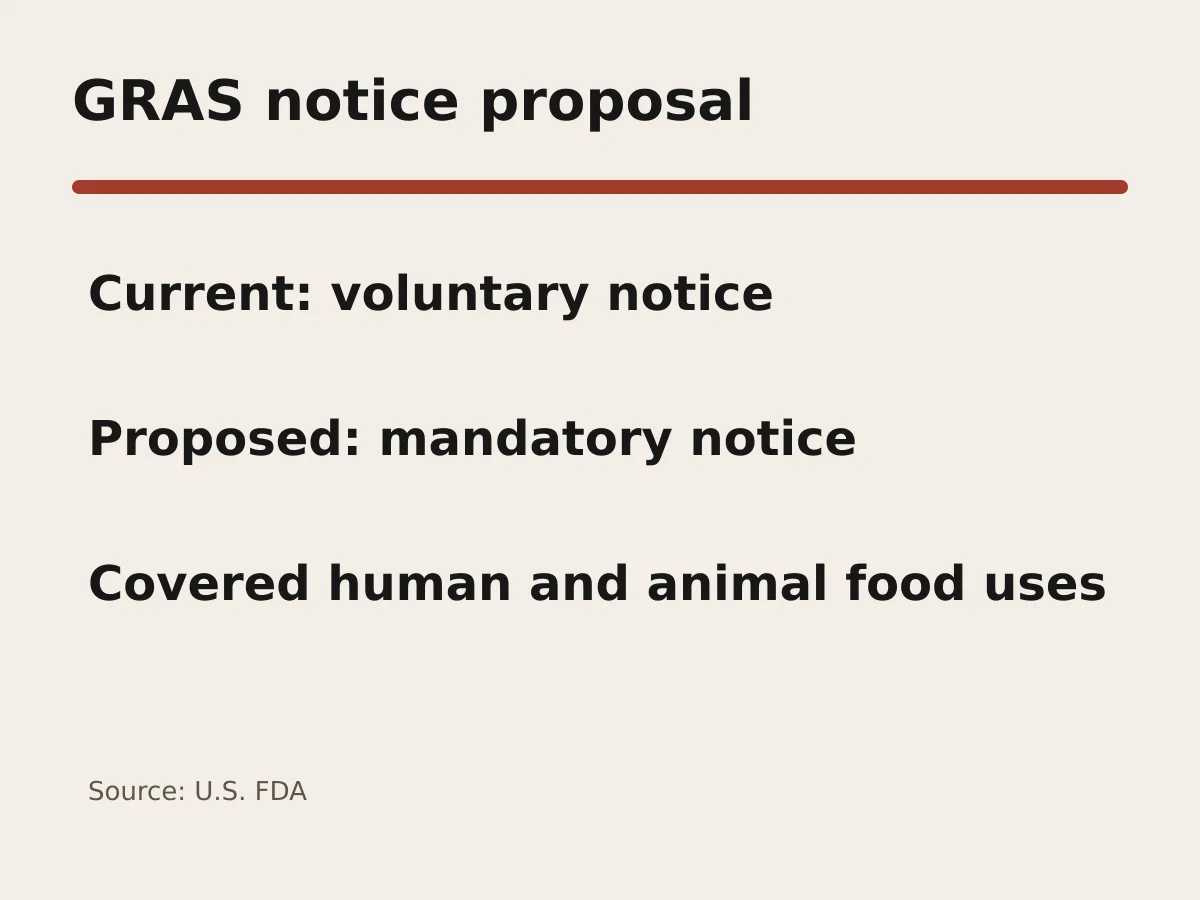
Under the current system, a company may reach an independent GRAS conclusion for a particular use without submitting a notice to FDA, and a notifier does not have to wait for an agency response before marketing. FDA says the proposal would make notification mandatory for covered conclusions.
A mandatory notice would not be the same as converting every GRAS substance into a premarket food-additive approval. The proposed framework retains the statutory GRAS standard while requiring information to be submitted for agency review and public record in more cases.
FDA says its Human Foods Program had filed more than 1,200 GRAS notices by March 25, 2025, while the Center for Veterinary Medicine had filed 75 by March 28. The agency cites a 2011 estimate of more than 10,000 substances added to food.
The proposal also discusses legacy uses, exceptions and changes to the threshold-of-regulation process. Those details matter because not every substance or historical use would follow an identical filing path.
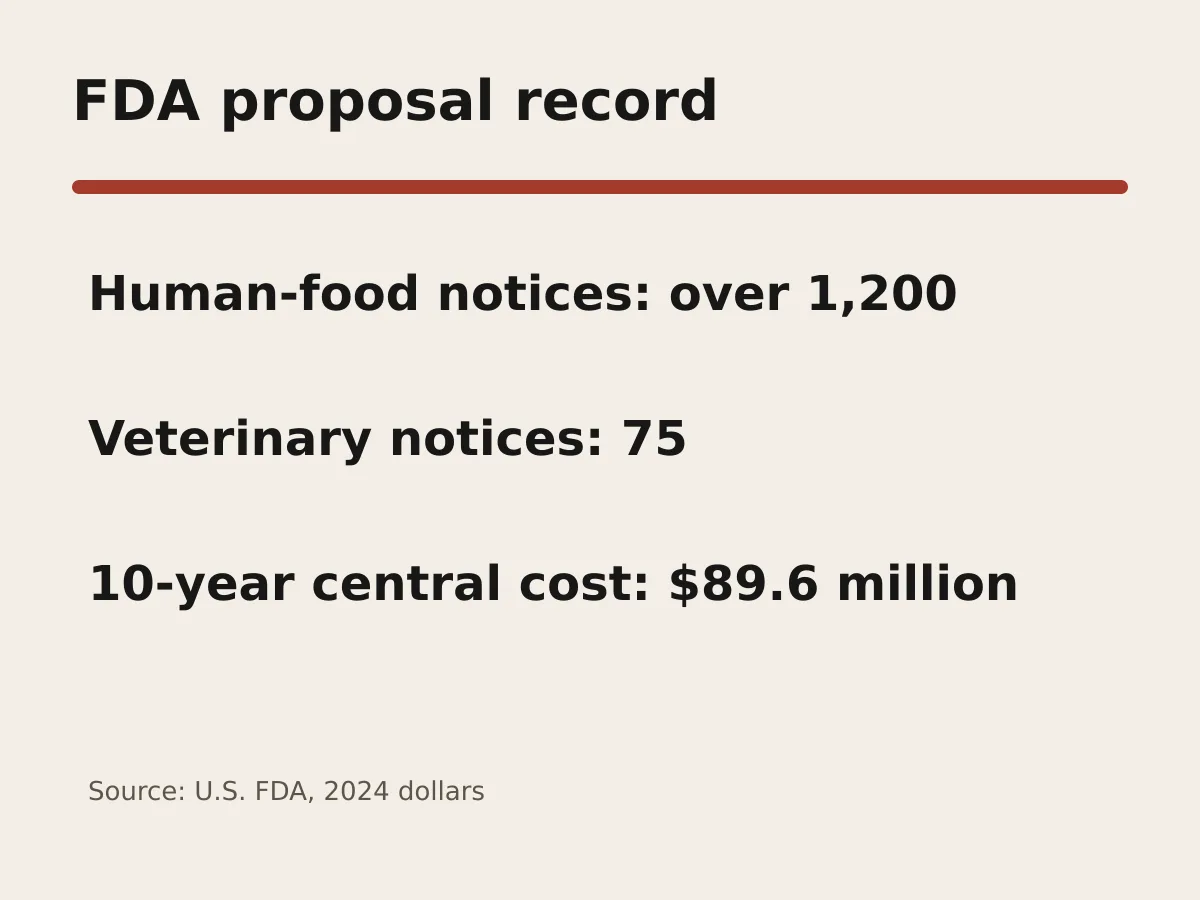
FDA's central economic estimate is a 10-year present-value cost of $89.6 million at a 3% discount rate, in 2024 dollars. Its stated range is $34.9 million to $210 million, with a central annualized estimate of $10.5 million.
The agency says broader notification would improve its visibility into substances used in food. That is FDA's regulatory rationale; the proposal does not establish that every independently concluded use is unsafe or predict which products may change.
Manufacturers, researchers, consumers and other interested parties can comment on the scope and estimates before FDA decides whether and how to issue a final rule.
Until a final rule takes effect, the current framework remains in place. Businesses evaluating a specific ingredient should rely on FDA's legal text and qualified regulatory advice rather than this general news summary.