
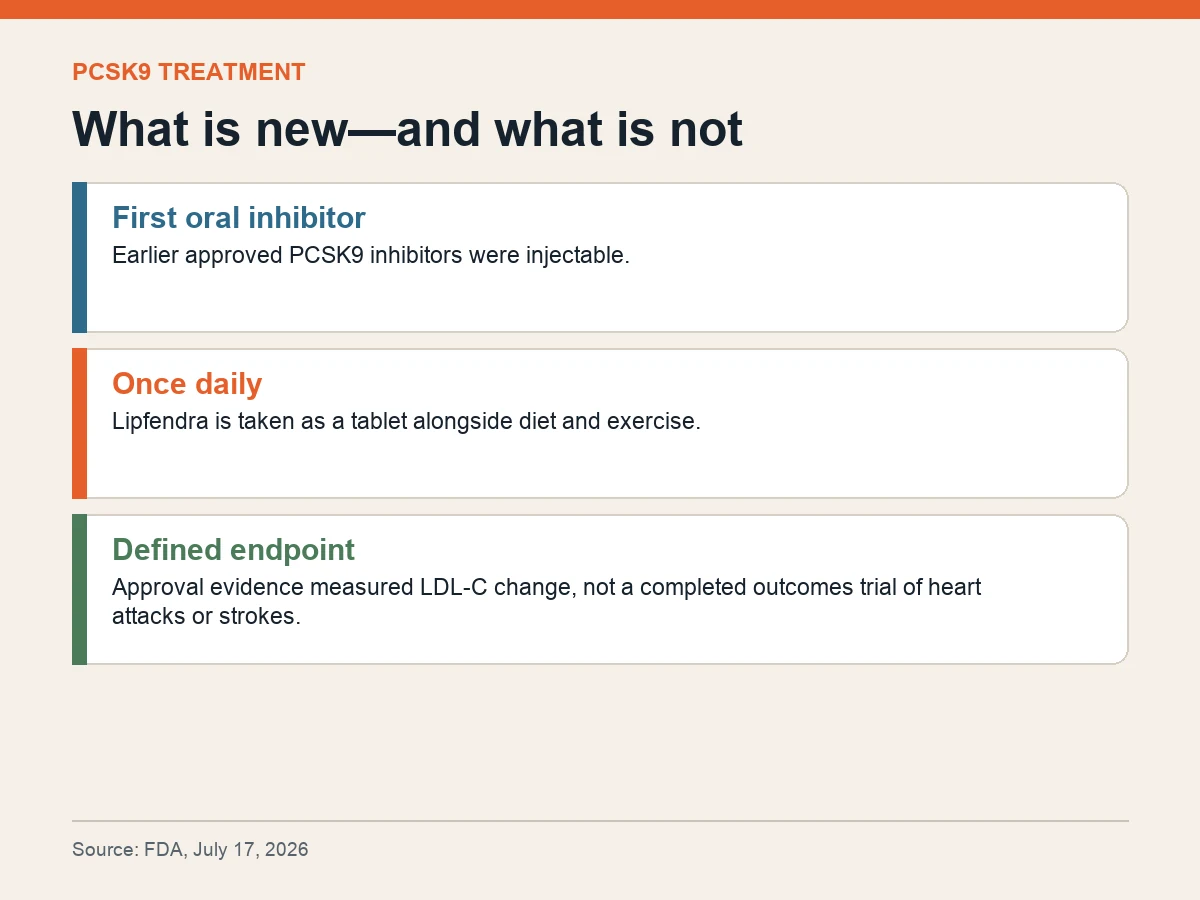
The Food and Drug Administration has approved the first oral medicine to inhibit PCSK9, adding a once-daily tablet to a powerful cholesterol-lowering drug class that had previously been available only by injection.
Lipfendra, the brand name for enlicitide, is approved alongside diet and exercise for adults with high cholesterol, including heterozygous familial hypercholesterolemia, an inherited condition commonly abbreviated HeFH.
FDA based the decision on two randomized, double-blind, placebo-controlled trials enrolling 3,207 adults who were already receiving the maximum statin therapy they could tolerate. Both studies measured percentage change in LDL cholesterol after 24 weeks.
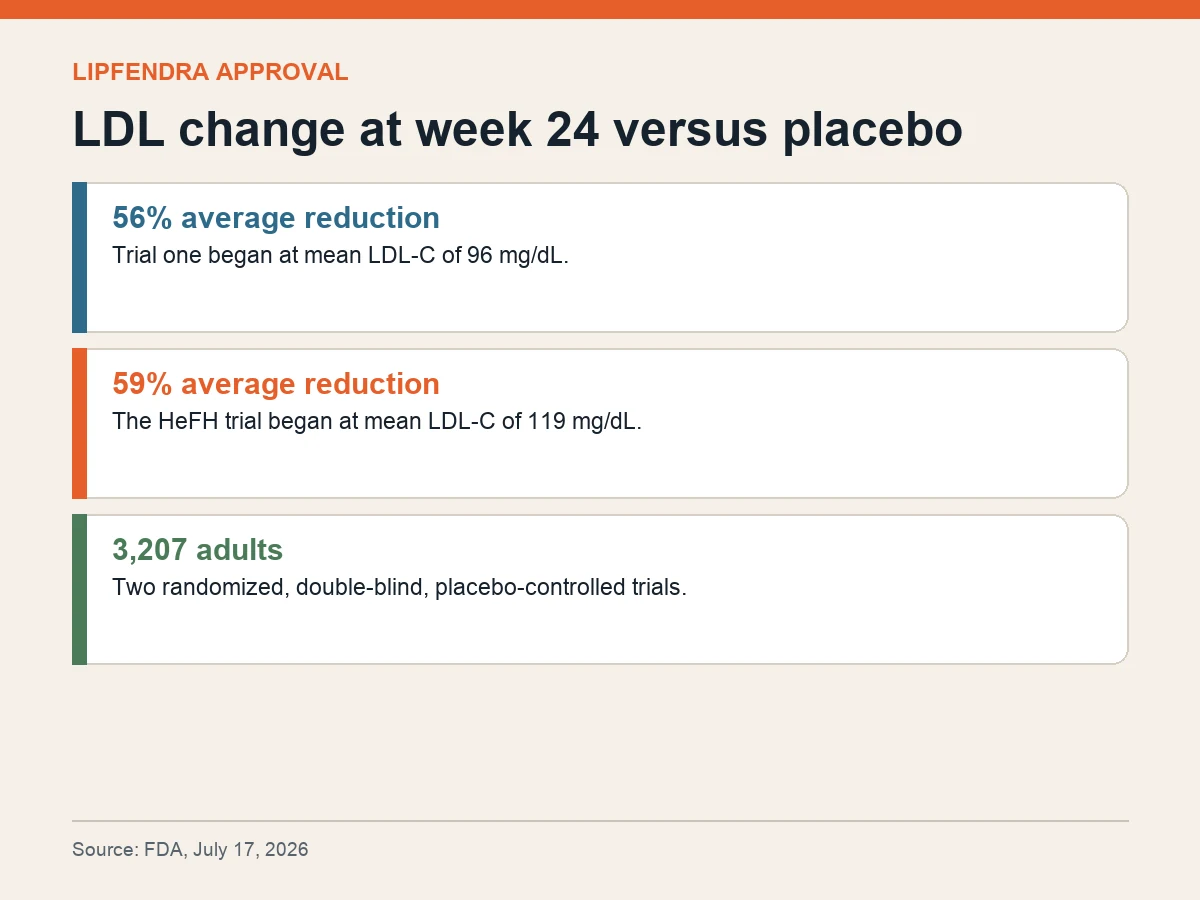
In the first trial, which enrolled adults with established atherosclerotic cardiovascular disease or high risk for it, the mean starting LDL-C was 96 milligrams per deciliter. Lipfendra produced an average 56% reduction compared with placebo at week 24.
The second trial enrolled adults with HeFH and began at a mean LDL-C of 119 milligrams per deciliter. The average reduction versus placebo was 59% at week 24.
Those percentages describe the comparison in trial LDL levels, not the share of patients cured and not a measured reduction in heart attacks or strokes. FDA’s public announcement centers on a laboratory endpoint; long-term clinical outcomes require their own evidence.
Adverse-reaction frequency in the first trial was similar between Lipfendra and placebo. In the HeFH study, diarrhea and dizziness occurred more frequently with the drug, while discontinuation rates due to adverse reactions were comparable across treatment and placebo groups in both trials.
The mechanism distinguishes the product’s route rather than inventing a new target. Other PCSK9 inhibitors already lower LDL through injections; Lipfendra is the first approved tablet to inhibit the same pathway. FDA granted the application Priority Review and approved it for Merck Sharp & Dohme.
Approval defines a population and use, not an individual prescription. The practical news is that adults needing additional LDL reduction now have an oral option in this class, while decisions about fit, interactions and monitoring remain clinical questions.