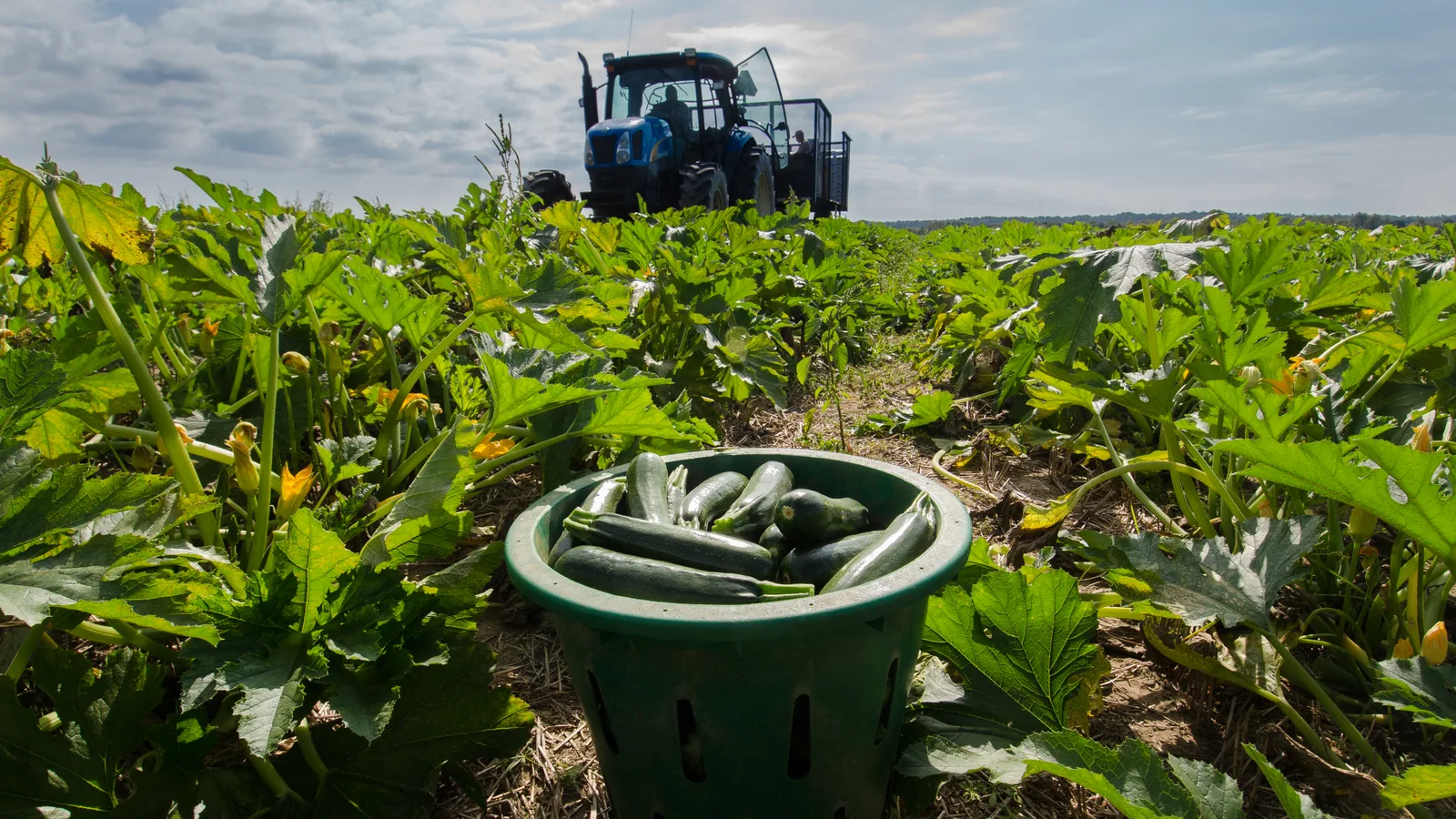
The Food and Drug Administration has finalized updated safety guidance for manufacturers and processors of ready-to-eat fresh-cut produce, replacing a 2008 guide and completing a draft first issued in 2018.
The notice is on Federal Register public inspection for Aug. 12 publication. It is industry guidance reflecting FDA's current thinking, not a recall, an outbreak alert or a declaration that a particular product is unsafe.
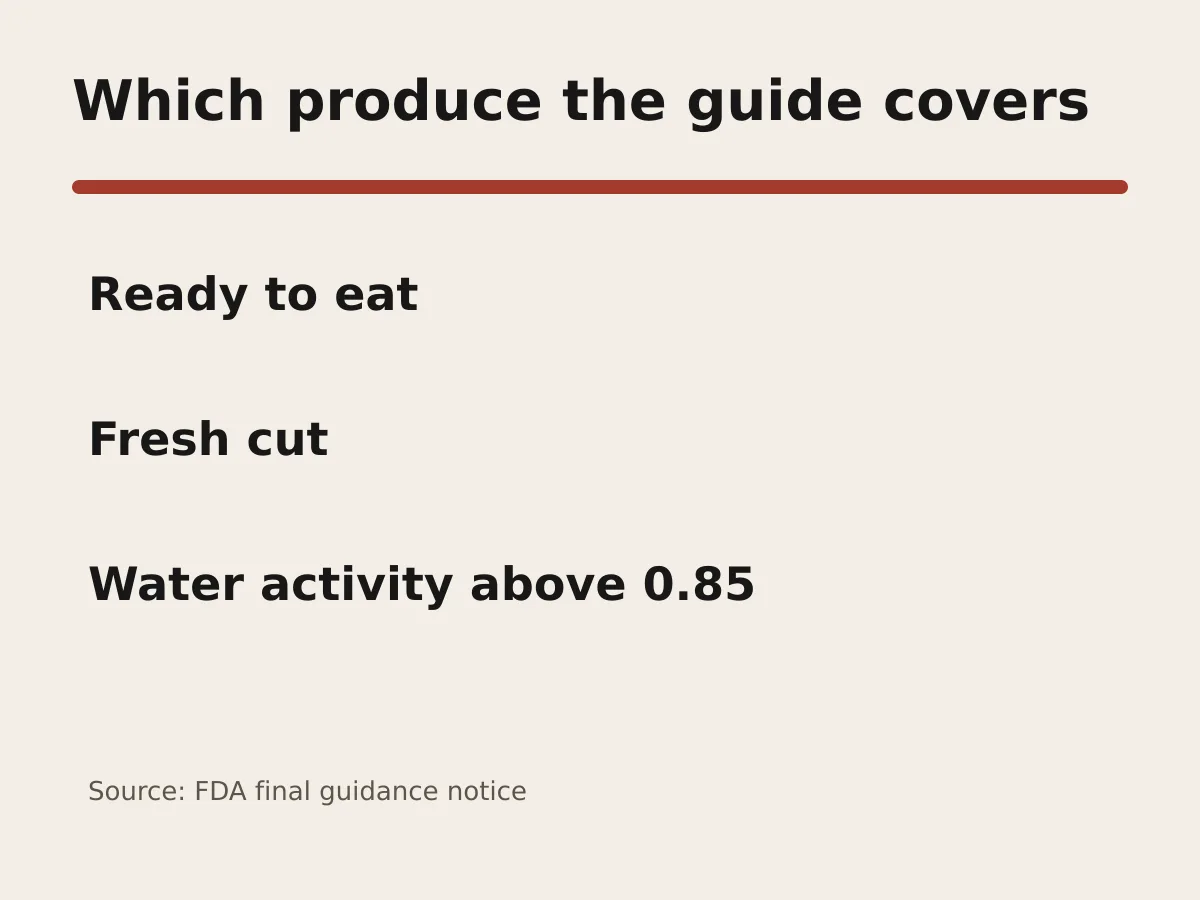
The guide covers ready-to-eat fresh-cut produce that is not a low-moisture food. FDA clarified that boundary as food with water activity greater than 0.85.
Its purpose is to help facilities apply current good manufacturing practices and hazard-analysis and risk-based preventive controls under 21 CFR part 117. Companies may use alternative approaches if they satisfy applicable statutes and regulations.
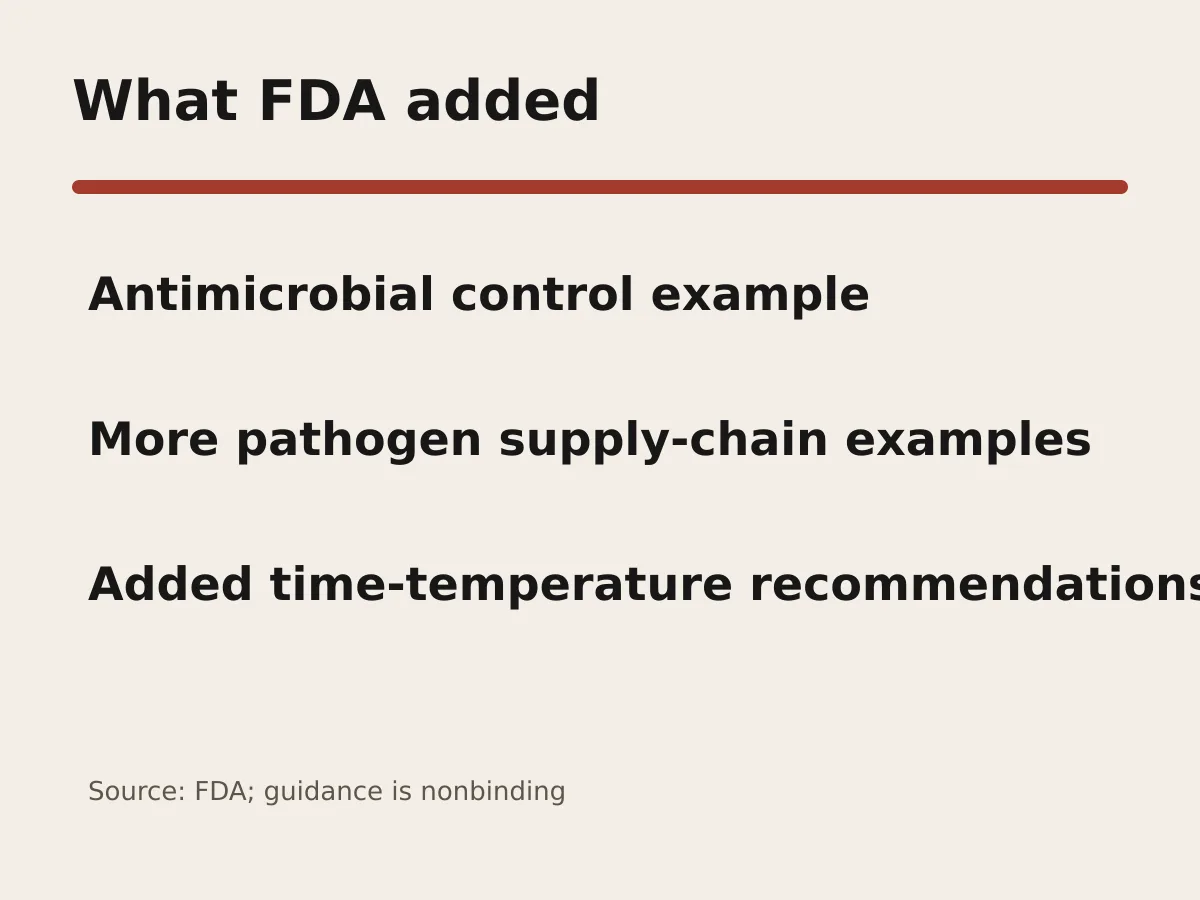
Compared with the draft, the final guide adds another example of an antimicrobial treatment used as a process control. It also expands examples of supply-chain programs for pathogen hazards.
FDA added time-and-temperature recommendations addressing conditions that can allow microorganisms to grow. The document's examples must be read in the context of a facility's ingredients, process and hazard analysis.
The guidance does not impose a new mandatory approval process for every bag of cut produce. Binding requirements come from the underlying law and regulations, while the guide explains one way industry can meet them.
Consumers should not infer that all fresh-cut produce carries the same risk or that the notice changes personal medical guidance. The immediate audience is the businesses that manufacture and process covered food.