
The Federal Communications Commission is collecting urban broadband prices from a sample covering as many as 2,000 census tracts, a yearly exercise that will shape the reasonable-comparability benchmarks used for federally supported service in 2027.
The survey is not a nationwide consumer poll. It is a required provider filing drawn from fixed-service operators identified through December 2025 Broadband Data Collection records. A separate sample can include as many as 500 urban tracts for fixed voice service.
The comparison matters to universal-service policy because supported rural offerings are judged against rates for comparable urban services. The annual urban survey supplies the observed price data used to build the next benchmark rather than assuming one national retail price.
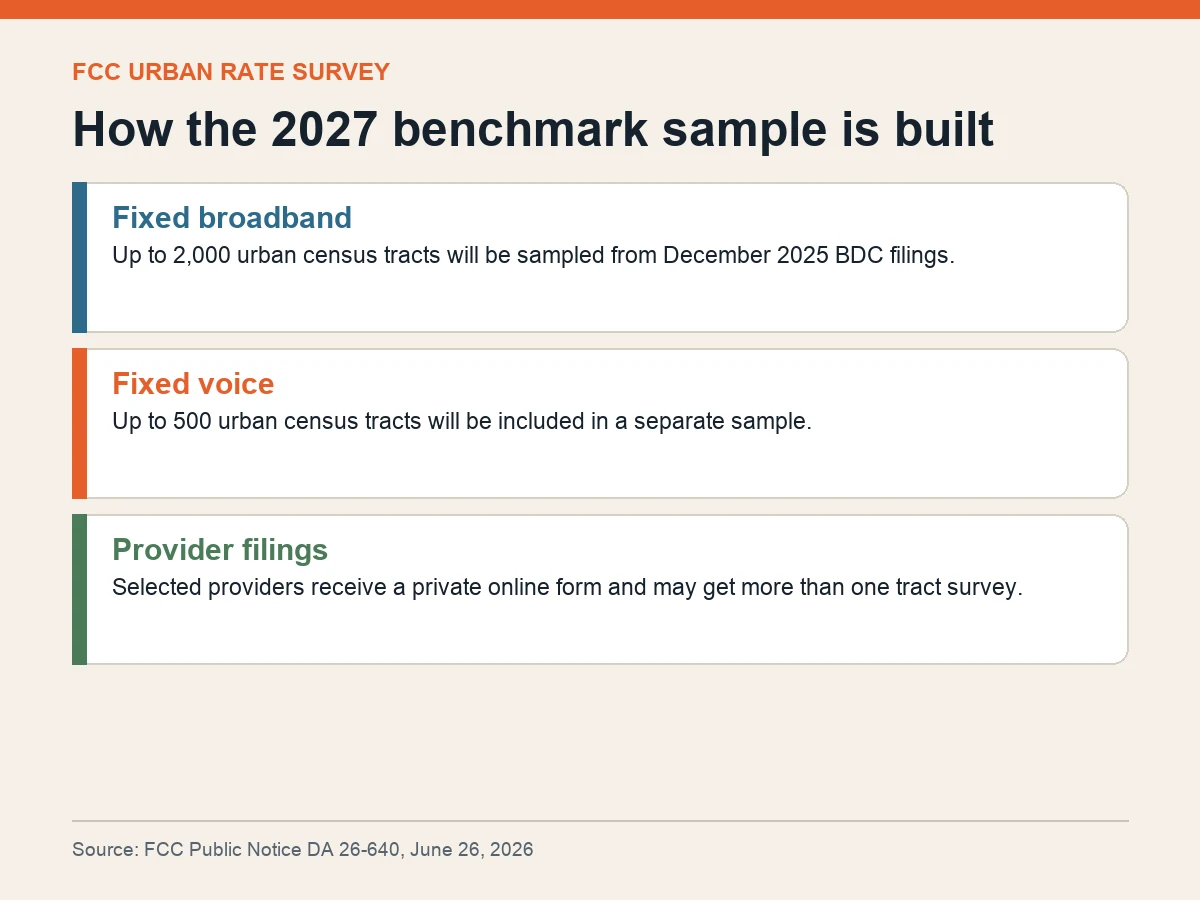
Because one company may serve many sampled tracts, the same provider can receive more than one survey. The FCC said notifications would go around July 6 to each selected provider’s BDC contact person and certifying official, with access to a private online reporting form.
Completed surveys are due August 14. The one-page public notice does not name the sampled companies or reveal the submitted prices, so it cannot show whether a particular plan will raise or lower next year’s benchmark.
The sampling frame uses December 2025 BDC data and 2020 census-tract boundaries. That keeps the provider list tied to a defined filing vintage while the geographic units reflect the newer decennial census rather than the 2010 boundaries used in the original survey order.
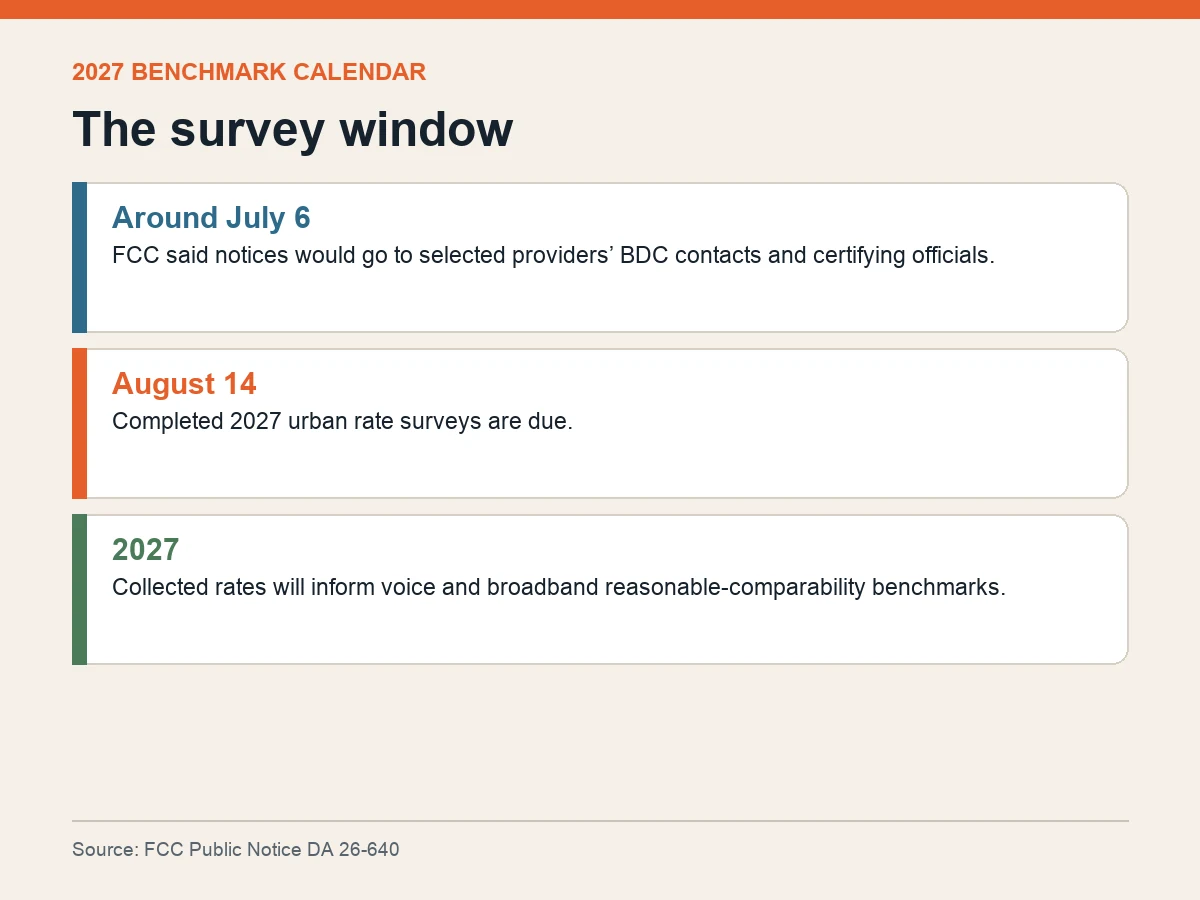
A benchmark produced from the survey is not a retail price cap. It is a federal comparability reference used in administering support rules, with the detailed calculation and supported-service requirements governed by the FCC’s broader universal-service framework.
The practical deadline belongs to the providers selected by the agency, not every internet-service provider. Customers do not submit the form, and companies outside the sample are not directed by this notice to file rates.
For policymakers, the quality question comes after collection: whether the sample, reported service characteristics and calculation method produce a reliable comparison across plans. The August filings are the input; the 2027 benchmark is the later policy output.