
The Federal Aviation Administration has proposed allowing qualifying military pilot trainees to use a current military flight medical examination instead of obtaining a separate FAA third-class medical certificate for specified training in civilian aircraft.
The proposal would cover U.S. military trainees and foreign trainees sponsored by the U.S. Armed Forces when their military medical examination authorizes flight status. It would extend an existing exception rather than remove medical oversight.
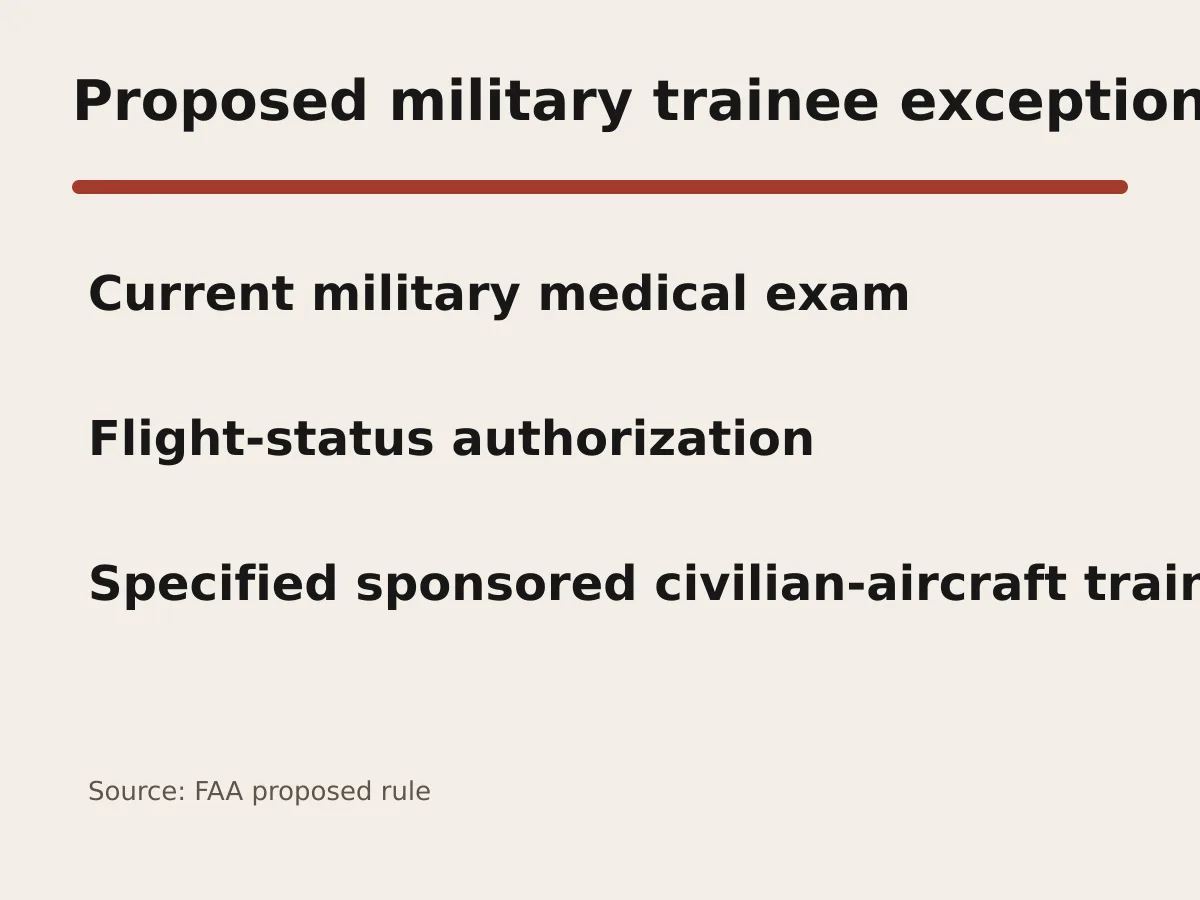
FAA says the military examination meets or exceeds the third-class medical standard for the covered training. A trainee without a current qualifying military exam would not receive the proposed exception.
The change is limited to civilian-aircraft flight training conducted as part of an approved military program. It would not create a general medical-certificate exemption for ordinary civilian student pilots.
FAA estimates roughly 2,000 people a year are in the affected training population: about 1,850 U.S. trainees and 150 U.S.-sponsored foreign trainees. The U.S. estimate includes pilots, combat-systems officers and remotely piloted aircraft trainees.
The agency says about 450 trainees who are not already covered by existing exceptions may qualify under the change. That estimate describes potential administrative coverage, not the number of people guaranteed to train or graduate.
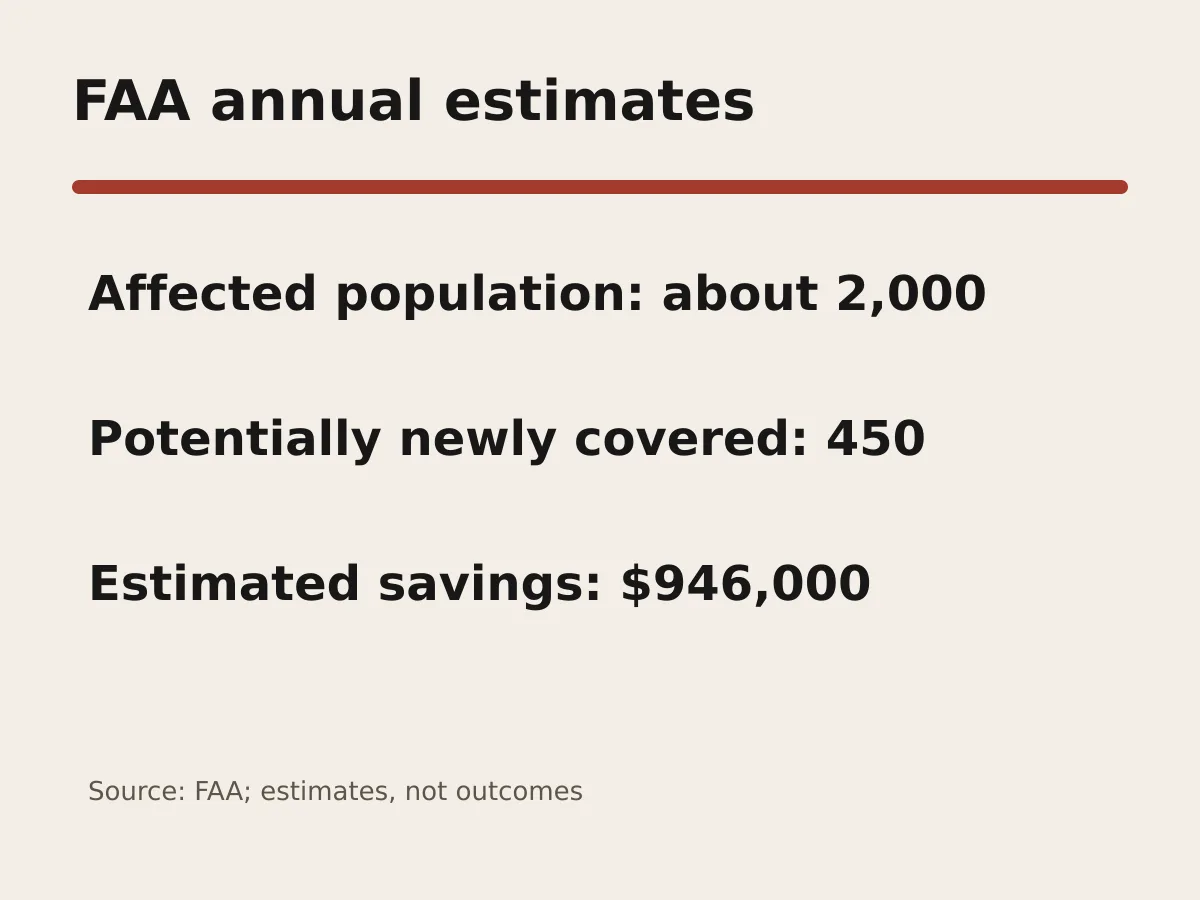
FAA estimates annual savings of $946,000 beginning in 2027. Its five-year present-value estimate is $2.9 million using a 7% discount rate or $3.4 million using 3%.
Those benefits come from avoiding a duplicative civilian medical-certificate process, according to the agency. The proposal does not relax military flight-status requirements or set pilot-selection standards.
Comments are due Oct. 9, 2026. FAA can modify, decline or finalize the proposal after reviewing submissions, so current certificate requirements continue to govern until any final rule takes effect.